

3 Key Advantages of 4-Wire Kelvin Measurement
Learn the 3 key advantages of 4-wire Kelvin measurement: higher precision, error elimination, and better compliance. Discover the full benefits of Kelvin resistance testing for low-resistance measurement.
When it comes to measuring low-value resistances—such as battery internal resistance, cable conductivity, welding joints, and precision electronic components—traditional 2-wire testing often falls short due to inherent accuracy flaws. The 4-wire Kelvin measurement (also known as four-terminal sensing) stands out as the industry-leading solution, delivering reliable, repeatable results that standard testing methods cannot match. Below, we break down the 3 core advantages of this technique, with deep dives into how it elevates testing performance, alongside insights into the broader benefits of Kelvin resistance testing for professional and industrial applications.
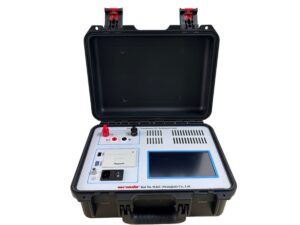
Click the image to know more about Wrindu DC Resistance Tester.
1. Unmatched Precision for Low-Resistance Testing
The standout benefit of 4-wire Kelvin measurement is its elite precision, especially for milliohm and microohm-level resistance values that are critical in high-stakes electrical and electronic testing. Unlike basic 2-wire setups that struggle to detect subtle resistance changes, this method isolates the measurement circuit to target only the device under test (DUT), eliminating external variables that skew readings. It delivers consistent, high-fidelity data even for ultra-low resistance samples, making it indispensable for precision manufacturing, component calibration, and quality control workflows.
This precision isn’t just a minor upgrade—it’s a game-changer for industries where even tiny resistance discrepancies can lead to product failures, safety hazards, or non-compliance. Whether testing automotive electrical components, medical device circuitry, or industrial power shunts, 4-wire Kelvin measurement ensures readings are accurate to the smallest unit, supporting reliable decision-making and rigorous product validation.
2. Complete Elimination of Lead and Contact Resistance Errors
The most critical technical advantage of 4-wire Kelvin measurement is its ability to fully eradicate errors caused by test lead resistance and poor contact resistance—the two biggest pain points of 2-wire testing. In standard 2-wire setups, the resistance of test leads, clip connections, and oxidized contact points is included in the final measurement, resulting in inflated, inaccurate resistance values that don’t reflect the DUT’s true resistance.
The 4-wire design fixes this by separating the circuit into two distinct paths: a current-carrying force path and a voltage-sensing path. The sense leads carry negligible current, so they don’t pick up voltage drops from leads or contacts, isolating the voltage drop across the DUT alone. This error elimination removes guesswork from testing, ensures repeatable results across multiple tests, and removes the need for manual error corrections, streamlining testing workflows and boosting overall efficiency.
3. Enhanced Compliance with Industry Testing Standards
For regulated industries, compliance with national and international testing standards is non-negotiable, and 4-wire Kelvin measurement aligns perfectly with strict industry requirements, offering a compliant, auditable testing solution. Many sectors—including automotive, aerospace, renewable energy, and electrical safety—mandate high-precision low-resistance testing to validate product performance and safety, and 2-wire methods rarely meet these stringent criteria.
By using 4-wire Kelvin measurement, teams can generate test data that meets ISO, IEC, and other industry-specific standards, simplifying certification processes and reducing the risk of non-compliance penalties. This compliance advantage ties directly into the wider benefits of Kelvin resistance testing, as it not only improves measurement quality but also protects businesses from regulatory setbacks, enhances brand credibility, and ensures products meet global safety and performance benchmarks.
Final Takeaway
From unrivaled precision and error-free testing to full regulatory compliance, the 3 key advantages of 4-wire Kelvin measurement solidify its status as the gold standard for low-resistance testing. By addressing the core flaws of traditional testing methods, it delivers consistent, reliable, and compliant data, making it an essential technique for engineers, technicians, and quality control professionals across every precision-focused industry. When accuracy and compliance matter most, 4-wire Kelvin measurement is the clear, trusted choice.
FAQ
Q1: Why is 4-wire Kelvin measurement more accurate than 2-wire testing for ultra-low resistance values?
4-wire Kelvin measurement delivers higher accuracy for ultra-low resistance because it completely eliminates test lead and contact resistance errors, which are the main distorters of 2-wire test results. Traditional 2-wire setups combine DUT resistance with lead and contact resistance in the final reading, leading to inflated, unreliable data especially for milliohm and microohm-level samples. The four-terminal design separates current and voltage circuits, isolating the true voltage drop across the DUT alone, ensuring readings reflect the actual resistance of the target component without external interference, aligning with the core benefits of Kelvin resistance testing for precision scenarios.
Q2: Can I use regular test leads instead of dedicated Kelvin leads for 4-wire resistance measurement?
No, you cannot use standard regular test leads for valid 4-wire Kelvin measurement—dedicated Kelvin test leads and clips are mandatory to achieve accurate, error-free results. Regular test leads lack the separated current and voltage path design, failing to isolate the sensing circuit from the force circuit, which reintroduces lead resistance errors and defeats the purpose of 4-wire testing. Dedicated Kelvin leads feature specialized wiring and insulated dual clips to maintain separate electrical paths, ensuring you unlock the full precision and error-elimination advantages of the 4-wire Kelvin method.
Q3: What industries and applications absolutely require 4-wire Kelvin resistance testing?
4-wire Kelvin testing is mandatory for high-precision, regulated, and safety-critical industries where even small resistance errors pose risks, including automotive electronics, battery manufacturing, aerospace, renewable energy, medical devices, and industrial electrical safety. These sectors require compliance with strict ISO/IEC standards and rely on ultra-accurate low-resistance data for quality control, product certification, and safety validation. Applications include battery internal resistance testing, cable conductivity checks, welding joint inspection, shunt resistor calibration, and circuit component verification, where 2-wire testing cannot meet accuracy or compliance requirements.
Q4: How does temperature affect 4-wire Kelvin measurement accuracy, and how to fix it?
Extreme or fluctuating temperatures can slightly alter 4-wire Kelvin measurement accuracy by changing DUT resistance and introducing thermal EMF interference, but this impact is easily mitigated with simple corrective steps. To maintain accuracy, conduct tests in a stable temperature environment (avoid direct heat/cold sources), use temperature-compensated testing tools, clean DUT contact points to eliminate thermal resistance, and take multiple stable readings to average out minor fluctuations. Unlike 2-wire testing, 4-wire Kelvin setup minimizes temperature-related error amplification, keeping measurements reliable even in mild temperature variations.
Q5: Is 4-wire Kelvin measurement only suitable for low-resistance components, or can it test high-resistance parts too?
4-wire Kelvin measurement is optimized and most beneficial for low-resistance components (below 1Ω), while it’s not cost-effective or necessary for high-resistance parts testing. The core advantages of error elimination and ultra-precision shine with milliohm/microohm samples, where lead resistance errors are proportionally significant. For high-resistance components (above 1kΩ), lead and contact resistance have negligible impact, so standard 2-wire testing is sufficient and more efficient. Stick to 4-wire Kelvin testing for low-resistance applications to maximize its performance and cost value.
