

4-Wire vs 2-Wire Resistance Measurement
Learn the full comparison of 2-wire vs 4-wire resistance measurement: key differences, ideal use cases, Wrindu expert review & FAQ. Choose the right resistance testing method easily.
Resistance measurement is a core task in electrical testing, power equipment inspection, and industrial manufacturing, but choosing the right method directly impacts result accuracy and work efficiency. The two most common techniques are 2-wire and 4-wire (Kelvin) resistance measurement, and understanding their differences helps avoid costly measurement errors. This simple, straightforward guide breaks down 2-wire vs 4-wire resistance measurement in plain terms, covering core working principles, key differences, and ideal use cases for quick, informed decision-making.
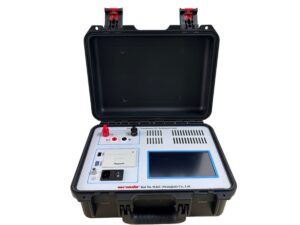
Click the image to know more about Wrindu DC Resistance Tester.
Core Working Principles: Simple Breakdown
2-Wire Resistance Measurement
The 2-wire method uses a single pair of test leads for both current supply and voltage sensing. One set of wires connects the tester directly to the Device Under Test (DUT), making setup fast and basic. However, this design includes test lead resistance, contact resistance, and wire voltage drops in the final reading, which distorts true DUT resistance values.
4-Wire (Kelvin) Resistance Measurement
The 4-wire Kelvin method uses two separate pairs of leads: one pair (force leads) carries test current, and the other (sense leads) measures only the voltage across the DUT. Since sense wires carry almost no current, they eliminate lead and contact resistance errors, delivering accurate, unaltered resistance readings—this is the key advantage that makes it the gold standard for precision testing.
Key Direct Comparison
|
Comparison Item
|
2-Wire Resistance Measurement
|
4-Wire Kelvin Resistance Measurement
|
|---|---|---|
|
Measurement Accuracy
|
Low to moderate; prone to large errors, especially for low resistances
|
High precision; eliminates lead/contact resistance errors
|
|
Error Sources
|
Test lead resistance, contact resistance, wire voltage drops
|
Nearly no external errors; only measures DUT true resistance
|
|
Setup Complexity
|
Very simple; quick wiring with one pair of leads
|
Slightly more complex; requires dedicated Kelvin test leads
|
|
Cost & Equipment
|
Low cost; standard multimeters and basic test leads work
|
Higher cost; needs Kelvin-compatible testers and specialized leads
|
Ideal Applicable Scenarios
Best for 2-Wire Resistance Measurement
-
Measuring high-resistance components (above 1kΩ), where lead/contact resistance is negligible
-
Quick, rough on-site checks and preliminary screening tests
-
Basic household electrical testing, low-precision routine inspections
-
Budget-limited testing with no strict accuracy requirements
Best for 4-Wire Kelvin Resistance Measurement
-
Testing ultra-low resistances (milliohm/microohm level: EV batteries, cables, welds)
-
4-wire Kelvin for EV battery testing: Battery internal resistance & health diagnosis
-
Kelvin testing in electronics manufacturing: Precision component calibration & QC
-
4-wire Kelvin method for power utilities: Grid equipment, transformer & cable testing
-
Regulated industrial testing, compliance checks, and high-stakes quality assurance
Quick Final Takeaway
Choose 2-wire measurement for fast, low-cost, rough tests on high-resistance parts with no strict accuracy needs. Opt for 4-wire Kelvin measurement when you need reliable, error-free precision—especially for low-resistance, industrial, OEM, and compliance-focused applications.
Wrindu Expert Review: 2-Wire vs 4-Wire Resistance Measurement
Wrindu (Rui Du Mechanical and Electrical (Shanghai) Co., Ltd.), founded in 2014, is a professional global manufacturer and system solution provider for power testing equipment, focusing on independent R&D, design and production of high-voltage power test devices. Our product portfolio covers substation transformer test gear, HV switch equipment, storage battery testers, cable fault detectors, insulation testing tools and more, with all products certified by ISO9001, IEC and CE international standards.
From Wrindu’s technical expert team, 2-wire vs 4-wire resistance measurement is not about which is “better”, but which fits the application scenario. 2-wire testing is practical for routine, low-precision tasks, but 4-wire Kelvin testing is non-negotiable for industrial and OEM scenarios requiring accuracy. We integrate 4-wire Kelvin technology into our professional power testing equipment, delivering tailored solutions for 4-wire Kelvin for EV battery testing, Kelvin testing in electronics manufacturing and 4-wire Kelvin method for power utilities, helping users eliminate measurement errors, meet compliance standards and improve work efficiency.
FAQ: Long-Tail Questions About 2-Wire & 4-Wire Resistance Measurement
Q1: When should I skip 2-wire testing and use 4-wire Kelvin measurement directly?
Conclusion first: You should use 4-wire Kelvin measurement directly when testing ultra-low resistances (below 1Ω), conducting industrial compliance testing, or needing accurate, repeatable data—2-wire testing is too error-prone for these scenarios.
Q2: Can I convert a 2-wire tester to 4-wire Kelvin measurement with simple upgrades?
Conclusion first: No, basic 2-wire testers can’t be fully converted to 4-wire Kelvin testers; you need a Kelvin-compatible tester and dedicated 4-wire test leads to realize true error-free precision measurement.
Q3: Does 4-wire Kelvin measurement cost more than 2-wire for long-term industrial use?
Conclusion first: No, 4-wire Kelvin measurement saves costs long-term for industrial use, as it reduces measurement errors, rework and defective products, outweighing the higher upfront equipment cost.
Q4: Why is 2-wire resistance measurement still widely used despite its low accuracy?
Conclusion first: 2-wire testing remains popular because it’s low-cost, ultra-simple to set up and fast to use, making it ideal for quick, rough tests on high-resistance parts with loose accuracy requirements.
Q5: Does Wrindu provide both 2-wire and 4-wire resistance testing equipment?
Conclusion first: Yes, Wrindu offers a full range of resistance testing equipment, including cost-effective 2-wire testers for routine use and high-precision 4-wire Kelvin testers for industrial, OEM and power utility applications.
