What is Wrindu Portable Insulation Oil DGA Tester?
Wrindu Portable Insulation Oil DGA Tester by Wrindu offers fast, accurate gas and moisture analysis in just 20 minutes, with no consumables, and easy PC connectivity.
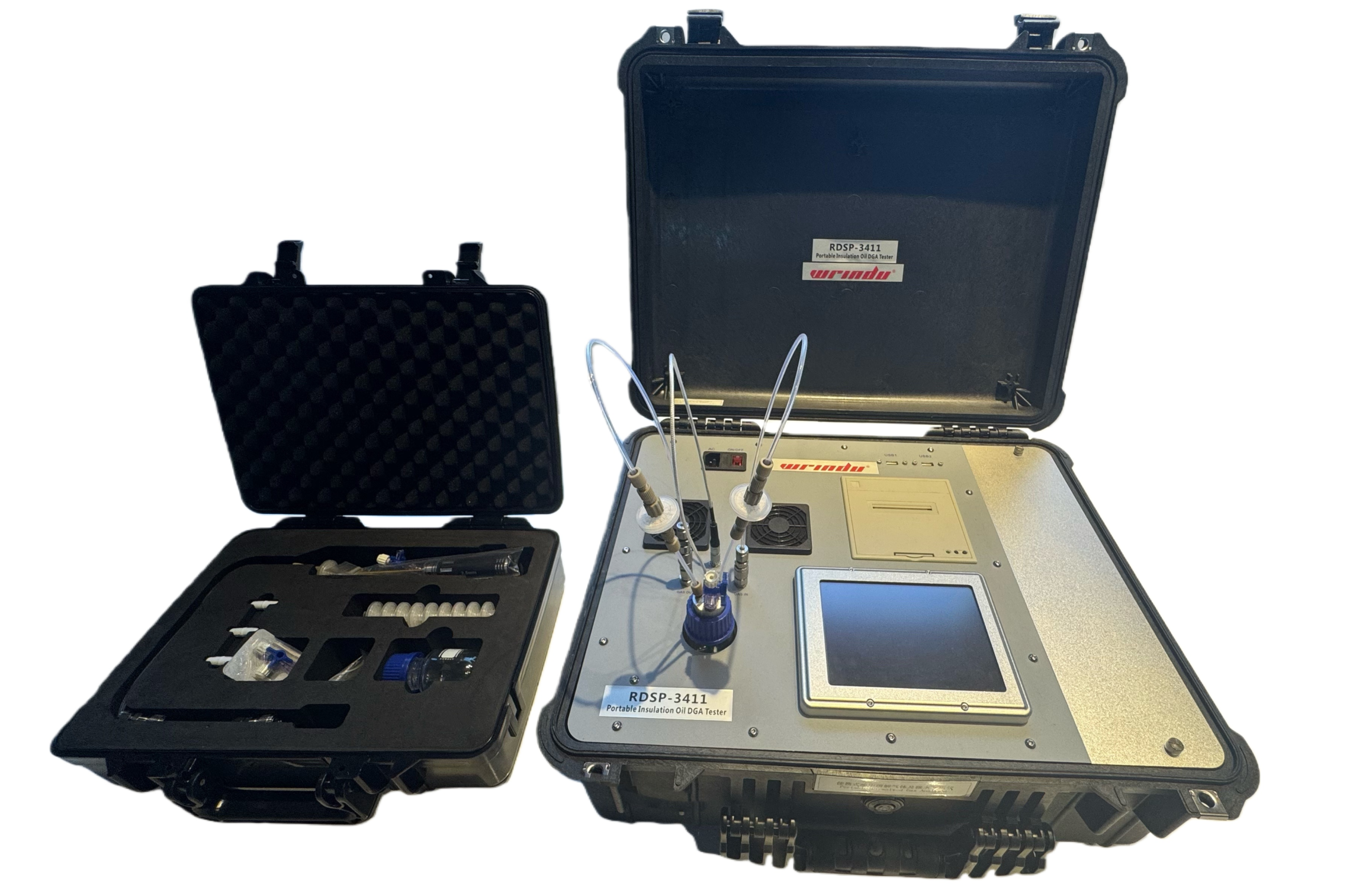
The RDSP-3411 Portable Insulation Oil DGA Tester by Wrindu is a cutting-edge tool designed for quick and accurate analysis of dissolved gases in insulating oils. It uses advanced infrared photo-acoustic spectroscopy technology to provide reliable results in just 20 minutes. This portable device is ideal for field use, offering a fast, efficient, and cost-effective alternative to traditional Gas Chromatography systems.
Why Choose Wrindu DGA for Your Testing Needs?
| Feature | Benefit |
|---|---|
| Fast and Efficient Measurement | Measures 7 key fault gases and moisture in just 20 minutes, providing quick results for timely decision-making. |
| No Consumables Required | Uses physical photo-acoustic spectroscopy, eliminating the need for calibration and carrier gases. |
| Simultaneous Moisture Testing | Measures moisture content in oil along with gases in the same test, providing comprehensive data. |
| User-Friendly Operation | Simple touch keyboard interface, no training required, allowing easy operation in the field. |
| Portable and Rugged Design | Compact and lightweight (<10 kg), housed in a durable carry case for convenient transport. |
| Reliable and Accurate Results | Delivers high accuracy and reliable test results, ensuring precision in analyzing oil quality. |
| Advanced Fault Gas Diagnosis | Supports international diagnostic methods (Roger’s ratios, Duval’s Triangle) and preset warning limits. |
| PC Connectivity | USB port for easy data transfer to an external PC for further analysis or record-keeping. |
Key Features and Specifications
| Feature | Details |
|---|---|
| Detection Range | Hydrogen (H2), Carbon Monoxide (CO), Carbon Dioxide (CO2), Ethylene (C2H4), Ethane (C2H6), Methane (CH4), Acetylene (C2H2), Moisture (H2O) |
| Accuracy | Valve < 20 ppm for gases, Valve ≥ 20 ppm for accurate detection |
| Samples | Oil and Gas |
| PC Port | USB port for external PC communication |
| Printing Output | 2-inch mini printer for immediate printouts |
| Power | AC100~250V, 47~63Hz, 12W |
| Host Dimensions | 524mm × 428mm × 206mm |
How Can Wrindu DGA Benefit Your Operations?
Wrindu DGA is designed to make the testing of insulation oil more accessible and efficient. It’s particularly useful for industries that rely on electrical equipment such as power plants, substations, and factories. By using this tester, you can ensure the quality and reliability of your insulation oil, helping prevent breakdowns and extend the lifespan of your equipment.
Whether you’re working in the field or at a testing facility, the RDSP-3411 is a must-have tool for anyone who needs fast, reliable, and accurate dissolved gas analysis.
FAQs
What is the purpose of a DGA tester?
A DGA tester acts as a “blood test” for oil-filled electrical equipment, detecting gases that indicate internal issues, such as aging or stress in insulating systems, without needing to open the transformer.
Which gases do these devices typically monitor?
The key gases monitored are:
-
Hydrogen (H₂): Indicates partial discharge or low-temperature overheating.
-
Methane (CH₄), Ethane (C₂H₆), Ethylene (C₂H₄): Signs of thermal issues at varying temperatures.
-
Acetylene (C₂H₂): Critical for high-energy arcing (>700°C).
-
Carbon Monoxide (CO), Carbon Dioxide (CO₂): Often related to overheating or insulation degradation.
How often should DGA testing be performed?
For healthy transformers, annual testing is standard. Increased testing frequency is needed if fault gases are detected or the unit is aging.
What is the difference between Lab (Offline) and Online DGA?
-
Lab (Offline): Manual oil sampling for detailed lab analysis.
-
Online Monitoring: Continuous, real-time on-site monitoring for data trends.
How are the results interpreted?
Results are analyzed using graphical methods like the Duval Triangle, Rogers Ratios, and Key Gas analysis to diagnose specific faults.
Can DGA results be misleading?
Yes, poor sampling techniques or contamination can skew results, causing false readings. Also, certain equipment like OLTCs may cause gases to migrate, leading to misdiagnosis.
What is the difference between DGA and Oil Quality tests?
DGA focuses on detecting internal faults in the equipment, while Oil Quality tests (e.g., dielectric strength, acidity) assess the condition of the oil itself as an insulator and coolant.
You might be interested in