

How Does Tan Delta Testing Detect Insulation Problems?
Learn how Tan Delta testing detects insulation degradation in high-voltage equipment. Discover how it works, why it matters, and common FAQs about transformer testing.
If you work with high-voltage equipment, you know that insulation failure is a leading cause of power outages. But how can you tell if your insulation is failing before it’s too late? The Tan Delta Test of Transformer and other electrical assets is the most reliable way to find out.
In this guide, we will break down exactly how this testing process works and why it is essential for your maintenance strategy.
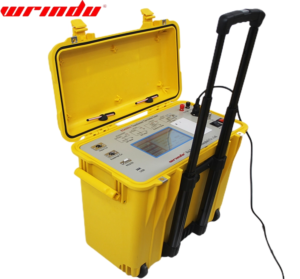
Click the image to know more about Tan Delta Tester of Transformer.
How Is High Voltage Applied During the Test?
To start the process, engineers use a specialized instrument like the Wrindu Tan Delta Tester. The device applies a very specific AC high voltage to the insulation system.
Instead of using normal operating voltage, the tester applies a controlled frequency—often lower than the standard 50/60Hz—to stress the insulation effectively. This high voltage creates an electric field within the dielectric material (the insulation). If the insulation is in perfect condition, it acts like a pure capacitor. However, if there are impurities, the material reacts differently to this voltage.
How Does the Device Measure Current Leakage?
Once the Wrindu tester applies the voltage, it measures two types of current:
- Capacitive Current: This is the “good” current that flows naturally in a healthy insulator.
- Resistive Current (Leakage): This is the “bad” current. It occurs when electricity “leaks” through contaminants like moisture, carbon tracks, or air bubbles.
The Wrindu Tan Delta Tester calculates the ratio between these two currents. The “Tan Delta” (or Dissipation Factor) is the mathematical angle between the total current and the capacitive current. A higher leakage current means a higher Tan Delta value, signaling that the insulation is no longer doing its job effectively.
What Is the Relation to Insulation Degradation and Why does the Tan Delta value matter?
It tells a story about the health of your equipment.
- Low Tan Delta: Your insulation is clean and dry. It can safely handle high-voltage stress.
- High or Increasing Tan Delta: This indicates insulation degradation.
What Are the Common Questions from Operators?
Does a high Tan Delta always mean I need to replace the transformer?
Can weather affect my results?
Yes. Humidity and temperature can impact surface leakage. For the most accurate results, always use a tester with built-in compensation features and perform tests in dry conditions.
How do I interpret Tan Delta test results?
A normal Tan Delta value is typically low (ranging from 0.001 to 0.005). As the Tan Delta value increases, it indicates that the insulation is degrading. If the value exceeds a certain threshold, it may suggest that the insulation is no longer capable of providing adequate protection and may need replacement.
Is Tan Delta testing a non-destructive method?
Yes, Tan Delta testing is non-destructive, meaning it does not damage the cable or its insulation. The test can be performed while the cable remains fully operational, making it ideal for continuous monitoring without interrupting service.
