

What Are the Main Applications of Tan Delta Tests in Transformers?
Discover how Tan Delta testing helps assess transformer insulation health, track aging, and prevent failures. Learn why the Wrindu Tan Delta Tester is essential for predictive maintenance.
Regular maintenance is the backbone of power grid reliability. Among various diagnostic methods, the Tan Delta Test of Transformer stands out as a critical tool for engineers. By measuring the dissipation factor, operators can “see” inside the equipment without tearing it apart.
Below, we explore the primary applications of this test and why the Wrindu Tan Delta Tester is a staple in modern electrical engineering.
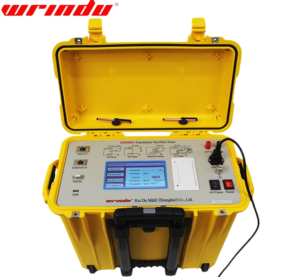
Click the image to know more about Wrindu Tan Delta Tester.
Why Is a Transformer Insulation Health Check Important?
The most common use of this test is to perform a comprehensive transformer insulation health check. Insulation is the most vulnerable part of a transformer. Over time, heat, oxygen, and moisture break down the chemical structure of the paper and oil.
How does the test identify hidden moisture?
Moisture is the silent killer of transformers. When you use the Wrindu diagnostic tool, it detects even tiny amounts of water or contaminants in the insulation. A low tan delta value confirms the insulation is dry and robust. A high value tells you that the oil may need purification or the paper insulation is aging prematurely.
How Does Tan Delta Support Predictive Maintenance?
Modern utility companies are moving away from “fix it when it breaks” strategies. Instead, they use predictive maintenance to save time and money. The Tan Delta Test of Transformer provides the data needed for this approach.
Can you track the aging of your assets?
Yes. By performing tests at regular intervals, you create a historical trend. If the tan delta value remains stable for five years and then suddenly spikes, you know a problem is developing. This data allows you to schedule repairs during planned outages rather than waiting for an emergency. The Wrindu Tan Delta Tester stores these results, making it easy for technicians to compare data over several years.
Can These Tests Prevent Catastrophic Failures?
The ultimate goal of any electrical test is to prevent catastrophic failures. A transformer explosion or fire causes massive financial loss and safety risks.
Does the test find faults before they become dangerous?
Absolutely. Most transformer failures start as small localized issues, such as carbon tracking or partial discharge. These issues increase the leakage current. Because the Wrindu tester is highly sensitive, it identifies these “red flags” early. By catching these problems in the early stages, you can take the transformer offline safely, avoiding a violent short circuit or total equipment loss.
Common Questions from Field Technicians
When using the Wrindu equipment in the field, technicians often ask several practical questions:
Does the size of the transformer affect the test?
While the principle is the same, larger transformers have higher capacitance. You must ensure your tester has the power to handle the charging current. Wrindu designs its testers to handle various sizes, ensuring accuracy for both small distribution units and large power transformers.
Should I test the bushings separately?
Yes. Bushing failure is a frequent cause of transformer fires. Many operators use the Wrindu Tan Delta Tester to check the C1 and C2 insulation of the bushings specifically, as this provides a more detailed view of the transformer’s overall safety.
