

How Do Temperature and Humidity Affect Tan Delta Measurements?
Learn how temperature and humidity affect Tan Delta measurements in transformers. Discover tips for accurate testing and how Wrindu Tan Delta Tester compensates for environmental factors.
When performing Tan Delta testing on transformers or cables, environmental factors such as temperature and humidity can have a significant impact on the results. These factors can lead to variations in measurements, potentially causing confusion if not properly accounted for. Understanding how temperature and humidity influence Tan Delta Test of Transformer results and learning how to compensate for these variables is crucial for accurate diagnostics.
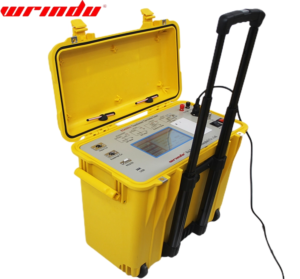
Click the picture to know more about Wrindu Tan Delta Tester.
How Does Temperature Affect Tan Delta Measurements?
Temperature plays a key role in the behavior of insulating materials. As temperature increases, the dielectric loss in insulation material also rises. This is because higher temperatures cause the molecules in the insulation material to move more freely, which leads to an increase in the energy lost as heat during the testing process.
For Tan Delta testing, the dielectric loss is reflected in the increase of the Tan Delta value. As the temperature goes up, so does the resistive current component, resulting in a higher Tan Delta value. This means that a higher Tan Delta value at elevated temperatures may not necessarily indicate degradation of the insulation; instead, it could be the result of temperature-induced changes in the material’s properties.
How to Compensate for Temperature Variations?
When performing Tan Delta testing with Wrindu Tan Delta Tester, it is essential to take temperature into account to avoid misinterpretation. Some Wrindu testers have built-in compensation features that adjust measurements according to temperature fluctuations. It’s also a good practice to perform tests under stable temperature conditions or to record the temperature at the time of testing and factor it into your analysis.
How Does Humidity Affect Tan Delta Measurements?
Humidity, particularly high levels of moisture, can significantly affect the Tan Delta value by increasing surface leakage. Moisture in the air can condense on the surface of the insulation, creating a conductive path that allows electrical current to leak through the insulation. This leads to a higher resistive current and an increased Tan Delta value.
Moisture entering the insulation material itself can also have a similar effect, causing the material to degrade over time. If the insulation is contaminated with water or other contaminants, it will result in higher leakage current during the test. In this case, a high Tan Delta value indicates potential insulation issues that require attention.
How to Handle High Humidity During Testing?
To minimize the effect of humidity on Tan Delta measurements, make sure the testing environment is as dry as possible. Wrindu Tan Delta Testers are designed with sensors that can detect and compensate for surface leakage caused by humidity. Additionally, performing tests during dry conditions can improve the accuracy of results. If testing in humid environments is unavoidable, it’s essential to interpret the Tan Delta values carefully, considering the possible impact of moisture on the results.
Tips for Accurate Tan Delta Testing in Varying Conditions
-
Perform Tests at Consistent Temperatures: To avoid the interference of temperature changes, perform tests at a consistent temperature or use Wrindu testers with built-in temperature compensation.
-
Avoid Testing During High Humidity: When possible, test cables or transformers in environments with controlled humidity levels. If humidity is high, ensure proper compensation for surface leakage during the analysis.
-
Record Environmental Conditions: Always document temperature and humidity levels when performing Tan Delta Test of Transformer. This data can be invaluable for comparing results across different tests and years.
-
Use Advanced Testers with Built-in Compensation: The Wrindu Tan Delta Tester comes equipped with advanced features that can adjust measurements based on environmental conditions, improving test accuracy even in challenging environments.
Common Questions from Operators
Does temperature always affect Tan Delta measurements?
Yes, temperature can increase dielectric loss, leading to higher Tan Delta values. It’s important to adjust for temperature fluctuations to avoid misinterpretation.
Can high humidity cause a false high Tan Delta value?
Yes, humidity increases surface leakage and can lead to higher resistive currents, artificially inflating the Tan Delta value. It’s crucial to account for environmental factors during testing.
What is the ideal testing environment for Tan Delta testing?
The ideal environment is one with stable, dry conditions. For accurate results, it’s best to perform tests at consistent temperatures and low humidity levels.
Wrindu Tan Delta Tester: Built to Handle Environmental Factors
The Wrindu Tan Delta Tester is engineered to deliver reliable results even in challenging conditions. With advanced algorithms and built-in compensation features for both temperature and humidity, the Wrindu Tan Delta Tester ensures accurate diagnostics of your electrical assets. Whether you’re performing a Tan Delta Test of Transformer or evaluating cables, Wrindu’s technology helps you get precise results in any environment.
