

How Can Surface Leakage Impact Tan Delta Test Accuracy?
Learn how surface contamination affects Tan Delta testing on transformers and how to avoid false readings. Discover cleaning tips and how Wrindu Tan Delta Tester ensures accurate results.
Accurate diagnosis of transformer health relies on precise measurements. However, one of the most common issues field engineers face is contamination. Surface leakage often creates false readings, making the insulation look worse than it is.
The Tan Delta Test of Transformer is powerful, but only if you mitigate these external factors. Here is how you can ensure accurate results every time you use your Wrindu Tan Delta Tester.
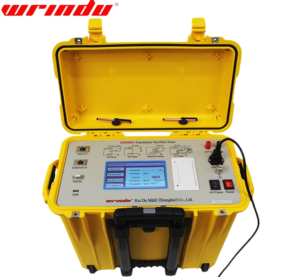
Click the image to know more about Wrindu Tan Delta Tester.
What is Surface Contamination and Why Does It Matter?
Surface contamination refers to any foreign material on the external surface of the bushings or the transformer tank itself. Common culprits include:
- Moisture (dew, rain, high humidity)
- Dust and dirt
- Salt deposits (near coastal areas)
- Industrial pollutants and oil residue
When you apply high voltage during a test, a small current wants to travel the easiest path to the ground. Contamination creates a conductive path on the surface, allowing a leakage current to bypass the internal insulation you actually want to measure. This extra, unwanted current artificially inflates your tan delta value, leading to inaccurate results and potential misdiagnosis of the equipment’s condition.
What Are Effective Cleaning Methods?
The easiest way to improve test accuracy is a simple physical clean. Before connecting your Wrindu test leads, follow these steps:
- Safety First: Ensure the equipment is de-energized and grounded.
- Wipe Down: Use a clean, dry cloth to remove loose dust.
- Use a Solvent: For stubborn oil or grease, use a suitable industrial cleaning solvent (like isopropyl alcohol or de-greaser). Ensure the solvent evaporates completely before testing.
- Dry Thoroughly: If the ambient humidity is high, physically dry the surfaces to minimize moisture interference.
A clean surface channels all current through the internal insulation system, providing a true reading of the Tan Delta Test of Transformer.
How Do Guard Wires and Measurement Techniques Help?
Sometimes, cleaning is not enough, or you cannot clean every surface effectively. This is where advanced measurement techniques and the proper use of equipment come into play. Modern testers like the Wrindu Tan Delta Tester have sophisticated guard terminals.
The Guard Circuit Explained
The guard terminal is a separate input on the tester. You physically connect a “guard wire” to the contaminated surface area you want to exclude from the measurement.
- The guard circuit diverts the surface leakage current away from the main measuring circuit.
- The instrument simply ignores any current routed through the guard.
- This ensures only the current flowing through the main insulation (between the high voltage and the main measuring lead) is used for the tan delta calculation.
Using the guard feature is essential for testing complex components like bushings, which have multiple surfaces that are difficult to clean perfectly in the field.
Common Questions for Wrindu Users
Can I just test in the rain?
No. Water on the surface makes guarding difficult and dangerous. Wait for dry weather for reliable results.
My Wrindu tester has a ‘Guard’ mode. How do I use it?
You connect the guard lead from the tester to the specific metal parts or surfaces you want to bypass. Refer to the specific connection diagrams in your tester’s manual for the correct application on different transformer types.
