

What Are the Latest Technological Advancements in Tan Delta Testing?
Explore how the Wrindu Tan Delta Tester delivers accurate transformer insulation tests with DSP, FPGA, high-density sine waves, automation, and temperature compensation.
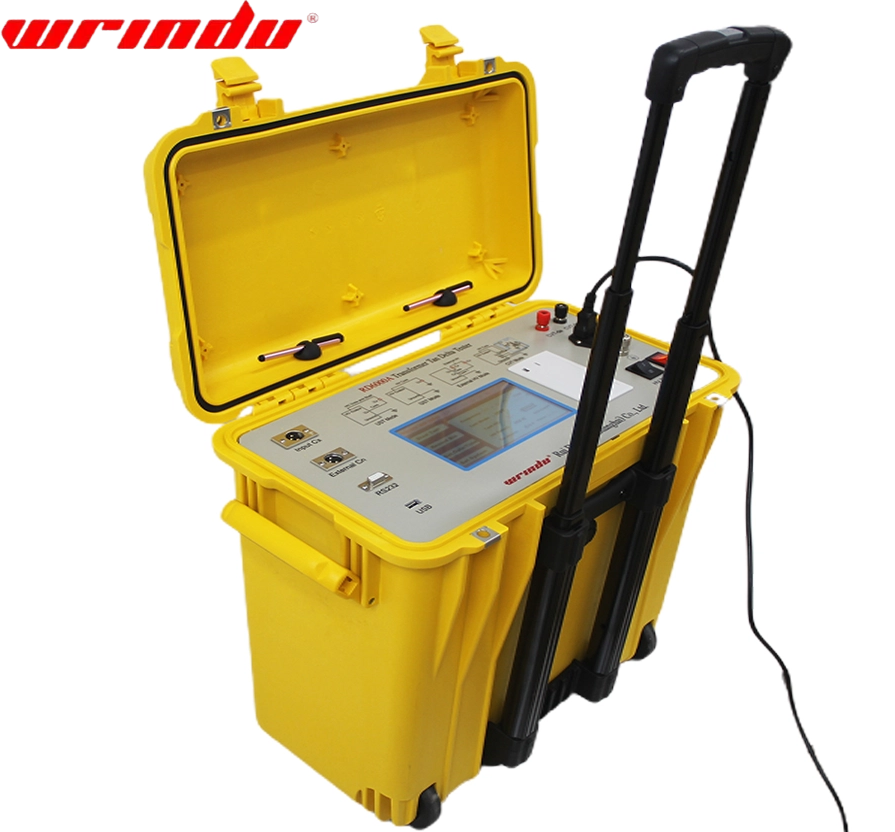
In the power industry, staying ahead of equipment failure is critical. Tan Delta testing (also known as Dissipation Factor or Loss Angle testing) remains a primary method for assessing the health of electrical insulation. As technology evolves, modern instruments like the Wrindu Tan Delta Tester have integrated groundbreaking features to make field testing faster and more accurate.
How Do DSP and FPGA Improve Test Accuracy?
Older analog systems often struggled with electrical noise, especially in high-voltage environments like substations. The latest advancements involve Digital Signal Processing (DSP) and Field Programmable Gate Arrays (FPGA).
These technologies allow the Wrindu tester to process complex signals in real-time. DSP filters out interference, ensuring that the measurement reflects the actual state of the insulation rather than external noise. FPGA chips handle high-speed data processing, which means you get stable readings even in unstable environments. For engineers performing a Tan Delta test of transformer units, this translates to data you can trust.
Why Is High-Density Sine Wave Output Essential?
A pure, stable waveform is the backbone of reliable testing. Recent technological shifts have moved toward high-density sine wave output. Unlike older models that might produce “choppy” or distorted waves, modern high-density generators create a smooth, continuous signal.
This precision is vital because even minor distortions in the test voltage can lead to incorrect Tan Delta values. By using a high-density output, the Wrindu Tan Delta Tester ensures that the dielectric loss measurement remains consistent across different frequencies. This prevents “false positives” that might suggest an insulation problem when the issue is actually the test equipment itself.
Can Portable, Automated Testers Save You Time?
In the past, Tan Delta testing required heavy equipment and manual calculations. Today, the industry has embraced portable, automated testers.
Modern units are now compact enough for one person to carry, yet powerful enough to handle high-voltage requirements. Automation has also simplified the workflow. With a single touch, the device can ramp up voltage, stabilize the signal, and record results automatically. This reduces human error and protects the operator. If you are managing a large-scale Tan Delta test of transformer fleet, these portable solutions allow your team to cover more ground in less time without sacrificing safety.
Common Questions from Wrindu Field Operators
Can I test in high-humidity environments?
Advancements in the Wrindu series address these concerns with built-in temperature and humidity compensation. This means the software automatically adjusts the results based on environmental conditions, providing a “normalized” value that is easy to compare with historical data.
Why is DSP technology better than traditional analog filtering?
A: DSP delivers rock-solid results by digitally filtering noise that analog filters often miss. In busy substations, this ensures accurate Tan Delta Test of Transformer measurements even near high-voltage lines.
How does high-density sine wave output prevent equipment damage?
A: High-density sine waves produce smooth voltage curves, eliminating spikes and harmonic stress. This protects transformers while giving lab-grade accuracy in field testing.
Does a portable, automated tester sacrifice power for size?
A: No. Modern FPGA-driven designs pack high voltage and bridge automation into a lightweight frame, providing full power without bulky components.
Can I compare results between different brands of testers?
A: Yes. Wrindu’s standardized high-density sine wave output and calibrated DSP ensure consistent results aligned with international standards, making cross-device comparison reliable.
How does automation improve safety for the operator?
A: Automation reacts faster than humans. FPGA controllers shut off power instantly during insulation breakdown or ground faults, protecting both operator and equipment.
Does the device handle temperature corrections automatically?
A: Yes. Wrindu testers adjust Tan Delta readings based on oil or ambient temperature, standardizing results for accurate comparisons over time.
