

What is Impact of No Load Loss on Transformer Efficiency?
Discover how no load loss affects transformer efficiency, energy waste, and operating cost. Learn accurate testing with Wrindu for informed efficiency decisions.
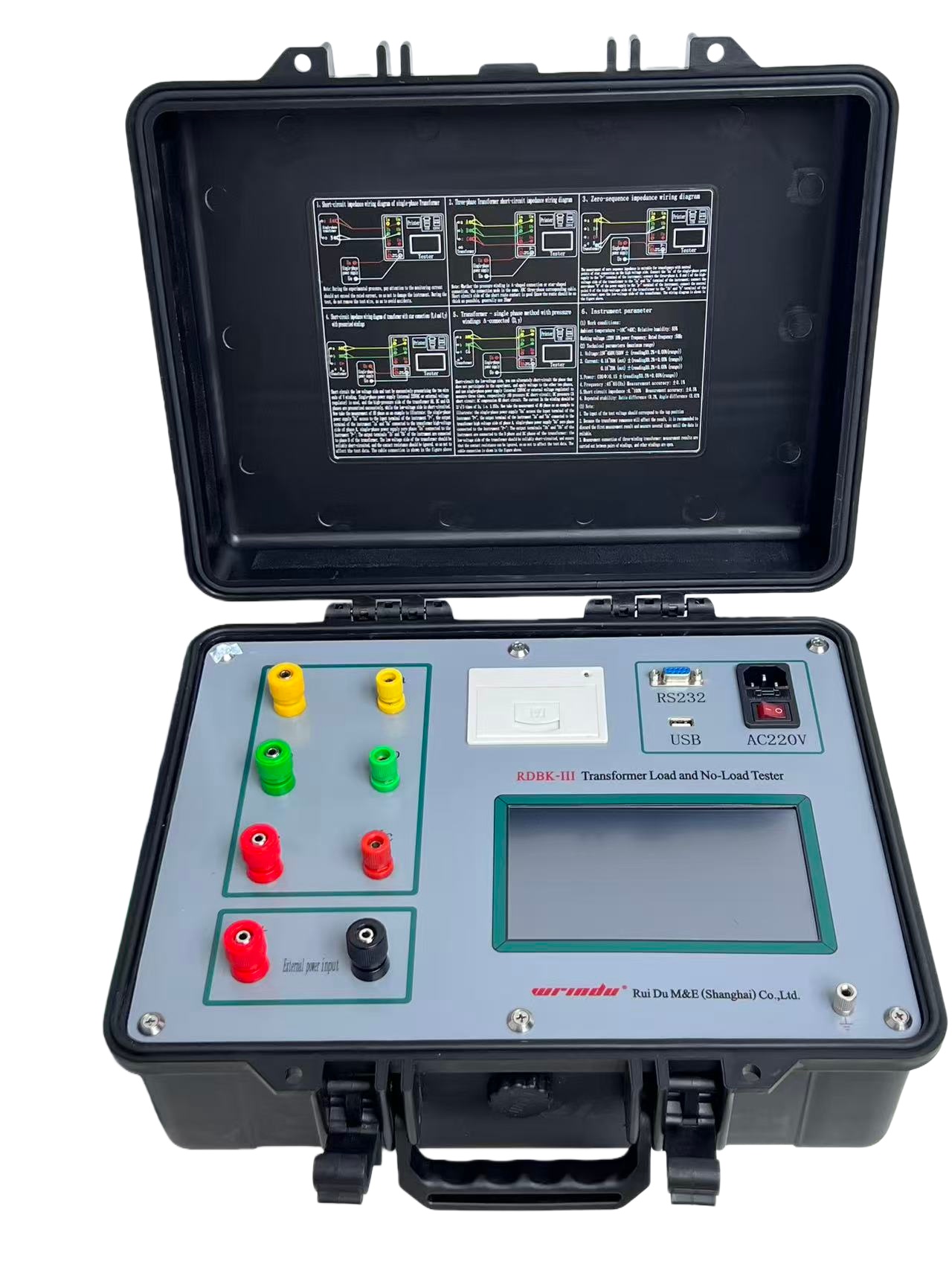
No load loss has a direct and long-term impact on transformer efficiency. It occurs whenever the transformer stays energized, even without load. For decision-makers, no load loss means continuous energy waste and higher operating cost. Understanding how no load loss affects transformer efficiency helps organizations make better purchasing, design, and testing decisions.
Click the picture to know more about Wrindu Transformer No-load and Load loss Tester.
What Is the Relationship Between No Load Loss and Transformer Efficiency?
Transformer efficiency describes how much input power turns into useful output power. No load loss reduces efficiency at all load levels because it remains constant. Even when load increases, no load loss still adds to total loss. This makes no load loss a key factor in overall transformer efficiency and lifetime energy performance.
How Do Efficiency Curves Show the Impact of No Load Loss?
Efficiency curves show efficiency versus load percentage. High no load loss pushes the entire efficiency curve downward. At light load conditions, no load loss dominates total loss and causes sharp efficiency reduction. In distribution networks where transformers often operate at low load, no load loss transformer efficiency becomes even more important. Lower no load loss leads to a higher efficiency curve across the operating range.
Why Does No Load Loss Cause Continuous Energy Waste?
No load loss creates energy waste because it exists 24 hours a day as long as the transformer remains energized. Even small losses accumulate into large energy waste over years of operation. For utilities and industrial users, this wasted energy increases electricity bills and carbon emissions. Reducing no load loss helps control hidden energy costs.
How Does No Load Loss Affect Lifetime Operating Cost?
Purchase price represents only part of transformer cost. No load loss drives long-term operating expense. Over a typical service life, energy loss cost often exceeds the initial equipment cost. Decision-makers who focus only on price may overlook this impact. Evaluating no load loss helps optimize total cost of ownership.
How Can Engineers Measure No Load Loss Accurately for Efficiency Evaluation?
Accurate measurement supports correct efficiency analysis. No load loss involves low current and low power factor, which demand high measurement accuracy. Ordinary meters often show unstable results. Professional transformer test systems from Wrindu provide stable power measurement and accurate phase detection, helping engineers evaluate no load loss transformer efficiency with confidence.
What Common Questions Do Decision-Makers Ask About No Load Loss and Efficiency?
Does reducing no load loss really save money?
A: Yes, especially in lightly loaded networks, it lowers energy waste and operating cost.
Do efficiency standards consider no load loss?
A: Yes, because no load loss occurs continuously and affects overall transformer efficiency.
Can field measurements reflect real efficiency?
A: Yes, but only with accurate instruments like Wrindu testers to capture low current and low power factor accurately.
How Does Wrindu Support Efficiency-Focused Decisions?
Wrindu focuses on transformer testing and power measurement solutions. Our no load loss test systems help users understand efficiency curves and quantify energy waste. High accuracy, stable measurement, and easy operation support both technical teams and decision-makers. Wrindu equipment helps organizations reduce losses and improve transformer efficiency.
