

DC vs VLF Testing: Which Is Safer for High-Voltage Cable Insulation?
Compare DC and VLF testing for high-voltage cables. Learn which method is safer for XLPE insulation, reduces aging, and provides more accurate results.
High-voltage cable testing ensures insulation integrity and system reliability. Engineers often face a choice between DC testing and VLF (Very Low Frequency) testing. Each method has advantages and limitations, particularly for XLPE and modern cable insulation. This article compares DC and VLF testing, highlighting effects on insulation, accuracy, and safety.
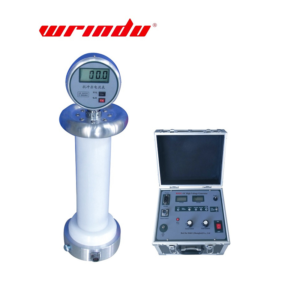
Click the picture to know more about Wrindu DC Tester.
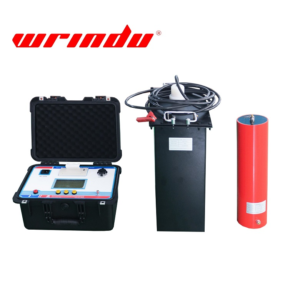
Click the picture to knowe more about Wrindu VLF HV Tester.
How Do DC and VLF Testing Differ in Voltage Application?
DC Testing:
-
Applies a constant voltage across the insulation.
-
Stresses insulation unevenly, especially in XLPE cables due to space charge accumulation.
-
Can cause residual voltage that remains in the insulation after the test.
VLF Testing:
-
Uses a sinusoidal voltage at very low frequency (0.01–0.1 Hz).
-
Simulates AC stress while minimizing capacitive charging currents.
-
Produces a voltage distribution closer to real operating conditions.
VLF testing is generally safer for modern polymer cables because it avoids high localized stress present in DC testing.
Which Method Gives More Reliable Leakage Current Measurements?
DC Testing:
-
Leakage current can include contributions from space charge and surface effects.
-
Readings may overstate insulation defects or create false alarms.
VLF Testing:
-
Leakage current reflects real insulation weaknesses under near-operating conditions.
-
Lower risk of misinterpreting results because VLF minimizes residual charge effects.
For insulation condition assessment, VLF testing provides more accurate and interpretable data, especially for XLPE cables.
What Are the Safety and Aging Risks of DC vs VLF Testing?
DC Testing Risks:
-
Uneven voltage distribution can overstress insulation layers.
-
Residual voltage increases hazard during post-test handling.
-
Repeated DC tests accelerate aging in XLPE cables due to space charge accumulation.
VLF Testing Benefits:
-
Lower stress on insulation reduces the risk of accelerated aging.
-
Minimal residual voltage enhances operator safety.
-
Allows testing of in-service cables without compromising insulation life.
VLF testing is widely recommended in standards for medium- and high-voltage polymer cables.
When Should Engineers Choose DC or VLF Testing?
DC Testing is Suitable for:
-
Older paper-insulated or oil-paper insulated cables.
-
Situations where short-duration high-voltage stress is required.
VLF Testing is Recommended for:
-
XLPE, EPR, or modern polymer cables.
-
Field tests on energized or installed cables.
-
Periodic condition monitoring and preventive maintenance programs.
Choosing the right test method depends on insulation type, test objectives, and cable age.
Wrindu Expert Review
Both DC and VLF testing have roles in high-voltage cable assessment. However, VLF testing offers safer and more reliable evaluation for modern XLPE and polymer-insulated cables. By understanding the differences, engineers can reduce insulation stress, improve result accuracy, and protect cable life.
