

How to Locate Underground Cable Faults Step by Step?
Learn step-by-step underground cable fault location methods, from fault identification to pinpointing and repair, to reduce outages, improve safety, and speed maintenance.
Reliable power systems depend on fast and accurate underground cable fault location. When a fault appears, engineers must find the exact point quickly to reduce outage time and repair cost. A clear step-by-step method improves safety, efficiency, and testing accuracy. This guide explains the staged process used in modern underground cable diagnostics.
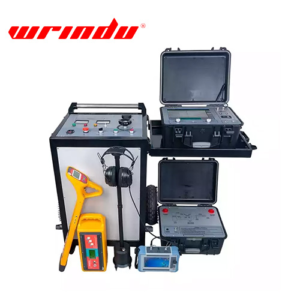
Click the picture to know more about Wrindu underground cable fault location tester.
Why Is Underground Cable Fault Location Important?
Fast fault location restores power sooner and protects nearby equipment. It also prevents repeated digging and reduces labor cost. Accurate underground cable fault location helps engineers minimize service interruption, avoid unnecessary cable replacement, improve preventive maintenance planning, and increase network reliability. Without proper location methods, repair work becomes slow and uncertain.
What Preparation Is Needed Before Fault Location?
Good preparation ensures safe and reliable testing. Key steps include disconnecting the faulty cable from the power source, confirming grounding and discharging stored energy, checking cable route drawings and joint positions, and selecting suitable cable fault location equipment. Clear preparation reduces testing risk and improves final accuracy.
How Does Step-by-Step Underground Cable Fault Location Work?
Step 1: Identify the Fault Type
Engineers first measure insulation resistance and continuity. These results reveal whether the fault is an open circuit, short circuit, high-resistance fault, or sheath fault. Correct identification guides the next testing method.
Step 2: Perform Pre-Location Testing
Pre-location narrows the fault distance along the cable length. Common techniques include Time Domain Reflectometry (TDR), the arc reflection method, and the bridge measurement method. This stage provides an estimated distance before field tracing begins.
Step 3: Pinpoint the Exact Fault Position
After pre-location, engineers move to on-site pinpointing. Typical methods include acoustic and electromagnetic detection, the step voltage method for sheath faults, and a surge generator with a ground microphone. These tools identify the precise digging point and prevent unnecessary excavation.
Step 4: Verify and Repair the Fault
Engineers confirm the location before excavation. After repair, they repeat insulation and withstand testing to ensure reliability. This final verification completes the underground cable fault location process.
What Common Problems Affect Fault Location Accuracy?
Several factors reduce measurement precision, including complex cable routing or multiple joints, high-resistance or intermittent faults, electrical noise in urban environments, and incorrect instrument parameter settings. Understanding these challenges helps engineers choose better testing strategies.
How Do Modern Instruments Improve Underground Cable Fault Location?
Advanced digital systems increase efficiency and accuracy. Modern cable fault locators provide automatic waveform analysis, clear distance calculation, integrated surge and acoustic detection, and portable field-ready design. These features shorten troubleshooting time and support preventive maintenance programs.
What Questions Do Wrindu Instrument Users Often Ask?
Q1: What is the first step in underground cable fault location?
Start with fault type identification. Measure insulation resistance and continuity before any surge testing.
Q2: Why is pre-location necessary?
Pre-location reduces the search range. It saves time and prevents blind field tracing.
Q3: Which method gives the most accurate pinpointing?
Acoustic and electromagnetic detection provides the highest precision. It locates the exact digging point.
Q4: Can one instrument complete the whole process?
Yes, integrated cable fault location systems can handle all stages. They combine TDR, surge generation, and acoustic tracing.
Q5: How can engineers avoid repeated faults after repair?
Always perform insulation and withstand testing after repair. This step confirms long-term cable reliability.
