

How to Perform Time-Current Characteristic (TCC) Testing Properly?
Learn how Time-Current Characteristic (TCC) testing verifies overcurrent relay timing, improves protection coordination, and prevents nuisance tripping.
Time-Current Characteristic (TCC) testing ensures that overcurrent relays trip according to their designed curve. Incorrect timing can result in equipment damage or coordination failure.
Protection coordination depends heavily on accurate TCC performance.
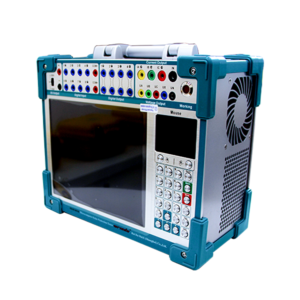
Click the picture to know more about Wrindu CT and PT Analyzer.
Why TCC Testing Is Critical?
Every overcurrent relay follows a specific time-current curve. The curve determines:
-
How fast the relay trips
-
How it coordinates with upstream and downstream devices
-
Whether selective protection is achieved
Improper timing may cause:
-
Nuisance tripping
-
Cascading outages
-
Equipment overheating
Step-by-Step TCC Testing Procedure
Step 1: Verify Relay Settings
Confirm pickup current and curve type.
Step 2: Inject Controlled Current
Apply several multiples of pickup current.
Step 3: Record Trip Time
Measure actual trip delay.
Step 4: Compare With Manufacturer Curve
Ensure timing deviation is within tolerance.
Step 5: Adjust if Necessary
Recalibrate settings if discrepancies are found.
Common Mistakes in TCC Testing
-
Ignoring CT saturation
-
Incorrect current ramp rate
-
Not compensating for temperature variation
-
Failing to test multiple current levels
Routine TCC testing ensures compliance with protection coordination studies.
For differences between primary injection and secondary injection testing, read Primary vs. Secondary Injection Testing: What’s the Difference?
