

What Is Multi-Frequency Current Injection and How Does It Improve Electrical Testing?
Learn how multi-frequency current injection improves electrical testing accuracy, reduces test time, and enhances insulation diagnostics for transformers and cables.
Multi-frequency current injection is an advanced testing method that applies several frequencies at the same time to evaluate electrical equipment performance and insulation condition.
It helps manufacturers, suppliers, and OEM companies improve testing accuracy while reducing inspection time—especially in fast-paced production environments.
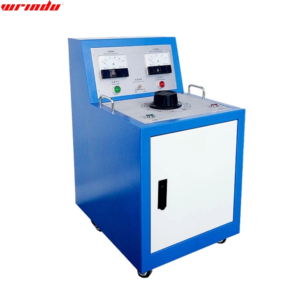
Click the picture to know more about Triple Frequency Voltage Generator.
What Does Multi-Frequency Current Injection Mean?
Multi-frequency current injection sends test currents at different frequencies into electrical equipment simultaneously. Instead of testing one frequency at a time, it collects data from multiple frequency levels in a single test.
This method is commonly used to check:
-
Insulation health
-
Dielectric properties
-
Aging conditions
-
Hidden internal defects
Compared to traditional single-frequency testing, it delivers deeper analysis and faster results.
How Does It Work?
The system injects controlled currents across low and medium frequency ranges. The equipment’s response is then measured and analyzed.
Different frequencies interact with insulation materials in different ways. By studying these responses, technicians can detect:
-
Partial discharge activity
-
Moisture inside insulation
-
Material aging
-
Internal breakdown risks
Modern test equipment—such as systems developed by Wrindu—integrates automated control and digital analysis to provide stable and repeatable results.
Which Equipment Benefits the Most?
Multi-frequency current injection is especially useful for equipment with complex insulation structures, including:
-
Power transformers
-
High-voltage cables
-
Switchgear
-
Surge arresters
Manufacturers use this method during factory testing to ensure products meet international safety standards before shipment.
Why Choose Multi-Frequency Over Single-Frequency Testing?
Traditional single-frequency testing often requires multiple test cycles to gather enough data. Multi-frequency testing performs all checks at once.
Key advantages include:
-
Shorter testing time
-
Higher sensitivity to small defects
-
Deeper insulation analysis
-
Improved production efficiency
For factories and OEM suppliers, this means lower testing costs and reduced warranty risks.
Where Is It Used?
Multi-frequency current injection is widely applied in:
-
Electrical manufacturing plants
-
Power generation facilities
-
Utility maintenance departments
-
Quality control laboratories
It supports both production-line testing and field diagnostics.
Can It Be Customized?
Yes. Manufacturers can customize systems by adjusting:
-
Frequency range
-
Current output levels
-
Software interface
-
Reporting functions
Wrindu provides flexible OEM solutions to match different product types—from small relay components to large power transformers.
Who Supplies Multi-Frequency Injection Equipment in China?
Several Chinese companies produce high-voltage testing equipment with this technology. Leading OEM suppliers focus on:
-
Strong R&D capability
-
International certifications (ISO9001, IEC, CE)
-
Custom manufacturing services
Wrindu is known for combining advanced design, professional technical support, and global after-sales service.
Does It Improve Safety?
Yes. Early detection of insulation problems helps prevent serious failures, fires, or electrical accidents.
By identifying small defects before they grow, multi-frequency testing extends equipment lifespan and improves overall power system reliability.
Does It Save Time and Cost?
Absolutely. Since multiple frequencies are tested in one operation:
-
Testing cycles become shorter
-
Labor costs decrease
-
Production speed increases
-
Equipment downtime is reduced
This makes it ideal for large-scale factory environments and OEM production lines.
Comparison: Single vs. Multi-Frequency Testing
| Feature | Single-Frequency Testing | Multi-Frequency Current Injection |
|---|---|---|
| Test Time | Longer | Much faster |
| Fault Sensitivity | Moderate | High |
| Depth of Analysis | Limited | Multi-layer evaluation |
| Production Efficiency | Average | High |
| Suitable for OEM Use | Basic | Excellent |
Industry Perspective
Multi-frequency current injection represents a major step forward in electrical testing. It supports smarter diagnostics, faster production workflows, and higher safety standards.
Manufacturers like Wrindu continue investing in advanced control systems and software integration to meet the growing demand for efficient and precise testing solutions.
Wrindu Expert Review
Multi-frequency current injection is a modern and efficient testing method used widely in electrical manufacturing and power system diagnostics.
It provides deeper insulation analysis, reduces testing time, lowers costs, and improves safety compliance.
For manufacturers and OEM suppliers, adopting this technology strengthens quality control and enhances competitiveness in global markets.
Frequently Asked Questions
Why is multi-frequency current injection important?
It improves fault detection accuracy and provides more detailed insulation analysis than traditional methods.
How does it improve diagnostics?
By analyzing equipment response across multiple frequencies at once, it reveals hidden defects and aging issues.
Does it meet international standards?
Yes, modern systems are designed to comply with IEC and IEEE testing requirements.
Is it suitable for predictive maintenance?
Yes. It supports early fault detection and helps prevent unexpected equipment failures.
What equipment supports this method?
Advanced current injectors and digital analyzers with frequency control and automated reporting features are commonly used.
Multi-frequency current injection is becoming an essential tool for reliable, efficient, and safe electrical testing in modern power systems.
