

CT Tester: How It Ensures Accurate Current Transformer Performance
Learn how CT testers verify current transformer accuracy, ratio error & polarity. Comply with IEC/IEEE standards for grid safety, metering & relay protection.
A CT tester—short for current transformer tester—stands as an indispensable diagnostic instrument used to validate the accuracy, ratio error, phase displacement, polarity, burden, and excitation properties of current transformers. In today’s electrical power systems, where precision and stability are non-negotiable, CT testers guarantee that protective relays and metering devices receive fully accurate current readings. Without routine calibration and comprehensive testing, even small deviations in current transformer performance can trigger protective relay malfunctions, inaccurate energy billing, or severe power system failures.
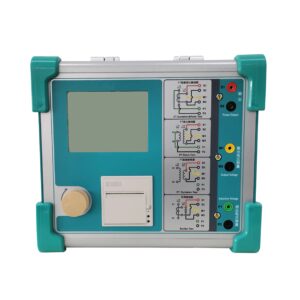
Click the image to know more about CT and PT Analyzer.
Understanding the Principles of Current Transformer Testing
A current transformer (CT) steps down high currents from a primary circuit to measurable levels that protective and metering equipment can safely process. Testing confirms that the transformation ratio and phase angle stay within the limits set by IEC or IEEE standards. Modern CT tester devices automate this entire process by delivering regulated test voltages and currents to evaluate excitation curves, knee points, insulation resistance, and polarity. Test data is analyzed instantly to classify CT accuracy, which is typically designated as 0.1, 0.2, 0.5 for metering grades, or 5P and 10P for protective relay types.
Precise measurement of CT errors eliminates systemic discrepancies between primary and secondary currents. For this reason, a high-performance CT tester forms the foundation of quality assurance throughout power system design, installation, and ongoing maintenance.
Market Trends and Industry Insights
The global CT tester market has experienced robust growth, fueled by the expansion of power transmission networks, renewable energy integration, and the rise of digital substations. Industry analyses from MarketsandMarkets and BloombergNEF show steady increases in CT tester adoption, driven by automated test bench solutions, adherence to IEC 60044 and IEC 61869 standards, and global investments in grid reliability. The Asia-Pacific region, particularly China and India, is seeing a sharp rise in demand for transformer testing equipment.
Amid this rapidly evolving landscape, Wrindu—officially known as RuiDu Mechanical and Electrical (Shanghai) Co., Ltd.—has established itself as a reliable provider of power testing and diagnostic equipment. Founded in 2014, the company specializes in high-voltage testing systems that support transformer commissioning, relay calibration, and substation certification for clients worldwide.
Core Technologies Behind Modern CT Testers
Today’s CT testers incorporate high-precision digital signal processing (DSP) and real-time data acquisition modules. These devices can automatically detect CT types, measure excitation current, and derive magnetization characteristics with exceptional repeatability. Advanced models feature full digital secondary injection, allowing field engineers to test current transformers safely without disconnecting them from the system. Embedded software computes accuracy class, phase angle error, and composite error, while generating comprehensive, professional test reports.
Built-in microcomputers and thermal compensation modules boost data stability even when ambient temperatures fluctuate. Additionally, automatic demagnetization functions protect the CT core after each test, preserving its long-term operational integrity. Cutting-edge CT testers now include cloud connectivity for remote data management and AI-powered anomaly detection, enabling predictive maintenance strategies for digital substations.
Top-Performing CT Testers on the Market
|
Model Name
|
Key Advantages
|
Accuracy Rating
|
Common Applications
|
|---|---|---|---|
|
CT Analyzer PRO
|
Auto demagnetization, rapid excitation curve generation
|
±0.05%
|
Substation field testing
|
|
PowerTest 600
|
High-current testing capability, insulation resistance measurement
|
±0.1%
|
Factory quality assurance testing
|
|
SmartCT X-Series
|
Touchscreen operation, full IEC 61869 compliance
|
±0.2%
|
On-site equipment commissioning
|
These models reflect prevailing design trends focused on portability, ruggedized casings, and fast testing sequences for multi-core current transformers.
Competitor Feature Comparison
|
Feature
|
CT Analyzer PRO
|
PowerTest 600
|
SmartCT X-Series
|
|---|---|---|---|
|
Max Test Current
|
120 A
|
100 A
|
80 A
|
|
Data Storage
|
500 test results
|
1,000 test results
|
Cloud synchronization
|
|
Communication Ports
|
USB, Wi-Fi
|
USB only
|
Wi-Fi, BLE
|
|
Standard Compliance
|
IEC 60044, IEEE C57.13
|
IEC 60044
|
IEC 61869
|
This comparison underscores the importance of testing flexibility, efficient data management, and alignment with updated international industry standards.
Real-World Applications and Return on Investment
Power utilities, engineering contractors, and industrial operators rely on CT testers to validate installed current transformers in substations prior to energization. A major utility in Southeast Asia documented a 25% drop in relay malfunctions after implementing automated CT testing systems. Rigorous testing ensures that differential and overcurrent protection systems operate exactly as engineered. In manufacturing settings, consistent CT verification boosts product reliability and lowers field failure rates.
Reliability and Maintenance Advantages
Regular CT testing extends the service life of transformers and prevents costly unplanned downtime. Early detection of issues like magnetic saturation, insulation degradation, or secondary open-circuit faults stops system instability before it occurs. Automated CT test devices record every verification cycle, building a traceable database for regulatory audits and predictive condition monitoring. Technicians benefit from user-friendly interfaces that guide them safely through ratio testing, phase error analysis, and burden checks.
The Future of CT Testing and Digital Transformation
As smart grids continue to advance, CT testing will increasingly integrate with digital twins, IoT sensors, and centralized asset management platforms. AI algorithms will analyze long-term testing trends to predict CT degradation years in advance. Compact, battery-powered CT testers with wireless connectivity are set to dominate field applications, cutting down inspection and calibration time significantly. Emerging innovations also include augmented reality (AR) interfaces, which provide step-by-step guidance to technicians via smart glasses or mobile devices.
How to Optimize CT Tester Selection
When choosing a CT tester, engineers should assess key factors including measurement range, adherence to technical standards, portability, and software compatibility. Instruments with automated curve plotting and ratio verification reduce human error and improve result repeatability. Calibration traceability to national metrological standards guarantees reliable performance certification. Selecting the right CT tester ultimately strengthens confidence in current measurements for both protective relay and metering applications.
Final Thoughts and Professional Call to Action
The importance of CT testers in maintaining accurate current transformer performance cannot be overstated. These tools safeguard electrical protection systems, validate metering precision, and optimize overall operational reliability. As grid infrastructure undergoes modernization, adopting high-precision CT testers that meet digital standards delivers both operational and financial benefits. Engineers, maintenance crews, and quality assurance professionals should regard CT testing not merely as a compliance requirement, but as a long-term investment in electrical safety and uninterrupted performance.
Frequently Asked Questions
What Is a CT Tester and How Does It Ensure Accurate Transformer Performance?
A CT tester assesses current transformer performance by measuring critical parameters including ratio, phase angle, polarity, and excitation. It guarantees precise current measurement, proper calibration, and overall system reliability, preserving power quality and safety across electrical networks.
How Is Current Transformer Accuracy Measured and Maintained?
Current transformer accuracy is validated by testing ratio error and phase displacement using high-precision CT testers. Routine calibration against reference standards preserves measurement integrity, ensuring consistent performance across power systems and compliance with IEC accuracy classifications.
Which Type of CT Tester Best Fits Your Testing Needs?
The optimal CT tester depends on the complexity of the application. Portable units are ideal for field inspections, while digital multifunction analyzers deliver laboratory-grade precision. Advanced Wrindu models offer automated testing, ample data storage, and high-accuracy performance, making them perfect for critical infrastructure and industrial maintenance.
How Are CT Tests Performed for Reliable Performance Verification?
CT testing involves standardized procedures including ratio, excitation, polarity, and burden tests. These assessments verify electrical properties, insulation strength, and transformer stability under operating conditions, ensuring accurate current conversion and long-term operational reliability.
Where Are CT Testers Used and Why Do They Matter?
CT testers are widely deployed in power plants, substations, grid utilities, and industrial facilities. They play a pivotal role in maintaining proper transformer calibration, eliminating measurement errors, and upholding safety standards across electrical distribution networks.
How to Choose the Best CT Tester for Your Application?
Select a CT tester based on its test current/voltage range, automation features, accuracy rating, portability, and compliance with IEC and ISO standards. Factor in after-sales support and calibration services to ensure long-term, dependable performance of the testing equipment.
How to Troubleshoot and Maintain Your CT Tester Efficiently?
Address common issues by inspecting power connections, test leads, and software configurations. Regular firmware updates, recalibration, and proper storage preserve the device’s precision. Scheduled preventive maintenance from Wrindu-certified service teams ensures optimal reliability and sustained accuracy.
What Standards Regulate CT Testing Procedures Globally?
CT testing adheres to IEC 60044, IEC 61869, and IEEE C57 standards, which establish guidelines for accuracy, safety, and calibration protocols. These regulations ensure test traceability, consistent performance verification, and cross-border compliance for electrical measurement systems.
