

7 Causes of Transformer Ratio Test Failures | Troubleshooting Guide
Fix transformer ratio test failures fast: learn top 7 causes (shorted turns, faulty tap changers) + actionable fixes to meet IEC & IEEE C57.12.90 standards.
A failed transformer ratio test (readings outside the ±0.5% IEC 60076-1 & IEEE C57.12.90 tolerance) doesn’t always mean a catastrophic transformer issue. Many failures stem from easy-to-fix errors, not permanent winding damage. This guide breaks down the top 7 causes of ratio test failures, walks through step-by-step troubleshooting, and shares actionable fixes to get compliant readings fast.
Safety Reminder: Always de-energize, lockout/tagout (LOTO) transformers and confirm zero voltage before troubleshooting or repairs. Never work on live equipment.
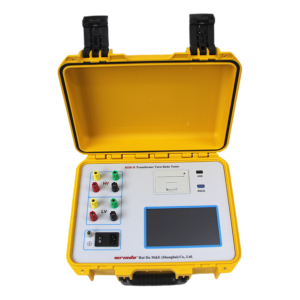
Click the image to know more about Transformer Turns Ratio Tester.
Top 7 Causes of Transformer Ratio Test Failures & Fixes
1. Shorted Winding Turns (Most Critical Fault)
What It Is: Insulation breakdown between adjacent wire turns in HV/LV windings creates a short, reducing the effective turns ratio and throwing off voltage measurements.
Signs of Failure: Large ratio deviation (>0.5%), often accompanied by overheating, oil discoloration, or humming noises.
Troubleshooting & Fix: Conduct a winding resistance test to confirm shorts; minor insulation damage may be repairable by certified technicians, but severe shorts require full winding replacement or transformer replacement.
2. Faulty Tap Changers (OLTC/Off-Circuit Taps)
What It Is: Worn contacts, misaligned taps, corroded connectors, or stuck tap changers disrupt the winding turn count, causing inconsistent ratio readings across tap positions.
Signs of Failure: Failures only at specific tap positions, erratic deviation percentages, or no reading at certain taps.
Troubleshooting & Fix: Clean tap contacts, lubricate moving parts, realign tap positions, or replace worn tap changer components; test all taps sequentially post-repair.
3. Incorrect Wiring & Polarity Reversal
What It Is: Mixing up HV/LV test leads, reversed polarity, or loose/corroded terminal connections are the most common human error causes of test failures.
Signs of Failure: Abnormally high ratio deviation, inverted readings, or intermittent test results.
Troubleshooting & Fix: Double-check lead labels (HV → H terminals, LV → X terminals), clean corroded terminals, tighten clamps, and reverse polarity if needed; re-run the test immediately after correcting wiring.
4. Residual Magnetism (Core Remagnetization)
What It Is: Leftover magnetic flux in the transformer core from previous testing or operation distorts voltage induction, skewing ratio measurements.
Signs of Failure: Small but consistent deviation (0.5–2%) that disappears after demagnetization.
Troubleshooting & Fix: Use a portable ratio tester with built-in demagnetization to degauss the core; repeat testing post-demagnetization for accurate readings.
5. Aged/Damaged Winding Insulation
What It Is: Over time, insulation deteriorates from heat, moisture, or oil contamination, leading to partial electrical leaks and unstable winding performance.
Signs of Failure: Gradually worsening ratio deviation, especially in older transformers (10+ years).
Troubleshooting & Fix: Perform an insulation resistance (Megger) test; dry out moisture-contaminated transformers, replace degraded insulation oil, or re-insulate windings if feasible.
6. Inaccurate/Uncalibrated Test Equipment
What It Is: Outdated, uncalibrated, or low-quality testers produce faulty measurements, leading to false “failure” readings.
Signs of Failure: Inconsistent results across multiple tests, deviation that doesn’t match physical transformer conditions.
Troubleshooting & Fix: Calibrate test equipment annually per IEC/IEEE standards, replace low-precision testers, and cross-verify readings with a secondary calibrated device.
7. Three-Phase Imbalance
What It Is: Uneven winding performance, phase-to-phase faults, or unbalanced load history causes inconsistent ratio readings across three phases.
Signs of Failure: One or two phases fail the ratio test, while the third phase passes within tolerance.
Troubleshooting & Fix: Test each phase individually to identify the faulty phase, repair phase-specific winding issues, and rebalance transformer loads post-fix.
How Wrindu Testers Help Prevent & Diagnose Test Failures
Wrindu’s IEC/IEEE-compliant portable ratio testers are built to minimize false failures and speed up troubleshooting, making them the top choice for field and factory diagnostics:
-
0.03% Ultra-High Accuracy: Eliminates equipment-related errors, ensuring failures are real—not tester-induced
-
One-Touch Demagnetization: Fixes residual magnetism issues in seconds, erasing the #1 cause of false failures
-
Automated Tap Sequencing: Tests all OLTC taps at once, quickly isolating faulty tap positions
-
Phase-by-Phase Testing: Pinpoints three-phase imbalance faults with clear, phase-specific readings
-
Polarity Alert System: Alerts users to reversed wiring before testing, preventing avoidable failures
-
Calibration Reminders: Built-in alerts ensure equipment stays calibrated and accurate
-
Data Logging & Deviation Tracking: Records historical readings to spot gradual insulation/tap wear early
FAQs: Transformer Ratio Test Failures (Long-Tail Q&A)
Q: Is a transformer ratio test failure always a serious fault?
A: No—many failures are false positives from easy fixes like reversed wiring, residual magnetism, or uncalibrated tools. Only large, consistent deviations signal critical winding or tap changer damage.
Q: How do I tell if a failure is from shorted turns or bad wiring?
A: Re-wire the tester correctly, demagnetize the core, and re-test. If the reading passes, it was a wiring error; if it still fails, it’s likely a winding or tap changer fault.
Q: What percentage deviation is a failed ratio test per IEC/IEEE standards?
A: Any deviation over ±0.5% from the nameplate turns ratio counts as a failure per IEC 60076-1 and IEEE C57.12.90 standards.
Q: Can residual magnetism cause a permanent ratio test failure?
A: No—residual magnetism only causes temporary false failures. Demagnetizing the core fully resolves this issue and restores accurate readings.
Q: How often should I calibrate my ratio tester to avoid false failures?
A: Calibrate annually per IEC/IEEE requirements, or after any drop, damage, or heavy field use to maintain accuracy.
Q: Can a faulty tap changer be repaired, or does it need full replacement?
A: Minor issues (dirty contacts, misalignment) are repairable; severely worn or broken tap changers require replacement to pass ratio testing.
Q: Why does my transformer fail ratio testing only at certain tap positions?
A: This is a classic sign of a faulty tap changer—only specific taps have worn contacts or alignment issues, not the entire winding.
Q: Can I still put a transformer into service if it fails a ratio test?
A: No—transformers with ratio deviations over ±0.5% risk grid instability, overheating, and catastrophic failure. Fix the issue and re-test for compliance before energizing.
Internal Link Note: Anchor text portable ratio tester links to Article 3 (2026 Portable Transformer Ratio Tester Buying Guide); core standard references link to the main IEC/IEEE standards article.
