

How OLTCs Guarantee the Backbone of Reliable Power Delivery?
To uphold reliable power delivery, transformers need dynamic tuning. OLTCs solve off-circuit tap changer flaws by enabling voltage adjustment without transformer shutdown.
To uphold the backbone of reliable power delivery, power transformers— the workhorses of voltage transformation—require dynamic tuning capabilities. In modern power grids marked by fluctuating industrial loads, intermittent renewable energy generation, long-haul transmission constraints, and strict grid code voltage mandates, static voltage regulation simply cannot meet operational demands. Power transformers serve as the critical bridge between power generation, transmission, and distribution, responsible for stepping voltage up or down to enable efficient, safe power transfer. Without real-time, adaptive tuning, these core grid components cannot counteract voltage sags, surges, and line losses—directly undermining the consistency and reliability of end-to-end power supply.
For decades, legacy off-circuit tap changers were the standard solution for basic voltage adjustment, but they carried a fatal flaw: full transformer shutdown is mandatory for any tap change. This meant grid operators had to halt power delivery, de-energize the transformer, and perform manual adjustments during scheduled or emergency outages. In an era where uninterrupted power is non-negotiable for businesses, healthcare facilities, data centers, and residential communities, this downtime translated to lost revenue, disrupted services, equipment stress, and non-compliance with regulatory voltage standards. This critical limitation left a massive gap in grid flexibility—until the widespread adoption of on-load tap changers (OLTCs).
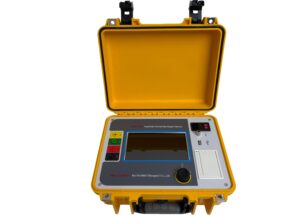
Click the image to know more about OLTC Analyzer.
This Is Where On-Load Tap Changers (OLTCs) Deliver Unparalleled Value
This is where on-load tap changers (OLTCs) deliver unparalleled value, solving the key limitation of legacy off-circuit tap changers that require full transformer shutdown for adjustments. As a precision electromechanical device integrated directly into power transformers, an OLTC enables seamless voltage regulation while the transformer remains fully energized and carrying rated load current. There is no power interruption, no forced outage, and no disruption to the flow of electricity to end users—making OLTCs the cornerstone of dynamic grid voltage control.
The operating mechanism of OLTCs is engineered for reliability and precision: during each tap change, load current is safely diverted through transition resistors or reactors to suppress arcing, and tap switching occurs within a sealed, insulated chamber. This controlled process adjusts the transformer’s winding turns ratio in small, discrete steps (typically 1.25% or 1.5% per tap), fine-tuning output voltage to maintain stable levels within a ±10% regulation range. Unlike rigid off-circuit tap changers, OLTCs respond in real time to grid fluctuations, whether triggered by peak load demand, sudden drops in renewable output, or voltage drops across long transmission lines.
Why OLTC-Driven Dynamic Tuning Is Irreplaceable for Modern Grids
1. Uninterrupted Power Delivery & Zero Downtime
The single greatest advantage of OLTCs is eliminating transformer shutdowns for voltage adjustments. For critical infrastructure such as high-voltage transmission substations, industrial manufacturing hubs, and grid-tie renewable stations, this means 24/7 power continuity. Utilities avoid costly unplanned outages, and end users receive consistent, high-quality power without interruptions.
2. Enhanced Grid Stability & Power Quality
Dynamic tuning via OLTCs keeps grid voltage within strict regulatory limits, reducing wear on transformers, switchgear, and connected electrical equipment. Stable voltage also cuts down on technical line losses, improving overall grid efficiency and supporting compliance with strict power quality standards.
3. Adaptability to Evolving Grid Demands
Modern grids are increasingly reliant on solar, wind, and other intermittent renewable energy sources, which create volatile voltage conditions. OLTCs provide the agility to balance these fluctuations, making them indispensable for renewable energy integration and smart grid modernization. Paired with automatic voltage regulators (AVR) and SCADA systems, OLTCs enable remote, automated tuning for even faster response times.
4. Long-Term Asset Reliability & Cost Savings
While OLTCs have a higher upfront cost than off-circuit tap changers, the return on investment is significant. Eliminating shutdown-related downtime, reducing equipment failure rates, and extending transformer lifespan drastically lower total ownership costs for utilities and grid operators over the asset’s lifecycle.
OLTC Maintenance: Protecting Dynamic Tuning Capabilities
To preserve the dynamic tuning performance that makes OLTCs indispensable, proactive maintenance is critical. Regular oil testing, contact inspection, and diagnostic testing (such as dynamic resistance measurement with specialized Wrindu OLTC testers help detect early signs of wear and prevent failures. Industry data shows OLTC-related issues account for nearly 30% of transformer failures, making targeted maintenance a key pillar of sustained reliable power delivery.
Final Takeaway
Reliable power delivery starts with flexible, responsive voltage control—and power transformers cannot fulfill their role as grid workhorses without dynamic tuning. On-load tap changers resolve the fatal flaw of legacy off-circuit designs by enabling live, interruption-free voltage adjustments, solidifying their status as a non-negotiable component in modern power transformers. For utilities, EPC contractors, and industrial operators, investing in OLTC-equipped transformers is not just a technical upgrade—it is a commitment to securing the backbone of reliable, resilient power delivery for years to come.
