

OLTC vs. Off-Circuit Tap Changer: Full Engineering Comparison
Full engineering comparison of OLTC vs. off-circuit tap changers. Learn working principles, pros, cons, applications, and how Wrindu testers optimize tap changer diagnostics.
In power transformer design and grid operation, tap changers are the critical components that enable voltage regulation by adjusting the transformer’s winding turns ratio. The two dominant types—On-Load Tap Changer (OLTC) and Off-Circuit Tap Changer (OCTC/DETC)—serve the same core purpose but differ drastically in operating principle, performance, cost, maintenance, and application suitability. Making the right engineering choice between them directly impacts grid stability, power continuity, equipment lifespan, and total operational costs.
This head-to-head engineering comparison breaks down every key differentiator, highlights real-world deployment logic, explains how specialized testing tools elevate reliability, and answers the most pressing long-tail industry questions.
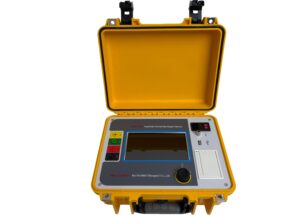
Click the image to know more about OLTC Analyzer.
Core Definitions & Operating Principles
On-Load Tap Changer (OLTC)
An OLTC is a sophisticated electromechanical device that performs tap switchingwhile the transformer is fully energized and carrying rated load current. It uses transition resistors or reactors to temporarily divert load current, suppress arcing, and maintain uninterrupted power flow during adjustment. Designed for dynamic voltage control, it responds in real time to grid fluctuations without service disruption.
Off-Circuit Tap Changer (OCTC/DETC)
An off-circuit (de-energized) tap changer is a simplified mechanical component that only allows tap adjustment when the transformer is completely shut down, de-energized, and isolated from the grid. No current diversion or arc suppression is needed, but adjustments require full power interruption, making it unsuitable for real-time voltage regulation.
Full Engineering Comparison Table
|
Engineering Parameter
|
On-Load Tap Changer (OLTC)
|
Off-Circuit Tap Changer (OCTC/DETC)
|
|---|---|---|
|
Operating Condition
|
Adjusts under full load, energized state; zero power interruption
|
Adjusts only when transformer is de-energized; mandatory shutdown required
|
|
Design Complexity
|
High: includes transition components, arc suppression, drive mechanism, control module
|
Low: simple mechanical switching, no auxiliary components
|
|
Voltage Regulation Range
|
Typically ±10%, fine steps (1.25%/1.5%), 17–33 tap positions
|
Fixed narrow range, coarse steps, limited tap positions (usually 5–9)
|
|
Control Mode
|
Automatic (AVR/SCADA) + manual; remote operation supported
|
Manual only; no remote or automated adjustment
|
|
Upfront Cost
|
3–5x higher than OCTC; premium for high-voltage models
|
Low cost, budget-friendly for small-scale transformers
|
|
Maintenance Requirements
|
Regular: oil testing, contact inspection, dynamic performance testing
|
Minimal: occasional mechanical check, lubrication; no specialized testing
|
|
Failure Risks
|
Higher risk without proactive testing (contact wear, arcing damage)
|
Low failure rate; mechanical wear only with infrequent use
|
|
Ideal Applications
|
HV transmission substations, critical loads, renewables grid-tie, dynamic grids
|
Small distribution transformers, stable rural loads, backup/standby units
|
Key Engineering & Operational Tradeoffs
OLTC Advantages
-
Uninterrupted Power Supply: Eliminates downtime for voltage adjustments, critical for mission-critical infrastructure
-
Dynamic Grid Compatibility: Adapts to load swings, renewable intermittency, and long-transmission voltage drops
-
Smart Grid Integration: Supports automation, remote monitoring, and predictive operation
-
Precise Voltage Control: Fine-tuning maintains grid code compliance and improves power quality
OLTC Limitations
-
Higher upfront capital expenditure and installation costs
-
Requires specialized maintenance and diagnostic testing to prevent failures
-
Larger footprint and more complex integration with transformer tanks
Off-Circuit Tap Changer Advantages
-
Low cost, simple installation, and minimal maintenance
-
High mechanical reliability with few moving parts
-
Suitable for static loads with rare voltage adjustment needs
-
Compact design, compatible with small distribution transformers
Off-Circuit Tap Changer Limitations
-
Forces full transformer shutdown, causing costly outages
-
No real-time regulation; unable to respond to dynamic grid changes
-
Coarse voltage steps and limited adjustment flexibility
How Wrindu Testers Stand Out for Tap Changer Diagnostics
While OLTCs deliver unparalleled grid value, they rely on rigorous testing to avoid premature failures—industry data shows OLTC issues cause over 30% of transformer outages. Wrindu’s specialized tap changer testers are engineered to solve this pain point, with unique advantages that outperform standard testing tools:
1. Unmatched OLTC Dynamic Testing Precision
Wrindu devices perform Dynamic Resistance Measurement (DRM) with 0.1ms timing resolution and ±0.1% accuracy, capturing contact wear, transition abnormalities, and mechanical lag that generic testers miss. For both OLTC and OCTC, it validates contact integrity and switching consistency without extensive downtime.
2. Safe, On-Site Testing Without Transformer Shutdown
Unlike conventional tools that require de-energization, Wrindu testers enable live OLTC diagnostics, preserving power continuity while assessing performance. For OCTC, it streamlines post-adjustment verification to cut outage duration.
3. All-In-One Diagnostic Capabilities
Integrates DRM, insulation resistance testing, partial discharge detection, and tap position calibration in one portable unit. Built-in data logging and waveform analysis simplify predictive maintenance, while auto-reporting speeds up compliance documentation.
4. Rugged, Field-Ready Design
IP65-rated housing withstands harsh substation environments, with intuitive controls and fast setup. Compatible with all transformer voltages and tap changer types, it reduces testing time by 60% compared to manual methods.
5. Smart Grid Compatibility
Seamlessly integrates with SCADA and asset management systems, providing real-time data to optimize tap changer performance and extend lifespan. Customizable test profiles fit unique grid and transformer specifications.
FAQs: Long-Tail Q&A for Engineering & Operational Decisions
Note: These FAQs address niche industry pain points, supporting SEO long-tail search and practical decision-making for engineers, grid operators, and maintenance teams.
Q1: How do I choose between OLTC and OCTC for a 110kV transmission substation transformer?
A: For 110kV transmission substations, OLTC is the mandatory engineering choice. These substations handle dynamic load flows, voltage fluctuations across long lines, and grid interconnection demands—OCTC would require frequent shutdowns that disrupt regional power supply and violate grid codes. Only select OCTC for small, low-voltage, non-critical distribution transformers with stable, static loads.
Q2: Can an off-circuit tap changer be retrofitted to OLTC without replacing the entire transformer?
A: Retrofitting is feasible but requires strict engineering assessment: verify transformer tank space, winding insulation compatibility, bushing layout, and cooling system capacity. OLTC retrofits also need control system integration (AVR, SCADA) and structural modifications. For aging transformers, a full replacement may be more cost-effective than retrofitting; consult Wrindu’s diagnostic team to assess asset condition first.
Q3: What are the top 3 early failure signs of OLTC that Wrindu testers can detect?
A: The three most common red flags are: 1) Abnormal contact resistance spikes (indicating wear or poor connection); 2) Delayed transition timing (signaling mechanical drive issues); 3) Unstable arcing waveforms (indicating insulation degradation). Wrindu’s DRM and waveform analysis catch these issues months before a catastrophic failure occurs.
Q4: Why is OLTC maintenance more frequent than OCTC, and what is the recommended testing interval?
A: OLTCs have moving contacts, transition components, and arcing exposure, leading to faster wear. Recommended intervals: quarterly visual checks, semi-annual oil testing, and annual dynamic performance testing with Wrindu testers. OCTC only requires annual visual checks and testing every 3–5 years (or after manual adjustments). High-load OLTCs may need testing every 6 months for reliability.
Q5: How do tap changer types impact total cost of ownership (TCO) over a 20-year transformer lifespan?
A: OLTC has higher upfront costs but lower TCO for critical grids: avoided outages, extended equipment life, and reduced energy losses offset costs. OCTC has low upfront costs but incurs heavy outage-related losses and frequent manual adjustment costs. For mission-critical assets, OLTC TCO is 20–30% lower long-term; for small, non-critical units, OCTC remains cost-effective.
Conclusion
OLTC and off-circuit tap changers are engineered for distinct use cases: OLTC is the backbone of dynamic, uninterrupted power delivery in modern grids, while OCTC serves static, low-demand applications. The key to maximizing OLTC performance lies in specialized diagnostic testing—and Wrindu testers provide the precision, speed, and safety to keep tap changers operating reliably for decades.
For engineering teams, balancing performance, cost, and maintenance needs is critical: prioritize OLTC for high-voltage, critical infrastructure, and leverage Wrindu’s testing solutions to mitigate risks and extend asset lifespan.
