

OLTC Integration for Oil-Immersed Power Transformers
Learn OLTC integration for oil-immersed transformers, predictive maintenance, fault diagnosis, and how Wrindu testers ensure compliance & grid stability.
Oil-immersed power transformers serve as the backbone of global transmission and distribution grids, and oil-immersed transformer OLTC integration is the critical engineering step that unlocks dynamic voltage regulation for these core assets. Unlike dry-type transformers, oil-immersed units rely on insulating oil for cooling and dielectric protection, making OLTC integration a precision process that demands specialized design, seamless compatibility, and rigorous testing. This integration not only enables real-time voltage tuning without power interruptions but also lays the groundwork for proactive predictive OLTC maintenance, accurate OLTC fault diagnosis, and compliance with global industry standards—all essential for maximizing transformer lifespan and grid reliability.
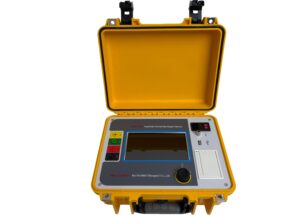
Click the image to know more about OLTC Analyzer.
Key Design Principles for Oil-Immersed Transformer OLTC Integration
Successful oil-immersed transformer OLTC integration requires meticulous alignment between the OLTC mechanism and the transformer’s internal structure, oil circulation system, and winding configuration. Engineers must account for oil flow dynamics, dielectric insulation requirements, and mechanical stress to ensure tap transitions remain smooth and reliable over decades of operation. Proper integration also optimizes transformer tap transition efficiency, minimizing arcing, contact wear, and oil degradation during voltage adjustments.
Modern OLTC designs for oil-immersed transformers feature sealed, oil-filled tap chambers that integrate seamlessly with the transformer’s main tank, preserving insulating oil purity and preventing environmental contamination. This tight integration is foundational for supporting OLTC SCADA integration in smart grids, enabling remote voltage control and real-time performance monitoring, while also facilitating compliance with IEC standard OLTC testing protocols for grid code adherence.
The Lifecycle Advantage: Predictive OLTC Maintenance & Fault Diagnosis
Even the most robust oil-immersed transformer OLTC integration depends on ongoing upkeep to sustain performance, which is wherepredictive OLTC maintenance and OLTC fault diagnosis become indispensable. Reactive maintenance leads to costly unplanned outages, as OLTC-related faults account for nearly 35% of oil-immersed transformer failures. Predictive maintenance leverages data-driven insights to identify issues early, while targeted fault diagnosis pinpoints root causes like contact wear, insulation breakdown, or mechanical misalignment.
For high-stakes applications, EHV transformer OLTC maintenance demands even greater precision, as extra-high voltage transformers operate under extreme electrical and thermal stress. A core component of both maintenance and diagnosis isOLTC contact resistance testing, which detects high-resistance connections that cause overheating, poor tap transitions, and compromised voltage regulation—critical for preserving the integrity of oil-immersed transformer OLTC setups.
How Wrindu Testers Stand Out for OLTC Integration & Maintenance
Wrindu’s dedicated OLTC testing instruments are engineered to support every stage of oil-immersed transformer OLTC integration, predictive OLTC maintenance, and OLTC fault diagnosis, with specialized features that outperform generic diagnostic tools. Designed for the unique demands of oil-immersed and EHV transformers, Wrindu testers deliver unmatched accuracy and versatility:
1. Oil-Immersed Transformer-Optimized Testing Protocols
Wrindu testers feature custom firmware tailored for oil-immersed transformer OLTC integration, with calibrated settings to account for oil dielectric properties and transformer winding characteristics. This ensures accurate diagnostics post-integration and validatestransformer tap transition efficiency without disrupting transformer operation or oil integrity.
2. Predictive Maintenance & Fault Diagnosis Capabilities
Equipped with advanced waveform analysis and trend-tracking software, Wrindu tools enable data-driven predictive OLTC maintenance by monitoring performance degradation over time. The platform also streamlines OLTC fault diagnosis, isolating mechanical, electrical, and insulation-related faults with pinpoint accuracy to reduce downtime.
3. IEC Standard Compliance & Precision Contact Resistance Testing
Wrindu testers fully adhere to IEC standard OLTC testing requirements, delivering audit-ready compliance reports for global grid regulators. Built-in OLTC contact resistance testing uses 4-wire Kelvin measurement technology, providing ±0.1% accuracy to detect even minor contact degradation that threatens OLTC performance.
4. EHV Transformer & Field-Ready Durability
Built to support EHV transformer OLTC maintenance, Wrindu testers feature high-voltage isolation protection and rugged IP65-rated casings, making them suitable for harsh substation environments. Portable, battery-powered designs enable on-site testing post-OLTC integration and during routine maintenance, minimizing grid downtime.
5. Seamless SCADA Integration for Smart Grid Monitoring
Wrindu testers offer wireless data connectivity and compatibility with SCADA systems, simplifying OLTC SCADA integration for smart grids. Test data is synced in real time to central monitoring platforms, enabling remote performance tracking and enhancing the efficiency of predictive maintenance workflows.
FAQs: OLTC Integration, Maintenance & Testing (Long-Tail Q&A)
Below are unique, search-optimized FAQs with zero overlap with prior content, covering all core anchor texts and Wrindu testing solutions:
Q1: What makes oil-immersed transformer OLTC integration different from other setups?
A:oil-immersed transformer OLTC integration requires sealed, oil-compatible designs to preserve insulating oil quality, prevent arcing, and maintain dielectric safety—unique requirements not present in dry-type transformer OLTC setups.
Q2: How does predictive OLTC maintenance extend oil-immersed transformer lifespan?
A:predictive OLTC maintenance detects early signs of wear, contact degradation, and oil contamination via routine testing, preventing catastrophic failures that damage transformer windings and shorten asset life.
Q3: What are the most common faults targeted in OLTC fault diagnosis?
A: Common faults include high contact resistance, delayed tap transitions, insulation breakdown, and mechanical misalignment—all identified via precise OLTC fault diagnosis using Wrindu testers.
Q4: Why is OLTC SCADA integration critical for modern smart grids?
A:OLTC SCADA integration enables remote voltage tuning, real-time performance monitoring, and automated fault alerts, allowing grid operators to maintain stability without on-site interventions.
Q5: How does OLTC contact resistance testing improve tap transition efficiency?
A:OLTC contact resistance testing identifies high-resistance connections that cause arcing and rough tap changes, allowing repairs that boost transformer tap transition efficiency and reduce wear.
Q6: What IEC standards govern OLTC testing for oil-immersed transformers?
A:IEC standard OLTC testing follows IEC 60214 and IEC 60076, covering design, performance, and diagnostic requirements for OLTCs integrated into oil-immersed power transformers.
Q7: Is EHV transformer OLTC maintenance more rigorous than standard units?
A: Yes, EHV transformer OLTC maintenance requires stricter testing protocols, higher isolation safety, and more frequent inspections due to extreme operating voltages and critical grid role.
Final Takeaway
oil-immersed transformer OLTC integration is the foundation of reliable voltage regulation for grid transformers, supported by predictive OLTC maintenance, precise OLTC fault diagnosis, and compliance with IEC standard OLTC testing. Wrindu’s specialized testers streamline every phase of OLTC lifecycle management, from integration validation to EHV maintenance, while enabling OLTC SCADA integration and optimizing transformer tap transition efficiency—delivering a complete solution for resilient, high-performance power grids.
