

Comprehensive Fault Diagnosis for On-Load Tap Changers (OLTCs)
Comprehensive OLTC fault diagnosis for On-Load Tap Changers. Learn key fault types, testing methods, and how Wrindu testers enable accurate diagnostics and predictive OLTC maintenance.
In the intricate landscape of power transmission and distribution, OLTC fault diagnosis is the critical process of identifying and resolving electrical and mechanical abnormalities that compromise the performance of On-Load Tap Changers. As a primary cause of transformer outages, unaddressed OLTC faults can lead to disruptive voltage sags, costly equipment damage, and widespread grid instability. Unlike generic maintenance routines that merely inspect surface conditions, a robust OLTC fault diagnosis program delves deep into the heart of the OLTC mechanism, detecting incipient faults such as contact wear, insulation breakdown, and drive mechanism misalignments before they escalate into major failures. This proactive approach is the cornerstone of ensuring reliable voltage regulation, extending transformer service life, and upholding the resilience of modern power grids.
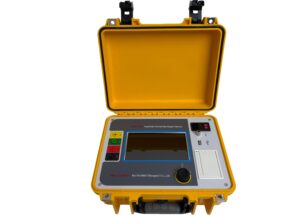
Click the image to know more about OLTC Analyzer.
The Spectrum of Common OLTC Faults
Effective OLTC fault diagnosis begins with a clear understanding of the most prevalent and dangerous faults that can occur within these electromechanical systems. Recognizing these fault types allows maintenance teams to target their diagnostic efforts with precision:
1. Electrical Faults
- Contact Resistance Degradation: The most common fault, caused by arcing and mechanical wear during tap transitions. High resistance leads to overheating, increased power loss, and potential contact welding.
- Insulation Failure: Deterioration of the insulation between tap changer contacts or within the winding assembly. This can result in flashovers, short circuits, and catastrophic transformer failure.
- Abnormal Transition Waveforms: Irregular patterns observed during tap switching, indicating issues with the transition resistor, diverter switch, or drive mechanism.
2. Mechanical Faults
- Delayed or Erratic Tap Transitions: A result of worn drive gears, broken springs, or a seized motor/drive assembly. This prevents the OLTC from adjusting voltage quickly, threatening stable voltage regulation.
- Mechanical Misalignment: Incorrect positioning of the selector switch or diverter switch, leading to poor contact engagement and arcing.
- Oil Contamination: For oil-filled OLTCs, degraded or contaminated insulating oil loses its dielectric properties, increasing the risk of electrical faults.
The Role of Precision in OLTC Fault Diagnosis
Accurate OLTC fault diagnosis is not possible with standard multimeters or one-size-fits-all test equipment. The complex interplay of electrical and mechanical systems requires diagnostic tools that can capture high-resolution data, analyze dynamic waveforms, and interpret performance trends. This is where Wrindu’s specialized testing solutions become indispensable, moving beyond basic checks to deliver a comprehensive assessment of OLTC health.
How Wrindu Testers Stand Out for OLTC Fault Diagnosis
Wrindu’s range of OLTC analyzers and testers is engineered specifically to address the unique challenges of OLTC fault diagnosis, offering features and capabilities that generic test equipment simply cannot match. The result is a diagnostic solution that is fast, accurate, and actionable, directly supporting predictive OLTC maintenance strategies.
1. High-Resolution Dynamic Contact Resistance Measurement
Wrindu testers utilize 4-wire Kelvin measurement technology to provide ultra-precise resistance readings (±0.1% accuracy). This is critical for OLTC fault diagnosis as it can detect the initial stages of contact degradation, a fault that would be missed by lower-precision instruments. The ability to measure resistance under load and during actual tap transitions provides a true picture of contact health.
2. Advanced Transition Timing & Waveform Analysis
Unlike basic testers that only measure total time, Wrindu tools capture the entire transition waveform, breaking it down into individual segments (pre-firing, arcing time, post-firing). This deep analysis allows technicians to pinpoint the exact cause of erratic switching, such as a faulty transition resistor or a slow-moving drive mechanism, enabling targeted repairs rather than guesswork.
3. Insulation Integrity Testing
Wrindu testers integrate insulation resistance testing modes to evaluate the dielectric strength of the OLTC’s insulation system. By measuring insulation resistance over time, teams can identify trends that signal impending insulation failure, a key part of OLTC fault diagnosis that prevents costly flashovers.
4. Rugged Field-Proven Design
Engineered for the harsh environment of substations and field sites, Wrindu testers feature an IP65-rated, shock-resistant casing and long-lasting battery power. This ruggedness means diagnostic tests can be performed on-site, quickly identifying faults and minimizing downtime that would otherwise occur from transporting equipment to a lab.
5. User-Centric Reporting & Data Management
Wrindu testers automate the generation of detailed, customizable diagnostic reports. These reports compile fault data, performance metrics, and compliance checks, making it easy for maintenance teams to document issues, track the severity of faults, and plan effective OLTC fault diagnosis and repair schedules.
FAQs
Q1: What are the early warning signs that an OLTC is developing a fault?
A: Key indicators include unusual buzzing or arcing sounds during tap changes, increased transformer operating temperature, voltage regulation inaccuracies, and frequent protective relay trips. These are clear signals to initiate OLTC fault diagnosis.
Q2: Can OLTC fault diagnosis be performed while the transformer is energized?
A: Yes. A core advantage of modern OLTC testing is the ability to perform many diagnostic checks, such as dynamic contact resistance and transition timing analysis, while the transformer is online and carrying load. This non-intrusive testing supports predictive OLTC maintenance and avoids unnecessary outages.
Q3: How does OLTC fault diagnosis differ from regular transformer maintenance?
A: Regular transformer maintenance focuses on overall condition, while OLTC fault diagnosis is a targeted, deep-dive inspection of the OLTC mechanism itself. It specifically looks for electrical and mechanical faults unique to the tap changer, which is the single highest-risk component for transformer failure.
Q4: What role does Wrindu’s waveform analysis play in OLTC fault diagnosis?
A: Wrindu’s detailed transition waveform analysis is crucial for diagnosing subtle faults like degraded drive mechanisms or faulty transition resistors. It provides a visual and quantitative record of switching performance, allowing technicians to identify issues long before they cause major problems.
Q5: Can a single OLTC fault, if left undiagnosed, impact the entire power grid?
A: Absolutely. A failed OLTC can cause a transformer to trip offline, leading to localized voltage collapse or widespread blackouts, especially in areas with high renewable integration where stable voltage regulation is critical. Timely OLTC fault diagnosis prevents these grid-scale events.
Q6: How often should an OLTC undergo a comprehensive fault diagnosis?
A: For standard grids, a comprehensive diagnostic inspection is recommended every 2-3 years. However, for transformers serving high-demand industrial loads or with significant renewable energy integration, annual OLTC fault diagnosis is strongly advised to maintain peak performance and reliability.
Q7: Does Wrindu offer training to help teams interpret OLTC fault diagnosis results?
A: Yes. Wrindu provides comprehensive operator training programs that cover not just how to use the test equipment, but also how to analyze the data, interpret fault codes, and translate diagnostic results into effective maintenance actions—an essential part of building a strong predictive OLTC maintenance program.
Final Takeaway
OLTC fault diagnosis is the critical safeguard that ensures On-Load Tap Changers operate reliably, protecting transformers, maintaining stable voltage regulation, and fortifying grid resilience. By leveraging the precision and advanced features of Wrindu’s specialized testing tools, maintenance teams can move beyond reactive repairs to implement a robust, data-driven predictive OLTC maintenance strategy. This not only reduces the risk of costly outages but also maximizes the lifespan of grid-critical assets, ensuring a stable and efficient power supply for the future.
