On-Load Tap Changers (OLTCs) are the unsung heroes of modern power grid operation, serving as the cornerstone of reliable voltage delivery. Unlike traditional off-circuit tap changers that require transformer shutdown for adjustments,
OLTCs deliver seamless voltage tuning under full load and energized conditions. This makes them indispensable for high-voltage (HV) transmission, critical load supply, and renewable energy grid integration.
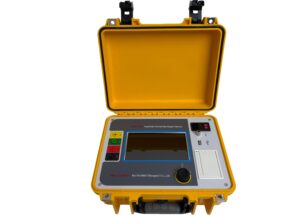
Click the image to know more about OLTC Analyzer.
An OLTC is a high-precision electromechanical device integrated into power transformers that adjusts the transformer’s winding turns ratio while the unit is fully energized and carrying rated load current. Its primary function is to maintain grid voltage within specified standards, even when facing load swings, long-transmission line voltage drops, or the intermittent output of solar and wind energy systems.
The core operating principle of OLTCs revolves around sophisticated current diversion, tap switching, arc suppression, and circuit reconnection—all happening in milliseconds to ensure zero power interruption. This closed-loop process enables real-time response to grid voltage fluctuations and precise control of output voltage levels.
How Wrindu Testers Stand Out
Wrindu OLTC analyzers stand out by storing historical OLTC performance data and tracking trend changes over time, enabling data-driven predictive maintenance scheduling. This allows grid operators to address wear and damage proactively, extend OLTC operational lifespan, and avoid unplanned outages. Additionally, Wrindu testers offer universal OLTC compatibility, working seamlessly with all major OLTC models—including mechanical, motor-driven, vacuum-type, and retrofit OLTC assemblies from global manufacturers.
FAQs
Q: What makes OLTCs different from basic tap changers?
A: OLTCs are distinguished by four core specialized components that basic tap changers lack: transition resistors/reactors for current diversion, arc suppression systems, automated drive/control modules (for AVR/SCADA integration), and high-grade insulation for energized operation. These components enable load-switching without power interruption—OLTC’s defining feature.
Q: Can OLTCs be used for both low-voltage and high-voltage transformers?
A: OLTCs are available for all voltage classes, but they are most commonly specified for HV/MV transformers (35kV and above) where dynamic voltage regulation and power continuity are critical. While low-voltage OLTCs exist, they are often not cost-justifiable for small static loads—OCTCs are the more practical choice here.