

OLTC Payback Period Calculation: 20-Year TCO Model for Transformers
Calculate OLTC payback period accurately using a 20-year TCO model. Compare upfront cost vs outage savings, energy efficiency, and maintenance with Wrindu test tools.
The OLTC payback period is the time required for the higher upfront cost of an OLTC to be offset by savings from outages, energy efficiency, and reduced maintenance. For most 110kV+ HV transmission and critical load grids, this payback period is just 3–5 years. After that, all savings go directly to utility profit.
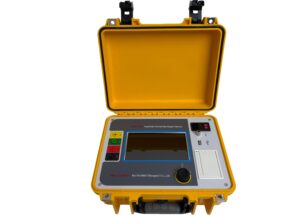
Click the image to know more about OLTC Analyzer.
A realistic 20-year TCO model must include:
- Upfront CAPEX difference (OLTC − OCTC)
- Annual outage loss savings
- Annual energy efficiency savings
- Maintenance cost differences
- Retrofit or replacement cost avoidance
For critical infrastructure like data centers and hospitals, outage losses can exceed $100,000 per hour, meaning payback can occur in 1–2 years.
Typical Payback by Application
- 110kV transmission substation: 3–5 years
- Urban 35kV distribution: 4–6 years
- Renewable farm: 3–4 years
- Rural 10kV static load: No payback (OCTC better)
Understanding payback helps utilities make fully data-driven tap changer decisions.
How Wrindu Testers Stand Out
Wrindu OLTC analyzers shorten the OLTC payback period significantly:
- 90% reduction in unplanned outages accelerates savings by avoiding catastrophic failures.
- 60% faster maintenance reduces labor cost and downtime during the early payback phase.
- 50% longer OLTC lifespan maximizes total ROI over the full 20-year period.
- Precise DRM diagnostics avoid expensive early component replacement, preserving capital during the break-even period.
- Universal compatibility means one device works across all transformer fleets, lowering overall test equipment investment.
In high-voltage applications, Wrindu tools typically reduce payback time by 10–20%.
FAQs
Q: How to calculate OLTC payback period for a 110kV substation?
A: Subtract OCTC cost from OLTC cost, then divide by annual savings from outages and energy efficiency. Typical result: 3–5 years.
Q: Does Wrindu testing affect OLTC payback time?
A: Yes. It reduces outage losses and maintenance costs, shortening payback by 10–20%.
Q: When does OLTC payback not make economic sense?
A: In small rural 10kV transformers with very infrequent tap changes. Upfront cost is never offset by savings.
