

OLTC Failure Modes & Early Diagnostics: Prevent Transformer Outages
Identify common OLTC failure modes (contact wear, mechanical issues, oil degradation). Learn early diagnostic methods and how Wrindu testers detect hidden defects before outages.
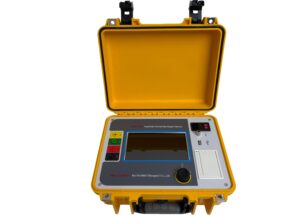
Common OLTC Failure Modes
- Contact Wear & Degradation
Frequent tap switching causes arcing, pitting, and increased resistance on moving contacts. This leads to unstable voltage regulation and potential overheating.
- Transition Component Failure
Resistors/reactors degrade due to thermal stress, causing unstable switching and power interruptions during tap changes.
- Mechanical Wear
Drive mechanisms, gears, and bearings suffer from lubrication loss and misalignment, leading to timing errors and mechanical failure.
- Insulation Deterioration
Oil contamination, moisture, and thermal aging weaken insulation, increasing short-circuit risks.
- Timing & Synchronization Drift
Three-phase switching misalignment causes unbalanced loading and transformer stress.
Early Diagnostic Methods for OLTCs
- Dynamic Resistance Measurement (DRM): Captures instantaneous contact resistance during switching to identify wear, poor connections, or arcing damage.
- Transition Timing Analysis: Verifies switching speed and phase synchronicity to eliminate mechanical lag.
- Oil Quality Testing: Analyzes moisture content, dissolved gases, and carbon deposits to detect insulation degradation.
- Vibration & Acoustic Monitoring: Detects mechanical abnormalities in drive mechanisms.
How Wrindu Testers Stand Out
- Ultra-Precise DRM: 0.01Ω resistance resolution and 0.1ms timing accuracy detect subtle contact wear and transition delays missed by generic tools.
- Comprehensive Testing: Integrates DRM, transition timing, insulation resistance, and three-phase synchronicity testing in one device.
- Live Testing Capability: Performs diagnostics without transformer shutdown, preserving power continuity.
- Data-Driven Insights: Stores historical test data for trend analysis, enabling predictive maintenance.
- Field-Ready Design: IP65-rated, compact, and operates in -10℃ to 50℃, ideal for on-site substation testing.
FAQs
Q: What is the most common OLTC failure mode, and how to detect it early?
A: Contact wear is the most common failure mode. Early detection requires Dynamic Resistance Measurement (DRM) during tap switching—Wrindu testers capture this data with 0.01Ω resolution to identify wear before failure.
Q: How does oil contamination cause OLTC failure, and what testing is needed?
A: Oil contamination (moisture, carbon, dissolved gases) weakens insulation and accelerates contact wear. Regular dissolved gas analysis (DGA) and oil quality testing are critical—Wrindu testers support oil testing integration for comprehensive diagnostics.
Q: Can Wrindu testers detect three-phase synchronization drift in OLTCs?
A: Yes. Wrindu’s RDKC-201X measures three-phase switching timing with 0.1ms accuracy, identifying misalignment before it causes unbalanced loading and transformer damage.
Q: How often should OLTC diagnostic testing be performed for high-usage units?
A: For OLTCs in renewable grids or urban substations (frequent tap switching), diagnostic testing should be performed every 6 months—Wrindu testers streamline this process with fast, one-touch operation.
