

OLTC Scheduled Maintenance Best Practices: Extend Lifespan and Reliability
Follow a structured OLTC maintenance schedule (monthly, quarterly, semi-annual, annual). Learn oil management, calibration, and how Wrindu testers optimize maintenance efficiency.
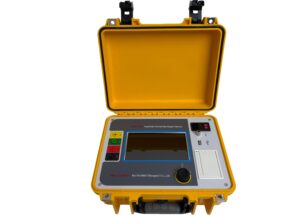
Structured OLTC Maintenance Schedule
- Monthly Visual Inspections
- Check for oil leaks, unusual noise, vibration, and loose wiring.
- Monitor tap operation smoothness and tap position indicator accuracy.
- Quarterly Mechanical Checks
- Lubricate drive mechanisms, inspect gears/bearings, and verify mechanical alignment.
- Test emergency stop and manual override functions.
- Semi-Annual Oil Quality Testing
- Test for moisture content, dissolved gases, carbon deposits, and acidity.
- Replace or filter contaminated oil promptly to prevent insulation degradation.
- Annual Comprehensive Diagnostic Testing
- Conduct full performance testing (DRM, transition timing, insulation resistance).
- Calibrate control systems (AVR, SCADA) and verify alarm functionality.
Key OLTC Maintenance Best Practices
- Oil Management: Use high-quality, oxidation-resistant insulating oil and install continuous filtration systems to remove contaminants.
- Control System Calibration: Calibrate Automatic Voltage Regulators (AVR) quarterly to ensure responsive, accurate tap switching.
- Genuine Spare Parts: Always use OEM-approved contacts, lubricants, and seals to maintain mechanical and electrical integrity.
- Team Training: Educate maintenance staff on manufacturer-specific OLTC operation and safety procedures (LOTO).
How Wrindu Testers Stand Out
- All-In-One Testing: Eliminates the need for multiple tools, reducing testing time by 60% compared to manual methods.
- Live Testing: Performs diagnostics without transformer shutdown, eliminating maintenance-related outages.
- Automated Reporting: Generates compliance-ready reports with built-in thermal printing, simplifying documentation.
- Predictive Data: Stores historical test data for trend analysis, enabling data-driven maintenance scheduling.
- User-Friendly Interface: 7-inch touchscreen and intuitive operation reduce training time for maintenance teams.
FAQs
Q: What is the optimal OLTC maintenance schedule for high-voltage transmission substations?
A: For 110kV+ transmission substations, follow a 6-month comprehensive diagnostic testing cycle (instead of annual) due to higher operational stress—Wrindu testers support this with fast, on-site testing.
Q: How often should OLTC oil be replaced, and what testing indicates replacement is needed?
A: Oil should be replaced every 5–8 years, or immediately if DGA detects abnormal acetylene/ethylene (arcing/overheating) or moisture content exceeds 50ppm—Wrindu testers integrate oil testing data for comprehensive analysis.
Q: Can Wrindu testers automate OLTC maintenance reporting?
A: Yes. Wrindu’s RDKC-201X generates automated, compliance-ready reports with built-in thermal printing and PC software integration, eliminating manual documentation and reducing administrative time.
Q: What are the consequences of skipping OLTC scheduled maintenance?
A: Skipping maintenance leads to accelerated contact wear, insulation degradation, and mechanical failure—resulting in unplanned outages, transformer damage, and 50% shorter OLTC lifespan.
