

OLTC Predictive Maintenance: Proactive Strategies for Grid Reliability
Transition from reactive to predictive OLTC maintenance. Learn condition-based monitoring, trend analysis, and how Wrindu testers enable data-driven reliability management.
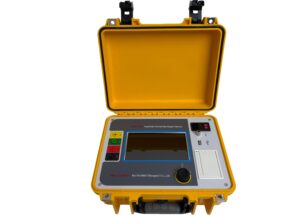
From Reactive to Predictive: The OLTC Maintenance Evolution
- Reactive Maintenance: Fixes failures after they occur—high cost, high downtime, and grid instability.
- Preventive Maintenance: Scheduled maintenance based on time—reduces failures but is inefficient.
- Predictive Maintenance: Data-driven maintenance based on actual OLTC condition—minimizes downtime, reduces costs, and maximizes lifespan.
Core OLTC Predictive Maintenance Strategies
- Condition-Based Monitoring (CBM)
- Use real-time data (contact resistance, transition timing, oil quality) to assess OLTC health.
- Adjust maintenance frequency based on actual condition, not arbitrary schedules.
- Trend Analysis
- Track historical test data to identify degradation patterns and predict failure timelines.
- Focus maintenance on components showing abnormal wear trends.
- Data Integration
- Integrate OLTC data with SCADA/asset management systems for centralized monitoring.
- Use AI/ML algorithms to analyze data and predict failures with high accuracy.
Key Predictive Maintenance Tools for OLTCs
- Dynamic Resistance Measurement (DRM): Captures contact wear trends over time.
- Transition Timing Analysis: Monitors mechanical degradation and synchronization drift.
- Oil Quality Sensors: Continuous monitoring of moisture, dissolved gases, and contamination.
- Vibration/Acoustic Sensors: Detects mechanical abnormalities in drive mechanisms.
How Wrindu Testers Stand Out
- High-Precision Data Capture: Delivers DRM and timing data with industry-leading accuracy, providing reliable inputs for trend analysis.
- Historical Data Storage: Stores up to 10,000 test records for long-term trend tracking and predictive modeling.
- PC Software Integration: Enables advanced data analysis, trend visualization, and predictive reporting.
- Live Condition Monitoring: Performs on-site diagnostics without shutdown, supporting real-time CBM.
- Universal Compatibility: Works with all major OLTC models, making it ideal for mixed transformer fleets.
FAQs
Q: What is the difference between preventive and predictive OLTC maintenance?
A: Preventive maintenance is time-based (scheduled regardless of condition), while predictive maintenance is data-based (maintenance triggered by abnormal condition trends)—Wrindu testers enable predictive maintenance by capturing accurate, trendable data.
Q: How does Wrindu’s OLTC analyzer support predictive trend analysis?
A: Wrindu’s RDKC-201X stores historical DRM, timing, and insulation data, and its PC software enables trend visualization and degradation pattern identification—allowing maintenance teams to predict failures months in advance.
Q: Can predictive maintenance reduce OLTC maintenance costs?
A: Yes. Predictive maintenance reduces unnecessary maintenance by 40–60% and eliminates unplanned outage costs—Wrindu testers drive these savings by enabling targeted, data-driven maintenance.
Q: What OLTC parameters are most critical for predictive trend analysis?
A: Contact resistance (DRM), transition timing, and three-phase synchronicity are the most critical—Wrindu testers measure these parameters with ultra-high precision for reliable trend analysis.
