

What Is Moisture Content in Transformer Oil and Why Should You Test It?
Learn how to measure moisture content in transformer oil, why it matters, and how Karl Fischer testing ensures accurate results. Improve insulation reliability with Wrindu testers.
After understanding boiling point, freezing point, and BDV (Breakdown Voltage), another critical factor in oil performance is moisture content. Even a small amount of water in transformer oil can significantly reduce insulation strength and lead to equipment failure.
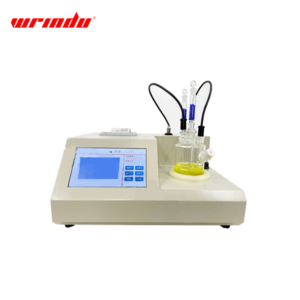
Click the image to know more about Wrindu Micro Water Tester.
What Is Moisture Content in Oil?
Moisture content refers to the amount of dissolved water present in insulating oil, usually measured in ppm (parts per million).
In simple terms:
- Low moisture = Good insulation performance ✅
- High moisture = High risk of failure ❌
👉 Transformer oil should always be kept as dry as possible.
Why Is Moisture Dangerous for Transformer Oil?
Water contamination has several negative effects:
- Reduces dielectric strength (BDV)
- Accelerates oil aging and oxidation
- Damages solid insulation (paper/pressboard)
- Increases risk of partial discharge and breakdown
👉 Moisture is one of the main causes of transformer insulation failure.
Where Does Moisture Come From?
Moisture can enter transformer oil from:
- Ambient humidity (air exposure) 🌫️
- Oil aging and chemical reactions
- Leaks or poor sealing systems
- Wet insulation materials inside the transformer
👉 Over time, even well-sealed systems can accumulate moisture.
How Is Moisture Content Tested?
The most accurate method is the Karl Fischer titration test.
Basic Testing Process:
- Take an oil sample carefully (avoid contamination)
- Inject the sample into the testing device
- The instrument automatically measures water content
- Results are displayed in ppm
👉 This method provides high precision and reliable results.
What Is an Acceptable Moisture Level?
Typical guidelines:
- New transformer oil: < 10 ppm
- In-service oil: 10–30 ppm (acceptable range)
- Above 50 ppm: Requires immediate attention ⚠️
👉 Limits may vary depending on voltage level and standards.
How Wrindu Moisture Testers Stand Out?
Wrindu moisture testers are designed for accurate oil condition monitoring:
- High Sensitivity Detection: Measures even trace moisture levels
- Fast Testing Speed: Quick results for field use
- Stable Performance: Reliable in different environments
- User-Friendly Interface: Easy for engineers to operate
👉 This helps prevent insulation failure by detecting problems early.
How to Reduce Moisture in Transformer Oil?
If moisture is too high, solutions include:
- Oil filtration and dehydration systems
- Vacuum drying processes
- Improving transformer sealing
- Regular monitoring and maintenance
FAQs About Moisture in Transformer Oil
Q1: How does moisture affect BDV?
A: Moisture significantly lowers BDV, making the oil more prone to electrical breakdown.
Q2: Can moisture be completely removed?
A: It can be reduced to very low levels, but continuous monitoring is still required.
Q3: How often should moisture be tested?
A: Typically every 6–12 months or more frequently in critical systems.
Q4: Is moisture testing necessary for new oil?
A: Yes. Even new oil can absorb moisture during storage and handling.
Q5: What is the best method for moisture testing?
A: Karl Fischer titration is the most accurate and widely used method.
