

What Is Dielectric Loss (Tan Delta) in Transformer Oil?
Learn what Tan Delta (dielectric loss) is in transformer oil, how it is tested, and why it matters. Improve insulation reliability with Wrindu Tan Delta testers.
After understanding boiling point, freezing point, BDV, and moisture content, another key parameter for evaluating oil quality is dielectric loss, also known as Tan Delta.
This test helps determine how much electrical energy is lost as heat within the insulating oil—an important indicator of oil aging and contamination.
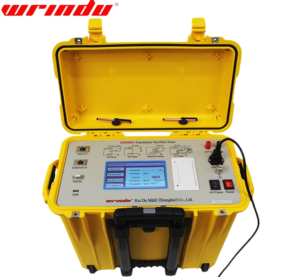
Click the image to know more about Wrindu Transformer Tan Delta Tester.
What Is Tan Delta in Simple Terms?
Tan Delta (or dissipation factor) measures the efficiency of insulation.
- Low Tan Delta = Good insulation quality ✅
- High Tan Delta = Energy loss and insulation deterioration ❌
👉 It shows how “clean” and “stable” the oil is under electrical stress.
Why Is Dielectric Loss Important?
In transformers and high-voltage equipment:
- Insulation should store electrical energy efficiently
- Poor insulation will dissipate energy as heat
If Tan Delta is too high:
- Oil heats up faster
- Insulation ages more quickly
- Risk of failure increases
👉 This makes Tan Delta a key parameter for long-term reliability.
What Causes High Tan Delta Values?
Several factors can increase dielectric loss:
- Moisture contamination 💧
- Oxidation and oil aging
- Presence of impurities or particles
- High operating temperatures
👉 These factors often develop gradually, making early testing essential.
How Is Tan Delta Tested?
Tan Delta is measured using a dielectric loss tester:
Basic Testing Steps:
- Place the oil sample in a test cell
- Apply an AC voltage
- Measure the phase difference between voltage and current
- Calculate the loss factor (Tan Delta)
👉 The result reflects how much energy is lost inside the oil.
What Is an Acceptable Tan Delta Value?
Typical reference values:
- New transformer oil: ≤ 0.001
- In-service oil: ≤ 0.005 (depending on standards)
👉 Higher values indicate contamination or aging and require attention.
How Wrindu Tan Delta Testers Stand Out?
Wrindu dielectric loss testers provide accurate and reliable measurements:
- High Measurement Accuracy: Detects small changes in insulation quality
- Stable Output Signal: Ensures consistent test conditions
- Automated Operation: Reduces human error
- Wide Application: Suitable for transformer oil and other insulating liquids
👉 This helps engineers monitor oil aging and plan maintenance effectively.
When Should You Perform Tan Delta Testing?
Recommended scenarios:
- During commissioning of new equipment
- As part of routine maintenance
- When BDV or moisture results are abnormal
- For aging transformers in long-term operation
FAQs About Tan Delta Testing
Q1: Is Tan Delta testing better than BDV testing?
A: They serve different purposes. BDV measures breakdown strength, while Tan Delta evaluates insulation quality and losses.
Q2: Can Tan Delta detect early oil aging?
A: Yes. It is very sensitive to early contamination and oxidation.
Q3: Does moisture affect Tan Delta?
A: Yes. Even small amounts of moisture can significantly increase Tan Delta values.
Q4: What happens if Tan Delta is too high?
A: It indicates poor insulation, which may lead to overheating and failure.
Q5: Should Tan Delta be tested regularly?
A: Yes. Regular testing helps detect problems early and extend equipment life.
👉 Next Step:
For a complete transformer oil analysis, combine Tan Delta, BDV, moisture content, and acidity testing to ensure maximum reliability and safety.
