

What Is the Boiling Point of Different Types of Oil?
Learn the boiling and freezing points of different oils, including edible oil, diesel, and gasoline. Understand temperature ranges, safety impacts, and how Wrindu oil testers ensure accurate analysis for industrial and power applications.
The boiling point of oil varies significantly depending on its composition and intended application. Understanding these values is essential for ensuring safety, maintaining equipment performance, and preventing chemical degradation.
Edible Oils
Most edible oils, such as soybean oil, palm oil, and olive oil, have boiling points generally above 200°C. However, in practical use, these oils begin to degrade before reaching their true boiling point.
- When oil temperatures exceed 250°C, harmful compounds such as aldehydes (e.g., acrolein) can form.
- These substances not only affect taste and quality but may also pose serious health risks, including long-term carcinogenic effects.
👉 This is why cooking oils are typically used below their smoke point rather than their boiling point.
Fuel Oils (Gasoline & Diesel)
- Gasoline (Petrol):
Instead of a single boiling point, gasoline has a distillation range of 30°C to 205°C, reflecting its mixture of hydrocarbons. - Diesel Fuel:
Diesel also has a boiling range rather than a fixed point:- Light diesel: 180°C to 370°C
- Heavy diesel: 350°C to 410°C
These ranges are critical for combustion efficiency, engine performance, and emissions control.
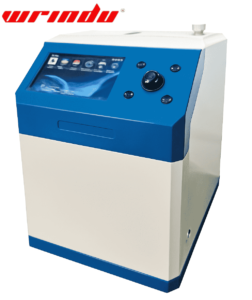
Click the image to know more about Wrindu Automatic Pour Point Freezing Point Tester.
What Is the Freezing Point of Different Oils?
The freezing point determines how oil behaves in low-temperature environments, especially in storage, transportation, and cold-region applications.
Edible Oils
- Palm oil, olive oil, peanut oil: around 5°C
- Soybean oil: approximately -8°C
- Blended oils: typically 2°C to 13°C, depending on composition
👉 Oils with higher saturated fat content (like palm oil) tend to solidify at higher temperatures.
Fuel Oils
- Gasoline: about -75°C
- Ethanol: approximately -117.3°C
Diesel Fuel (Condensation Point)
Diesel fuel does not use the term “freezing point.” Instead, it is characterized by its condensation point (or cloud point), which indicates when wax crystals begin to form.
Common diesel grades and their condensation points:
- 10# diesel: 12°C
- 5# diesel: 8°C
- 0# diesel: 4°C
- -20# diesel: -14°C
- -35# diesel: -29°C
- -50# diesel: -44°C
👉 Selecting the correct diesel grade is critical in cold climates to avoid fuel line blockage and engine failure.
Why Are Boiling and Freezing Points Important in Industrial Applications?
Understanding oil temperature characteristics is essential in industries such as power systems, petrochemicals, and food processing.
- Safety: Prevent overheating and hazardous chemical formation
- Performance: Ensure proper lubrication, insulation, and combustion
- Reliability: Avoid system failures caused by solidification or degradation
- Maintenance: Support predictive diagnostics and oil condition monitoring
For example, in transformers, oil must remain stable across a wide temperature range to maintain insulation integrity and cooling efficiency.
How Wrindu Testers Stand Out in Oil Analysis?
Wrindu provides advanced oil testing equipment designed to deliver accurate and reliable temperature-related measurements, helping industries optimize performance and safety.
Key Advantages:
- High Precision Measurement
Accurately determines critical parameters such as pour point, freezing point, and thermal behavior. - Automated Testing Process
Reduces human error and improves repeatability in laboratory and field conditions. - Wide Application Range
Suitable for transformer oil, lubricating oil, fuel oil, and edible oil testing. - User-Friendly Interface
Simplifies operation for both technicians and engineers. - Reliable for Preventive Maintenance
Helps detect early signs of oil degradation, supporting long-term asset management.
👉 Wrindu testers are particularly valuable for utilities and industrial operators aiming to reduce downtime and improve operational efficiency.
FAQs
Q1: What is the difference between boiling point and smoke point of oil?
A: The boiling point is when oil turns into vapor, while the smoke point is when it begins to break down and produce visible smoke. In practice, the smoke point is more important for cooking and industrial use.
Q2: Why does diesel use “condensation point” instead of freezing point?
A: Diesel contains wax components that begin to crystallize before fully freezing. The condensation point indicates when these crystals form and start affecting fuel flow.
Q3: How does temperature affect transformer oil performance?
A: High temperatures accelerate oxidation and reduce insulation strength, while low temperatures increase viscosity and may affect cooling efficiency.
Q4: What happens if oil is used beyond its safe temperature range?
A: It can degrade chemically, lose its functional properties, and produce harmful or damaging byproducts, leading to equipment failure or health risks.
Q5: How can I accurately measure the freezing point of industrial oil?
A: Using specialized equipment like automated pour point and freezing point testers ensures precise and repeatable results, especially for quality control and maintenance.
Q6: Which oil is best for low-temperature environments?
A: Oils with lower freezing or pour points, such as synthetic oils or specially formulated diesel grades (e.g., -35# or -50#), are ideal for cold climates.
