

What Is Wax Crystal Formation Mechanism in Insulating Oils
Explore the wax crystal formation mechanism in insulating oils, including how crystallization occurs, its impact on transformer performance, and key factors influencing low-temperature behavior. Learn how to control wax formation and improve oil reliability in power systems.
Wax crystal formation in insulating oils is a critical phenomenon that directly affects the low-temperature performance, fluidity, and reliability of power transformers and electrical equipment. When temperatures drop, dissolved wax components in oil begin to crystallize, which can lead to increased viscosity, reduced circulation, and even operational risks in extreme environments.
Understanding how wax crystals form—and how to control them—is essential for ensuring stable transformer performance, especially in cold-climate regions.
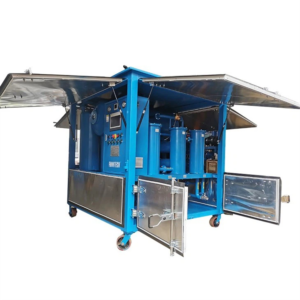
Click the image to know more about High Efficiency Vacuum Pump Oil Filter.
What Is Wax Crystal Formation in Insulating Oils?
Wax crystal formation refers to the process where long-chain hydrocarbons in insulating oil solidify into crystalline structures as temperature decreases. These crystals can grow, aggregate, and eventually form a network that restricts oil movement.
In transformer applications, this phenomenon is especially important because insulating oil must remain fluid to ensure both heat dissipation and dielectric stability.
Why Do Wax Crystals Form at Low Temperatures?
Wax crystals form due to the natural composition of mineral-based insulating oils. These oils contain paraffinic hydrocarbons that behave differently under temperature changes.
As temperature drops:
- Solubility of wax components decreases
- Molecules lose kinetic energy
- Paraffin chains align and solidify
- Nucleation sites trigger crystal growth
The result is a gradual transition from a fully liquid state to a semi-solid or gel-like structure.
How Does the Wax Crystal Formation Mechanism Work?
The formation process typically follows three stages:
1. Nucleation Stage
Small wax molecules begin to cluster together when thermal energy is insufficient to keep them dissolved.
2. Crystal Growth Stage
These clusters grow into visible wax crystals, forming plate-like or needle-like structures.
3. Network Formation Stage
Crystals interlock, creating a three-dimensional network that traps oil and significantly reduces flowability.
This mechanism explains why insulating oil can suddenly lose mobility once a critical temperature threshold is reached.
How Does Wax Formation Affect Transformer Performance?
Wax crystal formation can impact transformer operation in several ways:
- Increased oil viscosity reduces circulation efficiency
- Poor heat dissipation leads to thermal stress
- Blocked oil channels affect cooling systems
- Reduced dielectric performance under extreme conditions
- Risk of partial discharge in severe cases
These effects are especially critical in outdoor substations exposed to seasonal temperature drops.
What Factors Influence Wax Crystal Formation?
Several variables determine how easily wax crystals form:
- Oil composition: Paraffinic oils are more prone than naphthenic oils
- Cooling rate: Slow cooling encourages larger crystal growth
- Impurities: Particles act as nucleation centers
- Additives: Pour point depressants can delay crystallization
- Thermal history: Repeated cooling cycles change crystal structure
Understanding these factors helps in selecting or modifying insulating oils for specific environments.
How Can Wax Crystal Formation Be Controlled or Reduced?
Industry approaches to controlling wax formation include:
- Using low-pour-point base oils
- Adding pour point depressants (PPDs)
- Improving refining processes to remove waxy fractions
- Regular oil testing and condition monitoring
- Using advanced laboratory analysis to predict crystallization behavior
These methods help ensure that insulating oil remains operational even in sub-zero environments.
How Wrindu Testers Stand Out
Accurate analysis of wax crystal formation requires precise low-temperature testing and reliable measurement systems. This is where advanced testing equipment becomes essential.
Wrindu testers stand out in insulating oil analysis by providing:
- High-precision temperature control for pour point and freezing point evaluation
- Automated detection of flow cessation and crystal formation behavior
- Stable performance in low-temperature simulation environments
- Improved repeatability for laboratory and field correlation
- User-friendly operation designed for transformer oil testing workflows
By delivering consistent and accurate data, Wrindu testing systems help engineers better understand wax crystallization behavior and optimize oil selection for cold-climate applications.
FAQs: Wax Crystal Formation in Insulating Oils
Q1: What temperature does wax crystal formation usually start?
Wax crystallization typically begins near the oil’s cloud point, which varies depending on composition but often occurs above the pour point.
Q2: Is wax formation reversible in insulating oils?
Yes. When temperature increases, wax crystals dissolve back into the oil, restoring fluidity—unless long-term structural changes have occurred.
Q3: What is the difference between cloud point and pour point?
Cloud point is when wax crystals first become visible, while pour point is when oil stops flowing completely.
Q4: Can additives completely prevent wax formation?
No, but additives like pour point depressants can significantly delay crystal formation and reduce its impact.
Q5: Why is wax formation more critical in transformers than in fuels?
Because transformer oil must continuously circulate for cooling and insulation, even partial flow restriction can affect electrical reliability.
Q6: How is wax crystal behavior tested in laboratories?
It is typically evaluated using controlled cooling tests that measure cloud point, pour point, and flow characteristics under standardized conditions.
