

What Is Impact of Moisture on Oil Performance at Low Temperatures
Discover how moisture affects insulating oil performance at low temperatures, including its impact on dielectric strength, viscosity, and transformer reliability. Learn key causes of moisture contamination, long-term risks, and effective monitoring and testing methods for power systems.
Moisture contamination is one of the most critical factors affecting the performance of insulating oils, especially under low-temperature conditions. In power transformers and high-voltage equipment, even small amounts of water can significantly degrade dielectric strength, accelerate aging, and worsen low-temperature fluidity issues.
Understanding how moisture interacts with insulating oil at low temperatures is essential for ensuring long-term reliability and operational safety.
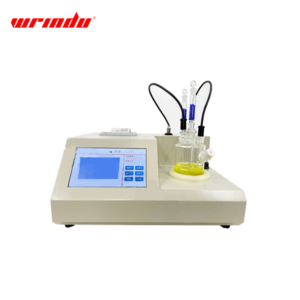
Click the image to know more about Wrindu Micro Water Tester.
What Happens When Moisture Enters Insulating Oil?
Moisture can enter insulating oil through:
- Breathing of transformer tanks due to temperature changes
- Seal aging and leakage
- Improper handling during maintenance
- Degradation of cellulose insulation materials
Once inside the oil, water may exist in three forms:
- Dissolved moisture
- Emulsified water
- Free water droplets
Each form behaves differently and becomes more problematic as temperature decreases.
Why Is Moisture More Dangerous at Low Temperatures?
At low temperatures, the solubility of water in oil decreases significantly. This leads to:
- Water separating from dissolved state
- Formation of micro-droplets
- Increased risk of ice crystal formation in extreme cold
- Localized insulation weakness
These effects can severely impact transformer safety during winter or cold-climate operation.
How Does Moisture Affect Oil Dielectric Performance?
Moisture is one of the strongest factors reducing dielectric strength in insulating oil.
E = \frac{V}{d}
Even small water contamination can:
- Lower breakdown voltage (V)
- Increase risk of partial discharge
- Create conductive paths under high electric fields
- Accelerate insulation aging
As water content increases, the oil’s ability to withstand electrical stress rapidly declines.
How Does Moisture Influence Low-Temperature Oil Flow Behavior?
Moisture affects low-temperature performance in multiple ways:
- Promotes ice crystal formation
- Increases viscosity when water separates
- Disturbs wax crystal structure in paraffinic oils
- Causes sludge formation under repeated freeze-thaw cycles
These changes can restrict oil circulation and reduce cooling efficiency in transformers.
What Are the Long-Term Effects of Moisture in Transformer Oil?
Long-term moisture contamination leads to:
- Accelerated oxidation of oil
- Breakdown of cellulose insulation (paper aging)
- Formation of acids and sludge
- Reduced transformer lifespan
- Increased risk of insulation failure
Over time, even moderate moisture levels can cause irreversible damage.
How Can Moisture in Insulating Oil Be Controlled?
Effective moisture control strategies include:
- Vacuum dehydration during maintenance
- Use of silica gel breathers
- Regular oil filtration and purification
- Sealed transformer design improvements
- Continuous moisture monitoring systems
Early detection is critical to preventing severe degradation.
How Wrindu Testers Stand Out
Accurate moisture analysis at low temperatures requires stable and precise testing equipment.
Wrindu testers stand out because they provide:
- High-precision detection of trace moisture levels in insulating oil
- Stable performance under low-temperature testing environments
- Automated analysis of oil condition parameters (including moisture-related behavior)
- Reliable repeatability for laboratory and field correlation
- Fast and efficient testing for transformer maintenance decisions
With advanced measurement capability, Wrindu testers help engineers detect moisture-related risks early and improve transformer reliability under harsh environmental conditions.
FAQs: Impact of Moisture on Oil Performance at Low Temperatures
Q1: Why does moisture become more harmful in cold environments?
Because water solubility in oil decreases at low temperatures, leading to free water and ice formation that weakens insulation.
Q2: What is the safe moisture level in transformer oil?
Typically, it is kept below 20–30 ppm depending on voltage class and transformer design, though stricter limits may apply for high-voltage systems.
Q3: Can moisture be completely removed from insulating oil?
It can be significantly reduced using vacuum dehydration and filtration, but continuous monitoring is required to prevent re-contamination.
Q4: How does moisture affect oil breakdown voltage?
Even small amounts of water can drastically reduce breakdown voltage by creating conductive paths and increasing electrical stress concentration.
Q5: What is the relationship between moisture and oil aging?
Moisture accelerates oxidation reactions, which leads to acid formation, sludge buildup, and faster insulation deterioration.
Q6: How is moisture in oil measured?
It is commonly measured using Karl Fischer titration or advanced online/offline moisture analyzers designed for insulating oil systems.
