

How to Evaluate Generator Performance Before Final Selection
Evaluate self-excited & separately excited generators with key tests: voltage regulation, load, insulation & excitation response. Ensure stability with Wrindu No-load & Load Loss Tester.
Choosing between self-excited and separately excited generators is only the first step. To ensure the generator truly meets your application needs, performance evaluation through testing is essential.
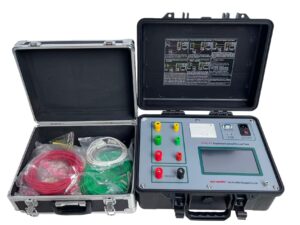
Click the picture to know more about Wrindu No load and load loss Tester.
Why Is Pre-Selection Testing Important?
Even if a generator meets specifications on paper, real-world conditions may differ.
Testing helps you:
- Verify actual voltage stability
- Confirm load handling capability
- Detect hidden faults before installation
- Avoid costly system mismatches
👉 In short, testing turns assumptions into measurable data.
What Key Tests Should Be Performed Before Choosing a Generator?
1. Voltage Regulation Test
This test checks how well the generator maintains voltage under varying loads.
- Self-excited: More voltage fluctuation
- Separately excited: Better voltage control
👉 Critical for sensitive equipment and automation systems.
2. Load Test (Full Load & Step Load)
A load test evaluates how the generator performs under real working conditions.
- Apply gradual and sudden loads
- Measure voltage drop and recovery time
👉 Helps identify:
- Weak excitation response
- Poor dynamic performance
3. Field Winding Resistance Test
This test ensures the excitation system is healthy.
- Detects shorted turns or poor connections
- Confirms proper current flow in the field circuit
👉 Essential for long-term reliability.
4. Insulation Resistance Test
Insulation quality directly affects generator safety and lifespan.
- Identifies moisture, aging, or contamination
- Prevents unexpected breakdowns
👉 A must for industrial and outdoor applications.
5. Excitation Response Test
This evaluates how quickly the generator reacts to load changes.
- Faster response = better stability
- Slower response = risk of voltage dips
👉 Especially important for:
- EV systems
- Railway applications
- Renewable energy systems
How Do Real Conditions Affect Generator Performance?
In practice, generators operate under dynamic conditions:
- Temperature variations
- Load fluctuations
- Environmental factors (humidity, dust)
👉 A generator that performs well in testing is more likely to remain stable in real applications.
How Do Self-Excited and Separately Excited Generators Perform in Testing?
Self-Excited Generators
- Slower response to load changes
- Higher voltage drop under full load
- Simpler testing process
Separately Excited Generators
- Faster and more precise response
- Excellent voltage stability
- More complex but more accurate evaluation
👉 Testing clearly highlights the performance gap between the two types.
What Instruments Are Needed for Accurate Evaluation?
To perform reliable testing, you need:
- Voltage and current meters
- Load bank
- Insulation resistance tester
- DC resistance tester
- Data recording system
👉 Advanced testing tools provide higher accuracy and faster results.
How Wrindu Testers Stand Out
Wrindu testing solutions are designed to support accurate generator evaluation before selection.
Key advantages include:
- High-precision measurement for voltage, current, and resistance
- Fast response analysis for excitation systems
- Integrated multi-function testing (load, insulation, resistance)
- Real-time data recording and trend analysis
- Portable and rugged design for field and industrial use
Compared to Standard Market Instruments:
| Feature | Basic Tools | Conventional Testers | Wrindu Testers |
|---|---|---|---|
| Accuracy | Low | Medium | High |
| Response Speed | Slow | Moderate | Fast |
| Multi-function | No | Limited | Integrated |
| Data Analysis | Manual | Partial | Real-time |
| Suitability | Simple checks | General testing | Professional evaluation |
👉 Wrindu testers provide more reliable data, helping engineers make better decisions.
What Are Common Mistakes During Testing?
Avoid these errors:
- ❌ Skipping full-load testing
- ❌ Ignoring temperature effects
- ❌ Using low-accuracy instruments
- ❌ Not recording test data
👉 These mistakes can lead to wrong generator selection.
How to Make a Final Decision Based on Test Results?
After testing, compare results with your requirements:
- Need stable voltage? → Choose separately excited
- Need cost efficiency? → Choose self-excited
- Need fast dynamic response? → Choose separately excited
- Need simple operation? → Choose self-excited
👉 Always base your decision on measured performance, not assumptions.
FAQs (Q&A Format)
Q1: Why is testing necessary before selecting a generator?
A: Testing ensures the generator meets real performance requirements and avoids future issues.
Q2: Which test is most important?
A: Voltage regulation and load testing are the most critical for performance evaluation.
Q3: Can I skip insulation testing?
A: No, insulation testing is essential for safety and long-term reliability.
Q4: How do I compare two generators effectively?
A: Use the same test conditions and compare voltage stability, response time, and efficiency.
Q5: Are advanced testers really necessary?
A: Yes, they provide more accurate data and help avoid costly selection mistakes.
Q6: How do Wrindu testers improve decision-making?
A: They deliver precise, real-time data that allows engineers to confidently select the best generator.
Conclusion
Selecting the right dc generator is not just about understanding specifications—it requires practical performance validation. By conducting key tests and using advanced tools like Wrindu testers, you can ensure your final choice delivers stability, efficiency, and long-term reliability.
👉 In modern power systems, data-driven selection is the smartest approach.
