

Purpose of Contact Resistance Testing
Learn the purpose of contact resistance testing, why loop resistance measurement is important, common testing applications, causes of high contact resistance, and FAQs for circuit breakers, switchgear, busbars, and cable connections.
Contact resistance testing is used to check the quality and condition of electrical connections in power equipment. Over time, the contact surface may become oxidized, loose, dirty, or worn out. These problems increase the contact resistance and reduce the efficiency of current flow.
When high current passes through a poor connection, heat is generated at the contact point. The higher temperature accelerates oxidation and further increases the resistance. If not detected in time, this can lead to overheating, equipment damage, power failures, or even serious electrical accidents.
Regular contact resistance testing helps engineers identify hidden defects early and ensure safe and reliable operation of electrical systems.
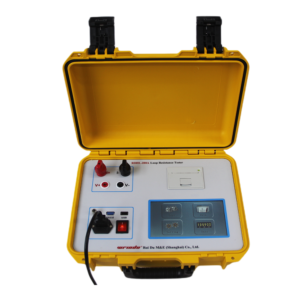
Click the image to know more about Wrindu Loop Resistance Tester.
Why Is Contact Resistance Testing Important?
The main purpose of loop resistance or contact resistance testing is to:
- Measure the resistance of conductive connections in a closed circuit
- Check whether the contacts are clean and tightly connected
- Detect oxidation, corrosion, or abnormal heating points
- Identify poor contact conditions or internal defects
- Ensure stable current transmission and system safety
- Prevent equipment failure and reduce maintenance costs
A low and stable resistance value usually indicates good electrical contact, while a high resistance value may suggest loose connections, contamination, or damaged contacts.
Common Applications of Contact Resistance Testing
Contact resistance testing is widely used in power systems, substations, and industrial electrical equipment, including:
1. High-, Medium-, and Low-Voltage Circuit Breakers
Testing helps verify whether breaker contacts are operating correctly and safely.
2. Switchgear and Isolation Switches
Loop resistance testing checks the condition of switch contacts and conductive paths.
3. Busbar Connections
Used to measure resistance at copper or aluminum busbar joints where large current flows.
4. Cable Connection Points
Ensures cable terminals and connectors have reliable electrical contact.
5. Bushing Connections
Detects abnormal resistance between bushings and conductive components.
6. Welding and Joint Points
Checks whether welded conductive joints have low and stable resistance.
Benefits of Regular Contact Resistance Testing
Regular testing provides several important advantages:
- Improves equipment reliability
- Reduces unexpected downtime
- Prevents overheating and fire risks
- Extends the service life of electrical equipment
- Supports preventive maintenance programs
- Ensures compliance with electrical safety standards
FAQs About Contact Resistance Testing
Q1: What is a normal contact resistance value?
A: The acceptable value depends on the equipment type and manufacturer standards. In general, lower resistance values indicate better contact quality.
Q2: What causes high contact resistance?
A: Common causes include oxidation, corrosion, loose connections, dirt, damaged contacts, or insufficient contact pressure.
Q3: How often should contact resistance testing be performed?
A: It is recommended during routine maintenance, after installation, after repairs, or whenever abnormal heating is suspected.
Q4: What equipment is used for contact resistance testing?
A: A micro-ohmmeter or contact resistance tester is commonly used. These instruments inject high current and measure very low resistance accurately.
Q5: Why is high current used during the test?
A: High current helps simulate actual operating conditions and provides more accurate measurement of very low resistance values.
Q6: What happens if contact resistance is too high?
A: Excessive resistance can cause overheating, voltage drop, energy loss, equipment damage, and possible system failure.
Q7: Is contact resistance testing important for preventive maintenance?
A: Yes. It helps detect hidden connection problems early before they develop into major failures or safety hazards.
