

What Is a Transformer Ratio? How Is the Transformer Ratio Calculated?
Learn what a transformer ratio is, how to calculate the transformer transformation ratio, and why it is important in power systems. Understand transformer voltage ratio formulas, current relationships, and applications in transmission and distribution systems.
Transformers are important devices used in power systems to increase or decrease voltage levels. One of the key parameters of a transformer is the transformer ratio, also called the transformation ratio. It shows the relationship between the voltages on the high-voltage side and low-voltage side of the transformer.
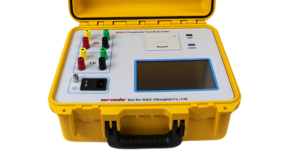
Click the picture to know more about TTR Tester.
1. What Is a Transformer Ratio?
The transformer ratio is the ratio between the voltage on the low-voltage side and the voltage on the high-voltage side of a transformer.
This ratio determines whether the transformer increases voltage (step-up transformer) or decreases voltage (step-down transformer). It is one of the most important indicators of transformer performance.
In power systems, transformers are used to convert AC voltage to different voltage levels for power transmission and distribution. Therefore, the transformer ratio directly affects how the transformer operates in different applications.
Normally, the transformer ratio is fixed during manufacturing and remains stable during normal operation. When designing a transformer, engineers must consider factors such as:
- Operating conditions
- Load requirements
- Power losses
- Application environment
2. How to Calculate the Transformer Ratio?
The transformer ratio can be calculated using the following formula:
K=\frac{U_2}{U_1}=\frac{I_1}{I_2}
Where:
- K = transformer ratio
- U₁ = voltage on one side of the transformer
- U₂ = voltage on the other side of the transformer
- I₁ = current on one side
- I₂ = current on the other side
The voltage ratio is inversely related to the current ratio. When voltage increases, current decreases, and vice versa.
It is important to understand that the transformer ratio refers to the relationship between the transformer winding voltages, not simply the input and output voltage values. In practical testing, engineers often compare measured voltages to confirm whether the transformer ratio is correct and whether the transformer is operating properly.
3. Why Is the Transformer Ratio Important?
The transformer ratio plays a key role in transformer design and power system operation.
By selecting the correct ratio, transformers can:
- Increase voltage for long-distance power transmission
- Reduce voltage for safe end-user applications
- Match different load requirements
- Improve transmission efficiency
- Reduce energy losses
The transformer ratio also helps with:
- Current control
- Load limitation
- Overload protection
- Voltage regulation
- Safe system operation
4. Applications of Transformers in Power Systems
Transformers are widely used in:
- Power generation systems
- Transmission networks
- Substations
- Distribution systems
- Industrial electrical equipment
In electrical grids, transformers increase voltage for efficient long-distance transmission and later reduce voltage to safe levels for homes, factories, and commercial users.
They also help maintain stable voltage and current levels, ensuring reliable and safe operation of the entire power system.
