

What Is the Purpose of a Transformer Low-Voltage Short-Circuit Impedance Test
Learn why transformer short-circuit impedance testing is important for performance evaluation, protection settings, condition monitoring, fault diagnosis, and maintenance planning. Includes FAQs and testing insights.
The short-circuit impedance test is one of the most important routine tests performed on power transformers. It provides valuable information about transformer design, operating condition, fault tolerance, and long-term reliability.
By measuring the transformer’s short-circuit impedance, engineers can evaluate electrical performance, verify protection settings, detect internal abnormalities, and support maintenance planning. For utilities and industrial facilities, this test plays a vital role in ensuring the safe and efficient operation of transformer assets.
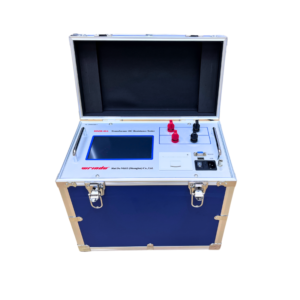
Click the image to know more about Wrindu DC Resistance Tester 40A.
What Is Transformer Short-Circuit Impedance?
Short-circuit impedance, also known as impedance voltage, represents the total opposition to current flow within a transformer under short-circuit conditions.
It is primarily determined by:
- Winding resistance
- Leakage reactance
- Magnetic coupling characteristics
- Transformer design structure
The measured impedance is usually expressed as a percentage (%) or in ohms (Ω) and serves as a key parameter for transformer performance evaluation.
Why Is Short-Circuit Impedance Testing Important?
Short-circuit impedance testing helps verify whether a transformer can operate safely and efficiently under normal and fault conditions.
The test provides critical data for:
- Transformer performance assessment
- Protection system coordination
- Condition monitoring
- Fault diagnosis
- Maintenance planning
Regular testing allows operators to identify changes in transformer characteristics before major failures occur.
How Does Short-Circuit Impedance Reflect Transformer Performance?
The short-circuit impedance value directly influences several important transformer performance indicators.
These include:
- Load-carrying capability
- Voltage regulation
- Power losses
- Energy efficiency
- Temperature rise characteristics
By measuring the impedance under specified test conditions, engineers can determine whether the transformer design meets operational and industry requirements.
Significant deviations from design values may indicate manufacturing defects, winding deformation, or internal damage.
How Does Short-Circuit Impedance Help Determine Protection Settings?
Transformer protection systems rely heavily on accurate impedance data.
When a short circuit occurs, the magnitude of the fault current depends largely on the transformer’s impedance value.
Accurate impedance measurements help engineers:
- Calculate prospective fault currents
- Configure relay protection settings
- Coordinate protective devices
- Ensure selective fault isolation
- Prevent equipment damage
Proper protection settings allow the transformer to withstand short-circuit stresses while ensuring rapid fault clearance.
Can Short-Circuit Impedance Testing Reveal Transformer Operating Conditions?
Yes. Changes in short-circuit impedance often indicate changes in the transformer’s internal condition.
Over time, factors such as:
- Mechanical stress
- Winding displacement
- Insulation aging
- Short-circuit events
- Transportation impacts
- Thermal expansion and contraction
may alter the transformer’s impedance characteristics.
By comparing current test results with historical baseline data, engineers can identify abnormal trends and investigate potential issues before they become serious failures.
How Does the Test Support Transformer Maintenance and Repair?
Short-circuit impedance measurements provide valuable information for maintenance planning and troubleshooting.
If the measured impedance differs significantly from factory test values, additional diagnostic tests may be required, such as:
- Partial discharge testing
- Dissolved gas analysis (DGA)
- Winding resistance testing
- Frequency response analysis (FRA)
- Insulation testing
These complementary tests help locate the source of the problem and determine appropriate corrective actions.
Impedance testing can also be used after transportation, installation, maintenance, or fault events to verify transformer integrity.
What Problems Can Be Detected Through Short-Circuit Impedance Testing?
This test can help identify several transformer defects, including:
Winding Deformation
Mechanical forces generated during fault currents may deform transformer windings.
Winding Displacement
Movement of windings can alter leakage reactance and change impedance values.
Internal Structural Damage
Loose clamping structures and mechanical deterioration can affect transformer impedance.
Manufacturing Defects
Abnormal impedance values may indicate construction or assembly issues.
Fault-Related Damage
Transformers exposed to severe short-circuit events may experience permanent mechanical changes that can be detected through impedance testing.
How Often Should Transformer Short-Circuit Impedance Be Tested?
Testing frequency depends on transformer type, operating environment, and maintenance strategy.
Typical recommendations include:
- During factory acceptance testing (FAT)
- Before commissioning
- After transportation or relocation
- Following major fault events
- During periodic condition assessment programs
Routine monitoring helps establish trend data and improves asset management decisions.
What Are the Benefits of Regular Short-Circuit Impedance Measurements?
Regular testing offers several advantages:
- Improved transformer reliability
- Early fault detection
- Enhanced protection coordination
- Reduced maintenance costs
- Prevention of catastrophic failures
- Better asset management
- Extended transformer service life
As part of a comprehensive transformer condition monitoring program, impedance testing contributes significantly to operational safety and system stability.
FAQs About Transformer Short-Circuit Impedance Testing
Q: What is transformer short-circuit impedance?
A: It is the total electrical opposition to current flow under short-circuit conditions, mainly consisting of winding resistance and leakage reactance.
Q: Why is short-circuit impedance testing performed on transformers?
A: The test evaluates transformer performance, verifies protection settings, detects internal abnormalities, and supports maintenance planning.
Q: Can short-circuit impedance testing detect winding deformation?
A: Yes. Changes in impedance values are often used to identify winding displacement or deformation caused by mechanical stress or fault currents.
Q: How does impedance affect transformer fault current?
A: Higher impedance limits fault current, while lower impedance allows larger short-circuit currents to flow.
Q: What causes transformer impedance to change over time?
A: Common causes include insulation aging, winding movement, transportation damage, thermal stress, and short-circuit events.
Q: Is short-circuit impedance testing part of transformer condition monitoring?
A: Yes. It is widely used as a diagnostic tool for assessing transformer mechanical and electrical integrity.
Q: What additional tests should be performed if abnormal impedance values are found?
A: Engineers often conduct dissolved gas analysis (DGA), partial discharge testing, winding resistance measurement, insulation testing, and frequency response analysis to further investigate the issue.
Conclusion
The transformer low-voltage short-circuit impedance test is a critical diagnostic procedure used to evaluate transformer performance, verify protection settings, assess operating conditions, and support maintenance decisions. By regularly monitoring impedance values and comparing them with baseline data, utilities and industrial operators can identify potential problems early, reduce failure risks, and ensure the safe, reliable, and economical operation of power transformers throughout their service life.
