

What Is the Function of a Transformer? Understanding Its Role in Electrical Power Systems
Learn the main functions of a transformer, including voltage transformation, electrical isolation, impedance matching, and current conversion. Discover how transformers improve power system efficiency and safety.
Transformers are among the most important devices in modern electrical power systems. They enable the efficient transmission, distribution, and utilization of electricity by adjusting voltage levels, providing electrical isolation, matching impedance, and measuring current.
Without transformers, it would be impossible to deliver electrical energy safely and efficiently from power plants to homes, commercial buildings, and industrial facilities.
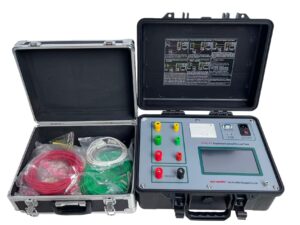
Click the picture to know more about Wrindu Transformer No-load and Load loss Tester.
What Is a Transformer?
A transformer is an electrical device that transfers energy between circuits through electromagnetic induction. It can increase or decrease voltage levels while maintaining the frequency of the power supply.
Transformers are widely used in:
- Power generation systems
- Transmission networks
- Distribution substations
- Industrial equipment
- Electronic circuits
- Measurement and protection systems
Their versatility makes them essential for almost every electrical application.
How Does a Transformer Help Ensure Safe Power Supply?
One of the primary functions of a transformer is to provide voltage levels that meet the requirements of different electrical equipment.
Different devices require different operating voltages. For example:
- Household appliances typically operate at low voltage.
- Industrial equipment may require medium or high voltage.
- Specialized equipment such as welding machines requires low voltage and high current.
A welding transformer, for example, converts a higher input voltage into a lower output voltage while producing the large current needed for welding operations.
By delivering the correct voltage and current levels, transformers help ensure safe and reliable power utilization.
How Does a Transformer Increase or Decrease Voltage?
Voltage transformation is the most recognized function of a transformer.
Step-Up Transformers
Step-up transformers increase voltage from a lower level to a higher level.
In power generation systems, electricity produced by generators is often increased from several kilovolts to transmission voltages that may reach hundreds of kilovolts.
Higher transmission voltages help:
- Reduce line current
- Minimize transmission losses
- Improve long-distance power transfer efficiency
Step-Down Transformers
Step-down transformers reduce voltage to levels suitable for consumers.
For example, transmission voltages are gradually reduced through substations before reaching residential and commercial users.
This process ensures safe and practical utilization of electrical energy.
Why Is Electrical Isolation Important?
Transformers also provide electrical isolation between circuits.
In an isolation transformer:
- The primary and secondary windings are electrically separated.
- Energy is transferred magnetically rather than through direct electrical connection.
This isolation offers several benefits:
- Improved electrical safety
- Reduced shock hazards
- Better protection against electrical faults
- Reduced interference between circuits
If an abnormal condition occurs on one side of the transformer, the other side may remain protected from direct electrical impact.
How Does a Transformer Perform Impedance Matching?
Impedance matching is another important transformer function, particularly in electronic and communication systems.
What Is Impedance Matching?
Impedance matching involves adjusting the impedance between two circuits to maximize power transfer and minimize energy loss.
By selecting an appropriate turns ratio, a transformer can:
- Match source and load impedances
- Improve signal transmission efficiency
- Reduce reflection losses
- Optimize amplifier performance
This function is commonly used in:
- Audio systems
- Communication equipment
- Amplifier circuits
- Radio-frequency applications
How Does a Current Transformer Change Current Levels?
A current transformer (CT) is a specialized transformer designed to convert high current values into lower, measurable currents.
Why Are Current Transformers Needed?
Power system currents are often too large to be measured directly by instruments.
Current transformers:
- Reduce primary current to a standardized secondary current
- Enable accurate measurement
- Support protective relay operation
- Improve operator safety
For example, a current transformer may convert hundreds or thousands of amperes into a manageable 1A or 5A output for monitoring equipment.
Why Are Transformers Essential in Modern Power Systems?
Transformers play a crucial role throughout the electrical grid.
Their benefits include:
- Efficient voltage conversion
- Reduced transmission losses
- Improved electrical safety
- Reliable power distribution
- Enhanced system protection
- Accurate measurement and monitoring
- Better energy utilization
Without transformers, modern power transmission and distribution networks would be significantly less efficient and more expensive to operate.
Where Are Transformers Commonly Used?
Transformers can be found in a wide range of applications, including:
Power Generation Stations
Used to increase voltage for long-distance transmission.
Transmission and Distribution Networks
Used to adjust voltage levels between different stages of the grid.
Industrial Facilities
Provide appropriate voltage for motors, machinery, and process equipment.
Residential Areas
Deliver safe utilization voltages for homes and buildings.
Electronic Systems
Perform isolation, impedance matching, and voltage conversion functions.
FAQs About Transformer Functions
Q: What is the main function of a transformer?
A: The primary function of a transformer is to transfer electrical energy between circuits while increasing or decreasing voltage levels as required.
Q: Why are transformers used in power transmission systems?
A: Transformers increase transmission voltage, which reduces current and minimizes power losses over long distances.
Q: How does a transformer improve electrical safety?
A: Isolation transformers provide electrical separation between circuits, helping reduce shock risks and fault propagation.
Q: What is the purpose of impedance matching in a transformer?
A: Impedance matching maximizes power transfer efficiency and minimizes energy losses between connected circuits.
Q: What does a current transformer do?
A: A current transformer converts large primary currents into smaller standardized currents for measurement, monitoring, and protection purposes.
Q: Can a transformer change frequency?
A: No. Standard transformers change voltage and current levels but do not alter the frequency of the power supply.
Q: Why is a transformer important for energy efficiency?
A: By enabling high-voltage transmission and efficient voltage conversion, transformers significantly reduce energy losses throughout the electrical system.
Conclusion
Transformers perform several critical functions within electrical power systems, including voltage transformation, electrical isolation, impedance matching, and current conversion. These capabilities make transformers indispensable for power generation, transmission, distribution, protection, and measurement applications. Understanding the functions of transformers helps engineers and technicians design safer, more reliable, and more efficient electrical systems.
