

Key Factors Affecting Ground Resistance Test Results & Accuracy Improvement Tips
Discover key factors affecting ground resistance test results and practical tips to improve testing accuracy for industrial and utility grounding systems.
Why Do Ground Resistance Test Results Vary Greatly?
Ground resistance test accuracy is not only determined by testing operations but also affected by environmental conditions, equipment status and electrode arrangement. Many inconsistent or inaccurate test readings are caused by ignored subtle factors rather than instrument failure. Mastering these influencing factors is the key to obtaining reliable and standard test data for electrical safety inspection.
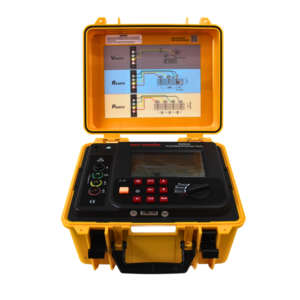
Click the picture to know more about Wrindu Earth Resistance Tester.
What Environmental Factors Affect Ground Resistance Test Accuracy?
1. Soil Resistivity and Condition
Soil moisture, composition and temperature directly change ground resistance values. Wet soil has high conductivity and low resistance, while dry, rocky or sandy soil has high resistivity and leads to higher test readings. Seasonal changes also cause regular fluctuations in test results.
2. Electromagnetic Interference
Nearby transformers, transmission lines, generators and operating industrial equipment will produce electromagnetic noise, interfering with the tester’s current and voltage signal collection, resulting in distorted and inaccurate resistance data.
What Operation & Equipment Factors Affect Test Results?
1. Electrode Spacing and Placement
Incorrect electrode distance will cause soil resistance zones to overlap. Too-short spacing cannot measure the true grounding resistance of the system, while irregular placement of auxiliary electrodes will lead to systematic test errors.
2. Electrode and Cable Condition
Corroded, damaged or loose grounding electrodes will increase contact resistance. Aging, broken or poorly insulated test cables will cause signal loss, directly reducing test accuracy and stability.
3. Pre-Test System Preparation
Unremoved parallel grounding paths, uncleaned rusty connection points and incomplete system isolation will lead to mixed test data, failing to reflect the real performance of a single grounding system.
How to Improve Ground Resistance Test Accuracy Effectively?
1. Standardize Electrode Layout
Follow the 62% distance rule for potential electrodes and place current electrodes far enough to form independent resistance zones. Adjust spacing appropriately according to on-site soil quality and grounding system scale.
2. Optimize Test Environment
Avoid testing in strong electromagnetic interference areas. Choose flat, intact soil for electrode burial. Water dry soil properly to ensure good contact between electrodes and soil before testing.
3. Maintain Testing Equipment
Use high-quality insulated test cables and complete electrode accessories. Regularly check the tester’s accuracy and choose professional testers with anti-interference functions for on-site testing.
4. Standardize Testing Procedures
Complete system inspection and isolation before testing, repeat tests multiple times and take stable average values to avoid accidental data errors.
FAQs About Ground Resistance Test Accuracy
Q1: Why are my ground resistance test results higher than previous years?
A: It is mainly caused by seasonal dry soil, aging and corrosion of grounding electrodes, loose connection points or long-term system operation degradation.
Q2: Can electromagnetic interference be completely avoided in field testing?
A: It cannot be completely eliminated, but it can be effectively reduced by using anti-interference ground resistance testers and staying away from high-power electrical equipment.
Q3: Does test cable length affect ground resistance readings?
A: Standard cable length has little effect, but excessively long, damaged or poorly insulated cables will cause signal attenuation and lead to inaccurate test data.
Q4: How to get the most accurate ground resistance test data?
A: Adopt the 3-point fall-of-potential method, standardize electrode placement, optimize the test environment, use professional testing equipment, and take multiple repeated test values for confirmation.
