

50 Hz vs 60 Hz: How Does Power Frequency Affect Electrical Equipment?
Learn the difference between 50 Hz and 60 Hz and how power frequency affects motors, transformers, generators, and electrical equipment selection.
50 Hz and 60 Hz are the two most common power frequencies used around the world. Although the difference is only 10 cycles per second, frequency can affect how electrical equipment operates.
Generators, motors, transformers, appliances, test equipment, and power electronic systems are designed for specific voltage and frequency conditions. Selecting the wrong frequency can reduce performance and may create operating problems.
Understanding the difference between 50 Hz and 60 Hz is therefore important when purchasing, exporting, installing, or testing electrical equipment.
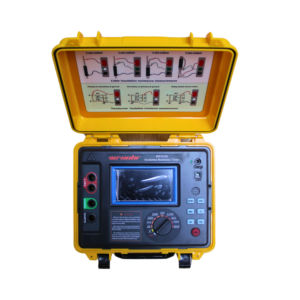
Click the image to know more about Wrindu IR Tester.
What Is the Difference Between 50 Hz and 60 Hz?
The basic difference is the number of AC cycles completed each second.
A 50 Hz system completes 50 cycles per second.
A 60 Hz system completes 60 cycles per second.
The period is also different:
- 50 Hz → about 20 ms per cycle
- 60 Hz → about 16.67 ms per cycle
The difference may seem small, but it affects equipment that depends on AC frequency.
Why Do Countries Use Different Power Frequencies?
Different countries developed their electrical systems at different times. As power networks expanded, their original frequency choices became standard operating conditions.
As a result, some markets use 50 Hz while others use 60 Hz.
Electrical equipment manufacturers must therefore consider the target market when designing and supplying products.
Does 50 Hz or 60 Hz Affect Motor Speed?
Yes. AC motor speed is related to supply frequency.
For a synchronous motor, the synchronous speed can be calculated as:
Ns = 120 × f / P
Where:
- Ns = synchronous speed in rpm
- f = frequency in Hz
- P = number of poles
For a four-pole motor:
At 50 Hz:
Ns = 120 × 50 / 4 = 1,500 rpm
At 60 Hz:
Ns = 120 × 60 / 4 = 1,800 rpm
Therefore, changing from 50 Hz to 60 Hz can significantly change motor speed.
How Does Frequency Affect Transformers?
Transformer design also depends on frequency.
The relationship between voltage, frequency, turns, and magnetic flux means that frequency cannot be ignored when selecting a transformer.
If a transformer designed for a higher frequency operates at a lower frequency without an appropriate voltage adjustment, the magnetic flux may increase.
This can increase magnetizing current, heating, and core stress.
Therefore, transformer nameplate information should always be checked before connecting the transformer to a different-frequency supply.
Can a 50 Hz Transformer Work on 60 Hz?
In some cases, equipment designed for 50 Hz can operate at 60 Hz, but the exact conditions depend on its design.
For the same voltage, increasing frequency generally reduces the magnetic flux level.
However, this does not mean every transformer can be used freely on another frequency. Engineers should check the manufacturer’s rated voltage, frequency, insulation level, cooling conditions, and other specifications.
Can a 60 Hz Transformer Work on 50 Hz?
This situation requires more attention.
At the same voltage, reducing frequency increases the magnetic flux in the core.
For example, changing from 60 Hz to 50 Hz while keeping the same voltage increases the volts-per-hertz ratio.
This may cause higher magnetizing current and additional heating.
Therefore, engineers should not assume that a 60 Hz transformer can operate at its full rated voltage on a 50 Hz supply.
How Does Frequency Affect AC Motor Performance?
Frequency can affect more than motor speed.
It may influence:
- Speed
- Torque
- Current
- Heating
- Efficiency
- Mechanical load
- Cooling performance
This is especially important in industrial applications involving pumps, fans, compressors, conveyors, and other rotating machinery.
A frequency change should therefore be considered together with the motor’s voltage and load conditions.
Why Is Voltage-Frequency Ratio Important?
Many AC devices are designed around a specific voltage-to-frequency relationship.
For transformers and motors, engineers often consider the V/f ratio.
If voltage stays constant while frequency decreases, the V/f ratio increases.
This can increase magnetic flux in magnetic equipment.
If frequency increases while voltage stays constant, the V/f ratio decreases.
Therefore, both voltage and frequency should be considered when evaluating equipment operation.
How Does Frequency Affect Generator Selection?
Generators must match the required electrical frequency.
A generator’s output frequency depends on its rotational speed and pole number.
If a generator needs to produce 50 Hz, its speed must match its pole configuration.
For example:
- 2 poles at 3,000 rpm → 50 Hz
- 4 poles at 1,500 rpm → 50 Hz
- 2 poles at 3,600 rpm → 60 Hz
- 4 poles at 1,800 rpm → 60 Hz
This relationship is important during generator design and commissioning.
What Happens When Equipment Is Connected to the Wrong Frequency?
The result depends on the type of equipment.
Motors
Motor speed may change, and current, torque, heating, and efficiency may also be affected.
Transformers
The magnetic operating condition can change, especially when voltage remains constant while frequency decreases.
Generators
The generator may not operate at the required speed or synchronize correctly with the grid.
Timing Devices
Some frequency-dependent clocks and timing devices can operate at a different rate when supplied by another frequency.
Electronic Equipment
Modern electronic devices may use power supplies that can accept both frequencies, but the nameplate rating should always be checked.
Why Is Frequency Important for International Equipment Export?
Electrical equipment manufacturers often sell products to multiple countries.
A product intended for a 50 Hz market may need a different configuration from one intended for a 60 Hz market.
Manufacturers should consider:
- Rated voltage
- Rated frequency
- Motor speed
- Transformer design
- Protection settings
- Generator configuration
- Test requirements
This is particularly important for large electrical equipment and complete power systems.
Does Frequency Matter During Electrical Testing?
Yes. Test equipment must also use the correct frequency for the intended test.
For example, a standard power-frequency AC test is different from a VLF cable test.
A test system may need to generate a specific frequency and maintain it accurately during the test.
Therefore, frequency specifications should be reviewed when selecting high-voltage testing equipment.
How Should Engineers Select Equipment for 50 Hz or 60 Hz Systems?
Start with the system requirements.
Check the Nameplate
Look for the rated voltage and frequency.
Check the Manufacturer’s Manual
Some equipment supports both 50 Hz and 60 Hz operation, while other equipment requires a specific frequency.
Check Motor Speed
For rotating equipment, calculate the expected speed under the selected frequency.
Check Transformer V/Hz Conditions
Make sure the selected voltage and frequency do not create an unsuitable magnetic operating condition.
Check Test Equipment Requirements
Testing equipment should be compatible with the required test frequency and voltage.
How Can Wrindu Support Different Electrical Testing Requirements?
Wrindu provides electrical testing equipment for applications involving transformers, cables, insulation systems, switchgear, SF6 equipment, grounding systems, and other power equipment.
Different electrical tests use different signal conditions. Engineers can select the appropriate test method based on the equipment type, voltage level, insulation structure, and applicable requirements.
For international projects, test equipment configuration can also be discussed according to the local power system and project requirements.
FAQs
Is 50 Hz better than 60 Hz?
Neither frequency is generally better. Each is a standard used by different power systems. Equipment should match the frequency for which it is designed.
Can I use a 50 Hz appliance on 60 Hz power?
It depends on the appliance. Some electronic products support both frequencies, while motors and transformers may have specific frequency requirements.
Can a 60 Hz motor run on 50 Hz?
It may run, but speed and operating conditions will change. The motor manufacturer should confirm whether the motor is suitable for the new frequency and voltage.
Why does motor speed increase from 50 Hz to 60 Hz?
Motor synchronous speed is proportional to frequency. Increasing frequency from 50 Hz to 60 Hz increases the theoretical synchronous speed by 20%.
Is a 50 Hz transformer different from a 60 Hz transformer?
They can be. Transformer design depends on frequency, voltage, core design, and other factors. The nameplate and manufacturer specifications should be checked.
What happens if frequency is too low for a transformer?
At the same voltage, a lower frequency can increase magnetic flux. This may increase magnetizing current, heating, and core stress.
What is the V/f ratio?
V/f means voltage divided by frequency. It is an important relationship for magnetic equipment such as transformers and AC motors.
Why do generators have different rpm for 50 Hz and 60 Hz?
Generator frequency depends on rotational speed and pole number. A higher frequency requires a higher speed when the number of poles stays the same.
Does frequency affect industrial pumps?
Yes. If the pump uses an AC motor, frequency can affect motor speed and therefore pump operating conditions.
Can one generator supply both 50 Hz and 60 Hz?
Some generator systems can be configured for different frequencies, but this depends on the generator design and control system.
