

T Analyzer vs Traditional CT Testing Methods: Why Digital Analyzers Improve Transformer Testing
Compare CT analyzers with traditional CT testing methods. Learn how digital CT test equipment improves efficiency, accuracy, and field transformer testing.
Why Are Engineers Changing the Way They Test Current Transformers?
Current transformer (CT) testing has always been important for power system maintenance and protection.
In the past, engineers often used several separate instruments to complete CT tests. These methods could check basic parameters, but they usually required more equipment, more manual operation, and more calculation work.
Today, digital CT analyzers provide a different testing approach.
A modern CT analyzer combines multiple functions into one system. It can automatically measure CT characteristics and generate test results.
Therefore, many utilities, testing companies, and manufacturers are choosing digital CT analyzers to improve testing efficiency.
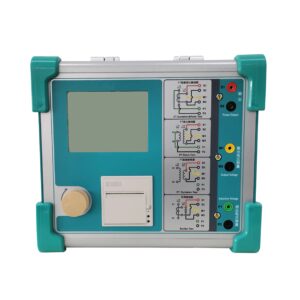
Click the image to know more about Wrindu CT and PT Analyzer.
What Are Traditional CT Testing Methods?
Traditional CT testing usually uses separate instruments for different measurements.
For example:
- A resistance tester measures secondary winding resistance.
- A voltage source checks excitation characteristics.
- A current source checks ratio performance.
- A phase meter evaluates phase displacement.
Engineers need to connect different devices according to each test requirement.
Although this method can provide accurate results, it has some limitations.
What Challenges Do Traditional CT Tests Have?
Multiple Instruments Increase Testing Complexity
Traditional testing often requires several devices.
Therefore, engineers need to:
- Prepare more equipment
- Change wiring between tests
- Manage different test parameters
This process takes more time, especially during field testing.
Manual Calculation Can Increase Human Errors
Traditional methods often require engineers to record and calculate results manually.
For example:
- Ratio calculation
- Error calculation
- Phase difference analysis
Manual processing may increase the risk of calculation mistakes.
Field Transportation Becomes More Difficult
Substation maintenance teams often work in different locations.
Carrying multiple test instruments can increase:
- Equipment weight
- Transportation difficulty
- Installation time
Therefore, compact multifunction equipment becomes more practical.
How Does a Digital CT Analyzer Work Differently?
A digital CT analyzer integrates several testing functions into one instrument.
Instead of using separate devices, engineers can complete multiple CT tests through one system.
A typical digital CT analyzer can perform:
- Ratio testing
- Polarity testing
- Excitation testing
- Knee point testing
- Resistance measurement
- Burden testing
- Ratio error testing
- Phase displacement testing
The system automatically controls the test process and calculates results.
Therefore, engineers can complete CT testing with fewer manual steps.
What Are the Advantages of Using a CT Analyzer?
How Does a CT Analyzer Improve Testing Efficiency?
A CT analyzer reduces the number of testing steps.
Engineers can select the required test function, enter CT parameters, and start testing.
The system then automatically:
- Applies test signals
- Measures electrical data
- Calculates results
- Stores test records
This reduces testing time during commissioning and maintenance.
Why Is Automatic Calculation Important?
CT testing involves many calculations.
For example:
- Transformation ratio
- Ratio error
- Phase displacement
- Knee point value
A digital analyzer calculates these parameters automatically.
As a result, engineers can reduce manual calculation work and improve testing consistency.
How Does Data Management Improve CT Testing?
Traditional testing often requires manual recording.
However, digital CT analyzers can store test results directly.
Useful data functions include:
- Internal memory
- USB transfer
- Report generation
- Printing
For example, the Wrindu RDHG-E supports:
- 1000 groups of test data storage
- USB data transfer
- Automatic reports
- Built-in printer
Therefore, testing teams can create complete maintenance records more easily.
Why Is Portability Important for CT Testing?
Many CT tests happen in:
- Outdoor substations
- Switchgear rooms
- Remote power facilities
Therefore, testing equipment needs to be easy to transport.
Compared with traditional testing systems, integrated CT analyzers usually provide:
- Smaller size
- Lower setup requirements
- Easier operation
This makes them suitable for field maintenance.
CT Analyzer vs Traditional CT Testing Equipment: Comparison
| Item | Traditional CT Testing Method | Digital CT Analyzer |
|---|---|---|
| Test equipment | Multiple instruments | One multifunction device |
| Operation | More manual steps | Automatic process |
| Calculation | Manual calculation | Automatic calculation |
| Data recording | Manual records | Digital storage |
| Report generation | Requires additional work | Automatic reports |
| Field transportation | More equipment required | More compact |
| Testing efficiency | Lower | Higher |
When Should Engineers Choose a Digital CT Analyzer?
A digital CT analyzer is especially useful for projects that require frequent CT testing.
Common situations include:
Substation Commissioning
During commissioning, engineers need to verify many CT parameters.
A multifunction analyzer can complete multiple tests faster.
Power Utility Maintenance
Utilities need regular inspection of protection and measurement CTs.
Digital records help track transformer conditions over time.
Transformer Manufacturing
Manufacturers need efficient quality inspection before delivery.
Automatic testing helps improve production efficiency.
Third-Party Testing Services
Testing companies often handle different CT models.
A multifunction analyzer provides wider testing capability.
What Features Should Engineers Check Before Buying a CT Analyzer?
Does the Analyzer Support Automatic Testing?
Automatic testing reduces operation steps.
Engineers should check whether the analyzer supports:
- One-click testing
- Automatic calculation
- Automatic reports
Can the Analyzer Test Different CT Types?
Different CT applications may require different functions.
Engineers should confirm whether the analyzer supports:
- Protection CTs
- Measurement CTs
- Toroidal CTs
- Bar-type CTs
Does the Analyzer Provide Enough Measurement Range?
The test range should match the application.
Important parameters include:
- CT ratio range
- Resistance range
- Burden range
- Knee point voltage
For example, the Wrindu RDHG-E supports:
| Parameter | Range |
|---|---|
| CT ratio | 1–10000 |
| Resistance | 0–300 Ω |
| Burden | 0–300 VA |
| Knee point | Up to 30 kV |
How Does a CT Analyzer Reduce Maintenance Risks?
Reliable CT performance is important for protection systems.
A digital analyzer helps engineers identify:
- Incorrect ratio
- Wrong polarity
- Abnormal excitation
- High resistance
- Excessive burden
- Saturation problems
Therefore, engineers can find potential issues before they affect power system operation.
CT Analyzer Selection FAQs
Is a digital CT analyzer better than traditional CT testing equipment?
A digital CT analyzer is more convenient for many applications because it combines multiple tests, automatic calculation, and data management. However, engineers should choose equipment based on actual testing requirements.
Can a CT analyzer replace all traditional CT testing methods?
A multifunction CT analyzer can replace many separate CT testing instruments. However, special applications may still require dedicated equipment.
Why do utilities prefer portable CT analyzers?
Portable analyzers reduce transportation requirements and make field testing easier.
Does automatic CT testing improve accuracy?
Automatic testing can reduce manual calculation errors and improve test consistency.
What data can a modern CT analyzer save?
Depending on the model, it can save test results such as ratio, resistance, burden, excitation data, and reports.
Is a CT analyzer suitable for factory testing?
Yes. Manufacturers can use CT analyzers for quality inspection and performance verification.
How can digital CT testing reduce maintenance costs?
Faster testing, fewer instruments, and easier data management can help reduce labor and operational costs.
