

How Does a CT Analyzer Improve Current Transformer Testing Accuracy?
Learn how a CT analyzer improves current transformer testing accuracy through ratio, polarity, excitation, and knee point tests for safer power systems.
Why Is CT Testing Accuracy Important in Power Systems?
Current transformers play an important role in power measurement and protection systems.
A CT provides current signals to:
- Protection relays
- Energy meters
- Monitoring systems
If CT test results are inaccurate, the protection system may receive incorrect information.
Therefore, accurate CT testing helps engineers confirm that a current transformer works correctly.
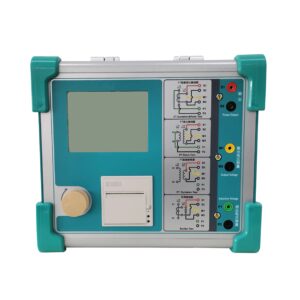
Click the image to know more about Wrindu CT and PT Analyzer.
What Factors Affect CT Testing Accuracy?
Several CT characteristics can influence measurement accuracy.
CT Ratio Errors
The CT ratio defines the relationship between primary current and secondary current.
For example, a 1000/5A CT should provide a stable conversion between the two currents.
However, aging, manufacturing problems, or magnetic changes can cause ratio errors.
A CT analyzer can measure:
- Actual transformation ratio
- Ratio error
- Difference between rated and measured values
This helps engineers check whether the CT meets required standards.
Why Is CT Excitation Testing Important?
CT excitation characteristics show how the magnetic core performs under increasing voltage.
During excitation testing, engineers can check:
- Excitation current
- Excitation curve
- Saturation point
- Knee point voltage
A damaged or unsuitable CT core may enter saturation earlier.
When saturation happens, the secondary current may become distorted.
This can affect relay operation during fault conditions.
How Does Knee Point Testing Help Protection Systems?
Protection CTs need enough capacity to provide accurate current signals during fault events.
The knee point voltage shows when the CT core begins to saturate.
A CT analyzer can identify:
- Normal knee point value
- Abnormal magnetic performance
- Possible core problems
This information helps engineers evaluate CT reliability.
How Can CT Analyzer Testing Reduce Protection Risks?
A digital CT analyzer helps engineers check important CT parameters before problems occur.
Typical tests include:
- Ratio test
- Polarity test
- Excitation test
- Knee point test
- Winding resistance test
These tests help identify:
- Incorrect wiring
- Magnetic core problems
- Aging issues
- Performance deviation
Regular CT testing supports safer power system operation.
Why Is Polarity Testing Necessary for CTs?
CT polarity affects the direction of current signals.
Incorrect polarity can cause:
- Relay misoperation
- Incorrect power measurement
- Protection coordination problems
A CT analyzer can automatically verify polarity.
This reduces the chance of wiring mistakes during installation.
How Does Digital Testing Support Long-Term CT Maintenance?
Modern maintenance teams need reliable historical records.
A CT analyzer can save test information for comparison.
Engineers can track:
- CT performance changes
- Aging trends
- Previous inspection results
This helps maintenance teams create better inspection plans.
CT Analyzer Testing Accuracy FAQs
What CT tests are important for protection systems?
Important tests include ratio testing, polarity testing, excitation testing, knee point testing, and resistance measurement.
Why does CT saturation matter?
CT saturation can reduce measurement accuracy and affect protection relay performance.
Can a CT analyzer test protection CTs?
Yes. Many CT analyzers support protection CT testing, including excitation and knee point analysis.
How often should engineers test current transformers?
The testing frequency depends on equipment condition, operation environment, and maintenance requirements.
