

Acoustic vs Acoustic-Magnetic Cable Fault Location
Compare acoustic and acoustic-magnetic cable fault location methods and see how the RDCD-Ⅱ/503D multifunction acoustic magnetic locator improves pinpoint accuracy and field efficiency.
Accurate cable fault pinpointing ensures fast repair and stable power supply. Engineers often compare acoustic location and acoustic magnetic locator methods. Both help find underground cable faults, but their detection logic and field efficiency differ.
This article explains the difference and shows how the RDCD-Ⅱ/503D Cable Fault Pinpoint Locator (multifunction) improves real-world testing.
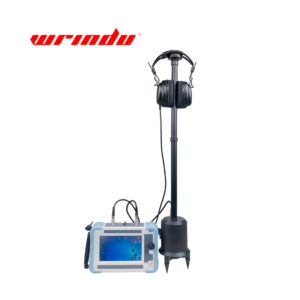
Click the picture to know more about Wrindu Cable Fault Pinpoint Locator (multifunction).
What Is Acoustic Cable Fault Location?
Acoustic cable fault location relies on sound from impulse discharge.
When high voltage hits the fault point:
-
An arc forms inside the cable
-
The arc creates a shock wave in the soil
-
A ground microphone detects the sound peak
Engineers move step by step to find the loudest discharge point, which marks the fault.
This method works well for:
-
Low-resistance faults
-
Shallow buried cables
-
Quiet environments
However, noise and soil conditions may reduce accuracy.
What Is an Acoustic Magnetic Locator?
An acoustic magnetic locator combines two signals:
-
Acoustic signal from arc discharge
-
Magnetic field signal from impulse current
The system compares sound timing and magnetic peak to confirm the exact fault point.
This dual-signal logic brings clear advantages:
-
Higher pinpoint accuracy
-
Better resistance to environmental noise
-
Reliable detection in deep or complex cable routes
Because of this, many engineers now prefer acoustic magnetic cable fault location for modern underground networks.
Why Do Engineers Prefer Multifunction Pinpoint Locators?
Field work requires speed, clarity, and safety. Single-mode acoustic tools often need repeated testing. Dual-mode systems reduce guesswork.
The RDCD-Ⅱ/503D Cable Fault Pinpoint Locator (multifunction) supports efficient fault confirmation with:
-
Synchronous acoustic and magnetic detection for precise positioning
-
Clear signal display that simplifies field judgment
-
High sensitivity sensors for weak discharge signals
-
Portable structure suitable for urban cable maintenance
These features help teams achieve faster underground cable fault location and lower repair time.
How Do Acoustic and Acoustic-Magnetic Methods Compare?
Detection Accuracy
-
Acoustic only → depends on sound clarity
-
Acoustic magnetic locator → confirms position with dual signals
Result: acoustic-magnetic gives higher precision.
Noise Resistance
-
Acoustic only → affected by traffic and environment
-
Acoustic magnetic → magnetic signal remains stable
Result: acoustic-magnetic works better in cities.
Field Efficiency
-
Acoustic only → more repeated discharge tests
-
Acoustic magnetic → faster confirmation of the fault point
Result: multifunction locator improves workflow.
Common Questions About Acoustic Magnetic Cable Fault Location
Q1: Which method gives the most accurate pinpoint result?
Acoustic-magnetic location gives the highest accuracy. Dual signals confirm the exact discharge point.
Q2: Can acoustic location work in noisy streets?
It can work, but accuracy may drop. Environmental noise can hide the real discharge sound.
Q3: Why choose the RDCD-Ⅱ/503D multifunction locator?
It combines acoustic and magnetic detection in one device. This design shortens search time and improves confidence.
Q4: Does acoustic-magnetic detection suit high-resistance faults?
Yes, it improves recognition of weak discharge signals. Magnetic sensing helps when sound becomes unclear.
Wrindu Expert Review
Choosing the right cable fault pinpointing method directly affects repair speed and network reliability.
-
Acoustic location offers simple operation.
-
Acoustic magnetic locator technology delivers higher precision and stronger noise resistance.
With multifunction tools like the RDCD-Ⅱ/503D Cable Fault Pinpoint Locator, engineers gain:
-
Faster underground cable fault confirmation
-
Clear dual-signal verification
-
More reliable maintenance decisions
For modern power systems, acoustic-magnetic cable fault location has become the practical and efficient choice.
