

Boiling and Freezing Points of Oil Explained | Edible Oil, Diesel and Gasoline Guide
Learn the boiling and freezing points of different oils, including edible oil, gasoline, and diesel. Understand temperature effects and how Wrindu testers ensure reliable oil performance.
What Are the Boiling and Freezing Points of Different Oils?
Understanding the boiling and freezing points of various oils is essential for industries like power systems, food processing, and fuel management. These temperature characteristics determine how oils behave under different operating conditions and directly impact safety, performance, and equipment reliability.
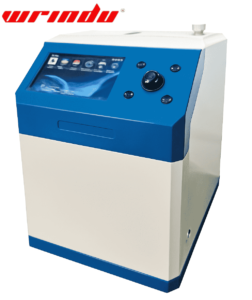
Click the image to know more about Wrindu Automatic Pour Point Freezing Point Tester.
What Is the Boiling Point of Common Oils?
The boiling point of oil varies depending on its type and composition:
- Edible Oils:
Most edible oils have a boiling point above 200°C. However, when temperatures exceed 250°C, harmful substances such as aldehydes can form, posing health risks. - Gasoline:
Gasoline does not have a single boiling point but a distillation range of 30°C to 205°C, meaning different components evaporate at different temperatures. - Diesel Fuel:
Diesel typically boils within 180°C to 370°C, with some heavier fractions reaching up to 410°C.
👉 These variations are critical in applications like transformer oil testing and fuel performance analysis, where thermal stability matters.
What Is the Freezing Point of Common Oils?
Freezing (or solidification) points also vary widely:
- Edible Oils:
- Palm oil, olive oil, peanut oil: around 5°C
- Soybean oil: approximately -8°C
- Blended oils: typically between 2°C and 13°C
- Gasoline:
Freezing point is about -75°C, allowing it to remain fluid in extreme cold. - Ethanol:
Freezes at -117.3°C, much lower than most fuels. - Diesel Fuel (Condensation Point):
Instead of freezing, diesel forms wax crystals. Typical condensation points include:- 10# diesel: -5°C
- 0# diesel: -14°C
- -35# diesel: -29°C
- -50# diesel: -44°C
👉 For power utilities, especially in cold regions, understanding these limits helps prevent flow issues and equipment failures.
Why Are These Temperature Points Important in Electrical Testing?
In transformer and cable systems, insulating oils must remain stable under both high and low temperatures.
- High temperatures can lead to thermal degradation and reduced insulation strength.
- Low temperatures can cause increased viscosity or solidification, affecting circulation and cooling.
This is why accurate testing of oil properties is essential for preventive maintenance and long-term asset reliability.
How Wrindu Testers Stand Out?
Wrindu provides advanced testing solutions designed specifically for high-voltage equipment and insulating oils:
- High Precision Measurement: Accurately detects thermal and dielectric properties of oils
- User-Friendly Design: Simplified operation for field engineers
- Reliable Performance: Stable results even in harsh environments
- Wide Application Range: Suitable for transformers, cables, and industrial oils
By using Wrindu testers, engineers can identify early signs of oil degradation, ensuring safer and more efficient power system operation.
FAQs
Q1: Why do different oils have different boiling points?
A: Because oils are made of different chemical compounds. Lighter molecules boil at lower temperatures, while heavier ones require higher heat.
Q2: Is the boiling point the same as flash point?
A: No. The boiling point is when a liquid turns into vapor, while the flash point is the temperature at which it can ignite.
Q3: Why is diesel’s freezing point called a condensation point?
A: Diesel forms wax crystals instead of fully freezing, which is why it’s referred to as a condensation or pour point.
Q4: How does temperature affect transformer oil performance?
A: High temperatures accelerate aging and reduce insulation strength, while low temperatures increase viscosity and reduce cooling efficiency.
Q5: How can I test oil quality in electrical equipment?
A: You can use specialized tools like Wrindu oil testers to measure parameters such as breakdown voltage (BDV), moisture content, and thermal characteristics.
