

How Are Digital CT Analyzers Changing Modern Transformer Testing?
Learn how digital CT analyzers improve current transformer testing with automatic measurement, data management, and smarter testing solutions.
Why Is Digital Technology Changing CT Testing?
Current transformer (CT) testing plays an important role in power system protection and measurement.
In the past, engineers often used several separate instruments to complete different CT tests.
This method required:
- More equipment preparation
- More manual connections
- More calculation work
- More time for reporting
Today, digital CT analyzers provide a more integrated testing solution.
They combine measurement, calculation, data storage, and report generation in one system.
This change helps engineers complete CT testing more efficiently and manage test information more easily.
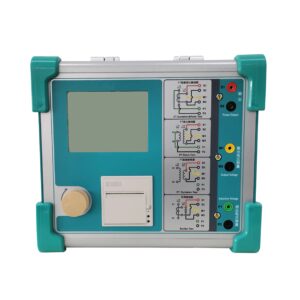
Click the image to know more about Wrindu CT and PT Analyzer.
What Is a Digital CT Analyzer?
A digital CT analyzer is a multifunction testing device designed for current transformer evaluation.
Unlike traditional testing setups, it integrates several functions into one instrument.
A modern CT analyzer can perform:
- CT ratio testing
- Polarity testing
- Excitation testing
- Knee point testing
- Winding resistance testing
- Burden measurement
- Ratio error analysis
- Phase displacement measurement
The system controls the test process and calculates results automatically.
How Is Digital CT Testing Different From Traditional Methods?
Traditional CT Testing Process
Traditional CT testing usually requires separate equipment.
Engineers may need:
- Voltage source
- Current source
- Measuring instruments
- Phase measurement equipment
- Manual calculation tools
Each test requires different wiring and settings.
This process increases preparation time and creates more opportunities for operation mistakes.
Digital CT Analyzer Testing Process
A digital CT analyzer simplifies the workflow.
Engineers can:
- Select the required test.
- Enter CT information.
- Connect test cables.
- Start automatic measurement.
- Review and save results.
The analyzer completes calculations and creates reports automatically.
This makes the testing process easier, especially during field work.
What Technologies Are Used in Modern CT Analyzers?
Automatic Measurement Technology
Modern analyzers use digital measurement systems to collect electrical data.
The system can measure:
- Voltage
- Current
- Resistance
- Phase angle
- Frequency
Automatic measurement reduces manual reading errors.
Digital Signal Processing Technology
Digital signal processing helps analyze electrical signals accurately.
It allows the analyzer to:
- Process test data quickly
- Identify waveform changes
- Calculate parameters automatically
This improves the consistency of CT test results.
Variable Frequency Testing Technology
Some advanced CT analyzers use variable frequency technology.
This method changes the testing frequency according to application requirements.
Benefits include:
- Improved testing flexibility
- Better performance for high-voltage CT testing
- Reduced equipment size
Variable frequency technology also helps create more practical field testing solutions.
How Does Data Management Improve CT Testing?
Why Are Digital Test Records Important?
Power equipment requires long-term condition tracking.
Paper records make comparison difficult.
Digital CT analyzers can store:
- Test results
- Equipment information
- Measurement data
- Generated reports
Engineers can review previous results during future maintenance.
How Do Reports Help Maintenance Teams?
Automatic reports provide structured testing information.
A complete report may include:
- CT identification
- Test parameters
- Measured values
- Test curves
- Final results
This improves communication between:
- Maintenance teams
- Testing companies
- Equipment manufacturers
How Do Digital CT Analyzers Support Smart Maintenance?
Modern power systems are moving toward digital maintenance.
Engineers increasingly use test data to monitor equipment condition.
Digital CT analyzers support this trend by providing:
- Historical data comparison
- Electronic reports
- Faster troubleshooting
- Better maintenance planning
Instead of checking equipment only after failures, teams can identify possible problems earlier.
Why Do Field Engineers Prefer Digital CT Analyzers?
Reduced Equipment Requirements
A multifunction analyzer replaces many separate instruments.
This reduces:
- Equipment transportation
- Cable preparation
- Setup time
It is especially useful for outdoor substations and remote locations.
Easier Operation
Digital systems guide engineers through testing steps.
Features may include:
- Touchscreen operation
- Automatic test procedures
- Built-in calculation
- Result display
This allows engineers to complete tests with fewer manual steps.
Faster Testing and Reporting
Field testing often requires quick results.
Digital analyzers can:
- Complete multiple tests
- Save results immediately
- Generate reports directly
This improves work efficiency during commissioning and maintenance.
How Will CT Testing Develop in the Future?
More Intelligent Testing Functions
Future CT testing equipment may include more intelligent features.
Possible improvements include:
- Automatic diagnosis
- Better data analysis
- Cloud-based record management
- Remote technical support
These functions can help engineers manage larger amounts of testing information.
More Integration With Power System Management
Digital testing equipment may connect more closely with maintenance systems.
Engineers can use test data together with:
- Equipment history
- Maintenance schedules
- Condition monitoring systems
This creates a more complete view of equipment health.
More Portable Testing Solutions
Power facilities continue to require easier field maintenance.
Future CT analyzers will likely focus on:
- Smaller size
- Higher testing capability
- Simpler operation
- Stronger data functions
Portable solutions will help engineers complete more testing tasks in different environments.
How Does Wrindu Support Digital CT Testing?
Wrindu RDHG-E Variable Frequency Transformer Comprehensive Tester combines CT and PT testing functions in one system.
It supports:
- CT ratio testing
- Polarity testing
- Excitation testing
- Knee point testing
- Resistance measurement
- Burden testing
- Phase displacement testing
The equipment provides:
- Automatic calculation
- Data storage
- USB data transfer
- Automatic report generation
- Built-in printer
With integrated testing functions, Wrindu helps engineers complete CT testing with a simpler workflow.
Digital CT Analyzer FAQs
What is the difference between a traditional CT test setup and a digital CT analyzer?
Traditional setups use multiple instruments, while digital CT analyzers combine several testing functions into one device.
Why are digital CT analyzers becoming more popular?
They reduce manual work, simplify testing procedures, and improve data management.
Can a digital CT analyzer replace multiple CT testing instruments?
For many common CT tests, one multifunction analyzer can replace several separate devices.
Are digital CT analyzers suitable for field testing?
Yes. Their integrated design makes them suitable for substations, maintenance sites, and commissioning projects.
What data can a digital CT analyzer save?
It can save test results such as ratio, resistance, excitation curves, burden values, and generated reports.
Will CT testing become more automated in the future?
Yes. Digital technology is increasing automation, data analysis, and integration in electrical testing.
