

How Can a Partial Discharge Tester Safeguard Your Switchgear Investment?
Learn how partial discharge testers detect insulation faults in switchgear, prevent outages, reduce maintenance costs, and improve electrical safety.
In today’s power sector, maintaining switchgear reliability is more challenging than ever. Rising electricity demand, renewable integration, and aging infrastructure have increased stress on high-voltage systems. Partial discharge (PD) testing has therefore become a critical preventive strategy.
Modern PD testers—such as those developed by Wrindu—help identify insulation defects at an early stage. By detecting deterioration before it escalates, utilities can prevent expensive outages and extend equipment service life by as much as 30%, while staying compliant with international safety regulations.
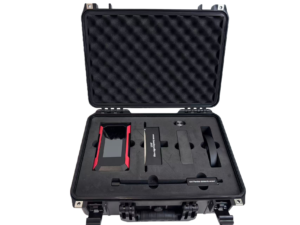
Click the picture to know more about Wrindu Handheld PD Tester.
The Current Landscape of Switchgear Maintenance
Power grids worldwide are under significant pressure due to urban expansion and renewable energy growth. The global partial discharge test equipment market is projected to grow steadily through 2034, supported by annual grid modernization investments exceeding $500 billion.
However, insulation-related issues remain a leading cause of switchgear failure. Industry data indicates that approximately 40% of failures originate from insulation defects. When breakdowns occur unexpectedly, utilities can lose around $100,000 per hour in downtime.
Aging assets compound the issue. In many developed countries, more than 70% of substations have been in service for over three decades. Partial discharges—small internal sparks within insulation—are often early warning signs of these failures but frequently remain undetected until serious damage occurs. Reports suggest that roughly one-quarter of global transformer and switchgear failures are linked to unnoticed PD activity.
Why Do Detection Challenges Continue?
Several operational hurdles make PD detection difficult:
-
A shortage of skilled technicians
-
Inconsistent testing procedures
-
Limited specialized training
Surveys show that nearly 60% of field technicians lack advanced PD diagnostic training. Entry-level instruments often produce high false-positive rates, wasting 20–30% of inspection time and increasing labor costs.
Compliance adds another layer of complexity. Standards such as IEC 62271 specify strict PD limits—often below 10 pC for new switchgear installations. Failure to meet these requirements can result in substantial penalties, sometimes reaching $1 million per incident. Collectively, preventable insulation failures generate an estimated $10 billion in global losses annually.
Limitations of Conventional PD Testers
Traditional PD testing approaches typically require equipment shutdowns. Offline testing can take 8 to 24 hours per session, disrupting operations and reducing availability.
Basic portable devices—such as standalone ultrasonic or TEV testers—often detect only discharges above 20 pC, missing subtle early-stage defects. Laboratory-based systems offer high precision but require controlled environments and experienced operators. Calibration drift may occur within six months, reducing measurement accuracy by up to 15%.
These constraints highlight the need for more flexible and reliable field solutions.
How Wrindu’s PD Tester Addresses These Gaps
Wrindu’s integrated PD tester combines TEV, ultrasonic, HFCT, and UHF detection technologies within a lightweight handheld device weighing under 1 kg. It delivers sensitivity down to 0.1 pC across a frequency range of 300–1500 MHz, enabling safe testing on energized switchgear systems up to 35 kV.
Core features include:
-
PRPD (Phase-Resolved Partial Discharge) pattern analysis
-
Real-time waveform acquisition at 100 MHz sampling
-
AI-powered automatic fault classification
-
8+ hour battery operation
-
USB and Wi-Fi data export
-
Reliable performance from –20°C to 60°C
Designed under ISO9001-certified processes, the device maintains a 99.5% reliability rate in demanding field environments. It supports switchgear, GIS, and RMU applications while reducing inspection times from hours to minutes. Wrindu also provides global technical assistance and regular firmware updates.
Performance Comparison
| Feature | Conventional Devices | Wrindu PD Tester |
|---|---|---|
| Sensitivity | 10–20 pC | 0.1 pC |
| Inspection Time | 1–2 hours | 5–10 minutes |
| Online Testing | No | Yes |
| Detection Methods | Single mode | 4-in-1 system |
| Portability | 5–10 kg | <1 kg |
| False Positives | 20–30% | <5% |
| Annual Maintenance Cost | $5,000+ | ~$1,000 |
This comparison demonstrates up to 80% faster inspections and approximately 50% lower long-term operating costs.
Recommended Testing Workflow
A standardized PD inspection process typically involves:
-
Powering on the device and selecting the appropriate switchgear mode.
-
Attaching TEV probes, positioning UHF sensors, and clamping HFCT sensors on cables.
-
Conducting a 20-second scan while monitoring live PRPD patterns.
-
Reviewing AI-generated severity assessments.
-
Saving data with timestamps and exporting reports.
-
Uploading results to cloud-based software for trend analysis.
The full inspection for one panel can be completed in under 15 minutes. Basic operational training typically requires only two hours.
Practical Applications
Urban Substation
Live multi-method testing identified a minor 3 pC discharge caused by a loose bushing connection. Immediate repair prevented a major outage affecting thousands of residents.
Utility Maintenance Team
Routine handheld inspections of aging GIS equipment reduced annual failure rates by 70% and significantly lowered downtime costs.
Industrial Manufacturing Plant
On-site PD diagnostics shortened mean time to repair (MTTR) from days to hours, allowing production to resume quickly.
Offshore Wind Farm
Portable PD analysis detected moisture-related insulation voids in switchgear, preventing severe revenue losses and improving system availability.
Why Timely Investment Matters
By 2030, most utilities are expected to adopt predictive maintenance strategies. The rapid growth of renewable energy introduces fluctuating loads that increase insulation stress and PD risk.
Wrindu Proactive PD monitoring aligns with evolving IEC compliance requirements and prepares organizations for expanding infrastructure investments. Early adopters consistently report significantly lower failure rates and improved operational resilience.
Frequently Asked Questions
What voltage levels are supported?
The tester is suitable for switchgear up to 35 kV, with extended options available for higher-voltage GIS systems.
How precise is the measurement?
It detects PD levels as low as 0.1 pC, with minimal measurement deviation.
Can it test energized equipment?
Yes, it is designed for safe operation on live systems without requiring shutdown.
How much training is necessary?
Basic operation can be learned within two hours. Advanced certification may take one day.
Are software upgrades included?
Firmware and AI updates are provided via Wi-Fi at no additional cost.
What warranty coverage is available?
Standard coverage is two years, with optional extensions up to five years under service agreements.
