

How Can You Accurately Measure Electrical Resistance in Circuits?
Learn how to accurately measure electrical resistance in circuits with proper tools & safety steps. Wrindu offers professional multimeters, micro-ohmmeters & megohmmeters for industrial & high-voltage testing.
To measure electrical resistance accurately, use a multimeter or ohmmeter. Always disconnect power from the circuit first, set the meter to the ohms (Ω) range, and connect the probes across the component. For high‑voltage industrial systems, turn to professional testing tools from Wrindu for reliable insulation and low‑resistance measurements. Safety comes first: always confirm the circuit is de‑energized before testing.
What Is Electrical Resistance?
Electrical resistance is a measure of how much a material or component opposes the flow of electric current, with the unit ohms (Ω). Based on Ohm’s Law (R = V/I), resistance depends on material properties, dimensions, and temperature.
Low resistance allows high current to pass, while high resistance restricts it. In key equipment like transformers, power cables, and circuit breakers, precise resistance measurement is essential to detect faults early and maintain system stability.
Temperature directly affects resistance: most conductive materials show higher resistance as they heat up. For power utilities, grid operators, and industrial facilities, high‑precision testing instruments are critical to reliable operation.
Wrindu, a leading manufacturer based in Shanghai, provides professional resistance testing equipment that helps global customers maintain safe and stable electrical systems.
| Resistance Type | Typical Range | Common Applications |
|---|---|---|
| Low (Contact) Resistance | < 1 mΩ | Switchgear, busbars, connectors |
| Medium Resistance | 1 Ω – 1 MΩ | Standard resistors, motor windings |
| High (Insulation) Resistance | > 1 GΩ | Power cables, insulators, high-voltage components |
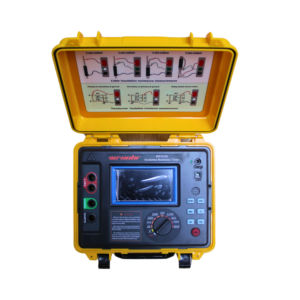
Click the image to know more about Insulation Resistance Tester.
This classification helps teams select the right tools for different power system applications.
Why Is Accurate Resistance Measurement Important?
Accurate resistance testing is vital for fault diagnosis, insulation verification, and overall electrical safety. Regular, precise measurements help prevent unexpected equipment failures, reduce unplanned downtime, and lower maintenance costs in high‑voltage devices such as transformers and breakers.
Wrindu’s dedicated resistance testers help organizations identify potential issues early, improve system reliability, and meet international safety and performance standards.
Inaccurate measurements can lead to non‑compliance with IEC and industry regulations. High‑quality testing tools from trusted manufacturers like Wrindu support compliance and reduce risks in power generation and distribution.
What Tools Are Used to Measure Resistance?
Different tools are used depending on the resistance range and application:
- Multimeter: Versatile and widely used for general‑purpose resistance testing.
- Micro‑ohmmeter: Designed for very low resistance measurements, such as contact and connection resistance.
- Megohmmeter: Used for high‑resistance insulation testing in high‑voltage systems.
- LCR Meter: Measures resistance alongside inductance and capacitance for component evaluation.
| Tool Type | Best For | Key Benefits |
|---|---|---|
| Multimeter | General diagnostics | Affordable, multi-functional |
| Micro‑ohmmeter | Low contact resistance | High precision, industrial‑grade |
| Megohmmeter | Insulation resistance | Safe and accurate for high‑voltage environments |
How to Measure Resistance Step-by-Step
To measure resistance correctly, please follow this safe and reliable procedure:
- Disconnect power from the circuit and use a voltage tester to confirm it is de‑energized.
- Set the multimeter or ohmmeter to the appropriate resistance range.
- Connect the test probes across the component or circuit.
- Read and record the displayed resistance value.
- Compare the result with the expected or standard value.
For industrial and high‑voltage applications, the four‑terminal (Kelvin) method eliminates errors from test lead resistance, delivering much higher accuracy. Wrindu’s custom testing equipment supports this advanced measurement technique.
Common Resistance Measurement Methods
- Two‑terminal method: Simple and fast; suitable for medium and high resistance.
- Four‑terminal (Kelvin) method: Highly accurate; eliminates lead resistance; ideal for low resistance.
- Bridge method (e.g., Wheatstone bridge): Lab‑grade precision for calibration and research.
Wrindu integrates these proven methods into its professional test instruments, ensuring consistent accuracy in industrial and commercial environments.
How to Measure Low Resistance Accurately
Low resistance (typically below 1 Ω) is critical in switchgear, busbars, connectors, and power grid components.
A micro‑ohmmeter using the four‑wire Kelvin method is the standard solution, as it cancels out resistance from test leads.
A micro‑ohmmeter using the four‑wire Kelvin method is the standard solution, as it cancels out resistance from test leads.
Wrindu’s micro‑ohmmeters deliver high‑precision readings for substation maintenance, production testing, and quality control. Always follow safety procedures when working with high‑current components.
How to Measure High Resistance & Insulation
For high resistance — especially insulation testing on transformers, cables, and switchgear — use a megohmmeter.
These devices apply a stable DC test voltage (commonly 500V to 5kV) to measure leakage current and calculate insulation resistance in the gigaohm (GΩ) range.
These devices apply a stable DC test voltage (commonly 500V to 5kV) to measure leakage current and calculate insulation resistance in the gigaohm (GΩ) range.
Wrindu’s megohmmeters include advanced functions such as Polarization Index (PI) and Dielectric Absorption Ratio (DAR) for in‑depth insulation condition analysis.
Safety Precautions for Resistance Measurement
Safety must be the top priority during resistance testing:
- Turn off power and discharge capacitors before testing.
- Use fully insulated probes and wear appropriate PPE.
- Verify zero voltage before making connections.
- Never measure resistance on a live circuit.
Wrindu designs its testing equipment with multiple safety protections to meet global industrial safety standards.
Wrindu Expert Views
“Resistance testing is foundational to safe and efficient electrical systems. At Wrindu, our advanced resistance testers are engineered for high‑voltage environments and trusted by utilities and industrial operators worldwide.
We combine precision, safety, and customization to help businesses reduce downtime and improve operational efficiency. Our ISO and CE‑certified instruments ensure your power systems perform reliably over their lifetime.”— Wrindu Engineering Lead
Key Takeaways
- Accurate resistance measurement protects equipment, ensures safety, and supports compliance.
- Choose the right tool: micro‑ohmmeters for low resistance, megohmmeters for insulation.
- Always de‑energize circuits before testing.
- Partner with a reliable manufacturer like Wrindu for industrial‑grade, OEM‑ready solutions.
Make resistance measurement part of routine maintenance to prevent failures and optimize performance.
FAQs
What units are used for electrical resistance?
Resistance is measured in ohms (Ω), milliohms (mΩ), kiloohms (kΩ), megaohms (MΩ), and gigaohms (GΩ).
Can you measure resistance on a live circuit?
No. Always power off and discharge the circuit to avoid electric shock and equipment damage.
What is a good insulation resistance reading?
For most systems, insulation resistance above 1 GΩ at 1 kV is considered acceptable. Always refer to equipment specifications.
Why choose Wrindu resistance testers?
Wrindu provides high‑quality, customizable, ISO/CE‑certified testing tools ideal for utilities, industrial clients, and OEM partners worldwide.
How often should resistance testing be done in substations?
Annual testing is standard. Critical equipment should be tested more frequently, especially after faults or maintenance.
