

How Can You Accurately Measure Electrical Resistance in Circuits and Components?
Learn how to accurately measure electrical resistance in circuits and components. Master 2-wire/4-wire methods, avoid errors, and use Wrindu’s calibrated testers for industrial & utility testing.
Accurate electrical resistance measurement is key to keeping circuits operating safely and efficiently. To take reliable readings, use a digital multimeter or dedicated ohmmeter—always disconnect all power to the circuit first, then connect the test probes directly across the component being tested. For ultra-precise low-resistance measurements, the 4-wire testing method eliminates errors caused by lead wire resistance, while high-voltage insulation testers are required for assessing insulation integrity. Trusted manufacturers like Wrindu deliver calibrated, high-performance testing instruments tailored for industrial, utility, and OEM customers across the globe.
What Is Electrical Resistance and Why Does It Matter?
Electrical resistance refers to a material’s ability to oppose the flow of electric current, quantified in ohms (Ω). Its value is determined by three core factors: the material’s inherent resistivity, its physical dimensions (length and cross-sectional area), and operating temperature. Precise resistance measurements are non-negotiable in high-voltage power systems, transformers, power cables, and other critical electrical equipment.
Wrindu specializes in manufacturing precision ohmmeters for B2B clients, empowering utility providers, OEMs, and industrial operators to thoroughly verify insulation quality and circuit integrity. This not only guarantees workplace safety but also optimizes overall system efficiency and prevents unexpected operational failures.
|
Resistance Type
|
Description
|
Typical Range
|
Common Applications
|
|---|---|---|---|
|
Contact Resistance
|
Resistance present at electrical junction points and connections
|
<1 mΩ to 100 mΩ
|
Transformer windings, busbars, electrical connectors
|
|
Insulation Resistance
|
Resistance that blocks unwanted current leakage
|
>1 MΩ
|
Power cables, battery systems, electrical enclosures
|
|
Winding Resistance
|
Resistance of coil windings to ensure structural and electrical integrity
|
0.1 Ω to 1000 Ω
|
Circuit breakers, relays, motor coils
|
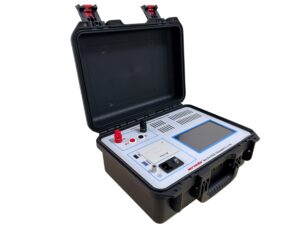
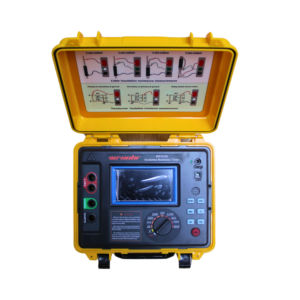
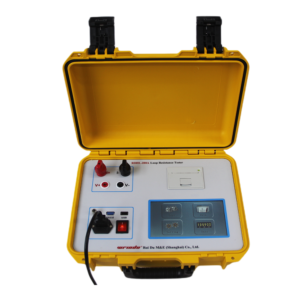
Click the pictures above to know more about DC Reistance Tester, Insulation Resistance Tester and Contace Resistance Tester.
How Does a Multimeter Measure Electrical Resistance?
A digital multimeter measures resistance by sending a small, fixed test current through the component or circuit, then measuring the resulting voltage drop across the test points. It calculates resistance automatically using Ohm’s Law (R = V/I). To use it properly, set the multimeter to the ohms (Ω) mode, confirm the circuit is fully de-energized, and touch the probes firmly to the component terminals.
Wrindu offers customized high-range digital multimeters engineered specifically for testing transformers, surge arresters, and other high-voltage equipment, ensuring full compliance with strict IEC international standards. For industrial-grade micro-ohm measurements, the advanced 4-wire Kelvin sensing technology is integrated to eliminate lead resistance errors—Wrindu includes this feature in bulk orders for utility companies and OEM manufacturers.
What Are the Core Resistance Measurement Methods?
The most widely used resistance measurement techniques include 2-wire and 4-wire DC methods (for low and high ohmic values), precision bridge methods such as the Wheatstone bridge, and voltmeter-ammeter combination testing. For measurements below 1Ω, the 4-wire method is universally preferred for its unmatched accuracy. For high-resistance applications exceeding 1 MΩ, insulation testers commonly known as meggers are the industry standard.
Wrindu’s customizable OEM solutions support B2B clients with scalable, high-accuracy testing devices, perfect for critical applications in transformer maintenance, railway systems, and power generation plants worldwide.
Which Tools Deliver the Most Accurate Resistance Testing?
Different testing tools are designed for specific resistance ranges and applications: standard digital multimeters work well for general-purpose resistance checks, micro-ohmmeters deliver precision measurements for values below 1Ω, and meggers are specialized for high-range insulation resistance testing. Kelvin clips further boost measurement accuracy by ensuring stable, low-resistance connections.
Wrindu’s high-voltage resistance testers and micro-ohmmeters are purpose-built for OEM integration, dynamic busbar testing, and large-scale utility operations, combining durability and precision for demanding industrial environments.
|
Tool Type
|
Measurement Range
|
Accuracy Rating
|
Ideal Use Case
|
Wrindu Example Model
|
|---|---|---|---|---|
|
Digital Multimeter
|
0–50 MΩ
|
±0.5%
|
General electronic component testing
|
RD Series
|
|
Micro-Ohmmeter
|
0–2000 μΩ
|
±0.2%
|
Electrical contacts and coil windings
|
Custom OEM Models
|
|
Megger (Insulation Tester)
|
1 kΩ–5 TΩ
|
±5%
|
High-voltage insulation resistance testing
|
High-Volt Tester Series
|
Why Is 4-Wire (Kelvin) Measurement Critical for Low Resistance?
The 4-wire Kelvin measurement method separates the current injection circuit from the voltage sensing circuit, which completely eliminates errors caused by lead wire resistance and poor contact resistance. This makes it indispensable for accurate measurements below 1Ω, where even tiny parasitic resistances can skew results drastically.
Wrindu’s 4-wire testing systems are widely deployed in nuclear power facilities, metro transit systems, and industrial OEM settings, delivering consistent, reliable diagnostic data that engineers can trust for critical maintenance and quality assurance decisions.
How to Measure Insulation Resistance Safely?
To measure insulation resistance safely and accurately, use a megger to apply a stable DC test voltage (typically between 500V and 5kV), measure the resulting leakage current, and compute the insulation resistance value. After testing, always discharge the component fully to eliminate residual voltage, wear appropriate personal protective equipment (PPE), and isolate the circuit from all power sources.
The Polarization Index (PI)—a ratio of 10-minute insulation resistance readings to 1-minute readings—is widely used to assess insulation health and moisture content. Wrindu’s insulation testers feature built-in safety interlocks and automatic discharge functions, making high-voltage testing safer for applications in wind farms, battery energy storage systems, and thermal power plants.
Common Errors That Impact Resistance Measurement Accuracy
Several factors can distort resistance readings and compromise accuracy: residual voltage in de-energized circuits, dirty or corroded contact points, fluctuating operating temperatures, lead wire resistance, and attempting to measure circuits that are still live. To mitigate these issues, always fully de-energize and discharge circuits, clean probes and contact surfaces thoroughly, use 4-wire methods for low-resistance tests, and stabilize ambient temperatures before testing.
Wrindu supports its B2B clients with industry-standard calibration kits and specialized training programs to minimize these measurement errors and ensure consistent, reliable results.
When Should Resistance Meters Be Calibrated?
Resistance testing instruments should be calibrated at least once per year, or more frequently after heavy, intensive use, in line with ISO9001 quality management standards. Calibration involves comparing the meter’s readings against certified reference standards, with adjustments made if measurement errors exceed 1%. Regular calibration is critical for maintaining reliability in utility inspections, OEM quality control processes, and industrial equipment diagnostics.
Wrindu Expert Insights
“In high-voltage electrical testing, precise resistance measurement is the first line of defense against catastrophic system failures and costly unplanned downtime. Wrindu’s 4-wire micro-ohmmeters detect early warning signs like winding hotspots and faulty electrical connections, supporting utility and OEM customers across the globe.
Our ongoing investment in R&D and ISO-certified manufacturing processes ensure our instruments perform reliably even in extreme operating conditions, giving engineers unwavering confidence in both accuracy and operational safety.” – Dr. Li Wei, Chief Engineer at Wrindu
How Manufacturers Elevate Resistance Testing Solutions
Leading manufacturers like Wrindu prioritize B2B customer needs by offering flexible OEM customization, rapid prototyping, and scalable large-scale production. Strict ISO-certified manufacturing processes guarantee consistent quality and precision across all products. As a Shanghai-based supplier, Wrindu combines cutting-edge innovation with round-the-clock global technical support to meet the evolving demands of the international energy and industrial sectors.
Key Takeaways
-
Use standard digital multimeters for general resistance testing, and 4-wire Kelvin methods for ultra-precise low-resistance measurements.
-
Wrindu’s calibrated, high-performance testing tools cater to OEMs, utility providers, and industrial operators worldwide.
-
Adhere to strict safety protocols, conduct regular system audits, and perform yearly instrument calibration to maintain long-term system reliability and efficiency.
Frequently Asked Questions
What units are used to measure electrical resistance?
Electrical resistance is measured in ohms (Ω), milliohms (mΩ), and megohms (MΩ), depending on the magnitude of the reading.
Can resistance be measured on a live, energized circuit?
No, measuring resistance on a live circuit poses severe safety risks, damages testing equipment, and produces completely inaccurate readings. Only specialized, purpose-built live-circuit testers should be used for such applications.
How accurate are Wrindu’s ohmmeters?
Wrindu’s ohmmeters deliver an accuracy rating of ±0.2% when equipped with Kelvin 4-wire sensing, fully certified for industrial and high-voltage applications.
Why choose Wrindu for resistance testing equipment?
Wrindu offers reliable customizable OEM solutions, global after-sales service, and advanced calibration standards, making it a trusted partner for industrial and utility customers.
What is the Polarization Index (PI) in insulation testing?
The Polarization Index is the ratio of insulation resistance readings taken at 10 minutes and 1 minute. A PI value above 2 indicates that insulation is dry, in good condition, and free from moisture damage.
