

How Does Transformer Core Design Affect No Load Loss?
How transformer core steel and lamination design affect no load loss, with engineering insights and accurate testing using Wrindu no load loss testers.
Transformer core design directly controls no load loss. Even when a transformer delivers no load, the core consumes energy as long as voltage remains applied. For engineers, understanding how core steel and lamination affect loss helps improve efficiency, reduce operating cost, and verify performance with accurate testing.
This article explains how transformer core design influences no load loss and how engineers can evaluate real performance using proper instruments.
What Is the Relationship Between Transformer Core Design and No Load Loss?
No load loss comes mainly from the transformer core. When voltage excites the core, magnetic flux flows through the steel and creates hysteresis and eddy current losses. Core design defines how much energy the transformer wastes under no-load conditions.
Transformer core loss design focuses on material quality, magnetic path length, and construction accuracy. A well-designed core reduces magnetization energy and heat generation. Poor design increases loss and raises long-term operating cost, especially in 24/7 energized transformers.
How Does Core Steel Quality Affect No Load Loss?
Core steel determines how efficiently the transformer handles magnetic flux. High-grade silicon steel offers lower hysteresis loss and better magnetic permeability. Engineers select steel based on loss curves, grain orientation, and saturation behavior.
Grain-oriented core steel aligns magnetic domains with the flux direction. This alignment reduces energy loss during magnetization cycles. Lower-grade steel forces the core to consume more energy, which increases no load loss even when the transformer remains idle.
Why Does Lamination Structure Matter in Transformer Core Loss Design?
Lamination design directly affects eddy current loss. Thin laminations limit circulating currents inside the core and reduce heat generation. Proper insulation between laminations further restricts energy waste.
In transformer core loss design, engineers balance lamination thickness with mechanical strength and manufacturing cost. Poor lamination quality or uneven stacking creates air gaps, which increase magnetizing current and raise no load loss. Precision assembly plays a key role in loss control.
How Do Manufacturing Tolerances Influence No Load Loss?
Manufacturing accuracy defines how closely a transformer meets its design targets. Core joint alignment, clamping pressure, and stacking factor all influence magnetic performance.
Small mechanical errors increase localized flux density and loss. Over time, vibration and stress can worsen these effects. Engineers rely on testing to confirm that real no load loss matches design expectations rather than theoretical values.
How Can Engineers Verify Core Design Performance in Practice?
Testing connects core design theory with real-world results. Engineers measure no load loss at rated voltage and frequency to confirm whether the core performs as expected.
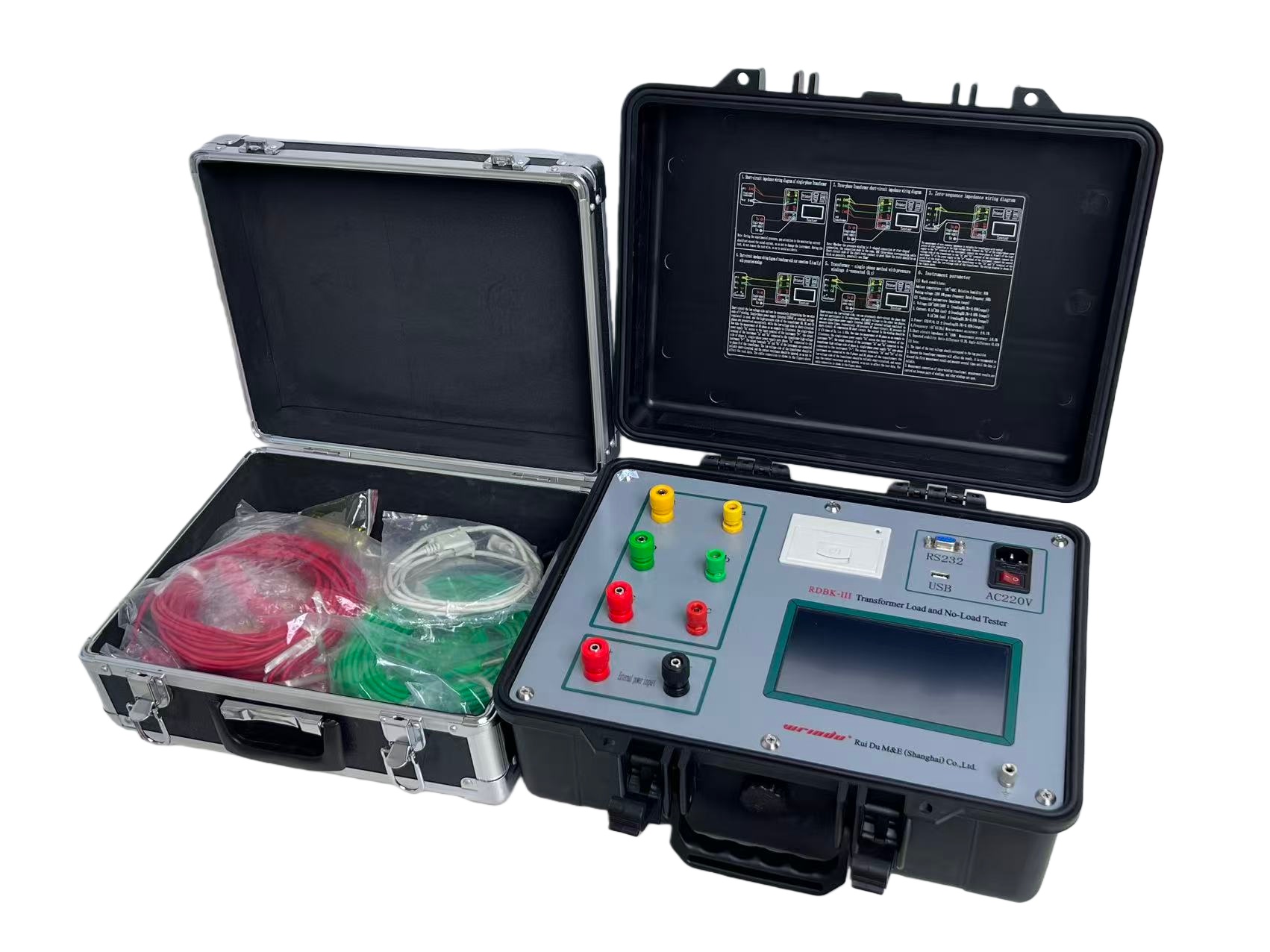
The Wrindu No load loss tester supports accurate evaluation by measuring true active power under controlled conditions. By using stable voltage control and precise sampling, engineers can detect small deviations caused by core steel quality or lamination issues. Wrindu instruments help engineers validate transformer core loss design during factory acceptance and on-site testing.
What Common Questions Do Instrument Users Ask About Core Design and No Load Loss?
Q: Can no load loss testing reveal poor core steel quality?
A: Yes. Higher than expected no load loss often indicates inferior core steel or improper material selection.
Q: Does lamination thickness affect measured no load loss?
A: Yes. Thicker or poorly insulated laminations increase eddy current loss and raise measured values.
Q: Can on-site testing detect core assembly problems?
A: Yes. Accurate testing can reveal excess loss caused by air gaps, misalignment, or mechanical stress.
Q: Why do engineers test no load loss after transport?
A: Transport can shift core structure. Testing confirms that core performance remains within design limits.
Why Does Transformer Core Design Matter for Long-Term Efficiency?
Transformer core design determines fixed energy loss that runs for the entire service life. In always energized units, no load loss accumulates year after year. Even small improvements in core steel and lamination reduce lifetime energy cost.
Engineering-level buyers now compare transformers based on efficiency and measured performance, not just ratings. Accurate testing with tools like the Wrindu No load loss tester supports data-driven decisions and long-term cost control.
