

How Impulse Energy Affects Cable Fault Pinpointing?
Learn how impulse energy affects impulse discharge cable fault pinpointing and how the wrindu 535T high-voltage signal generator enables safe, accurate underground cable fault location.
Cable fault pinpointing depends on accurate impulse discharge cable technology. Impulse energy controls how clearly engineers can detect, locate, and confirm underground cable faults. If the energy is too low, the signal becomes weak. If the energy is too high, insulation damage may increase. So choosing the right impulse level is critical for safe and precise testing.
This article explains how impulse energy influences fault pinpointing and how the wrindu 535T Cable Test High-voltage Signal Generator (Three gear) improves field efficiency.
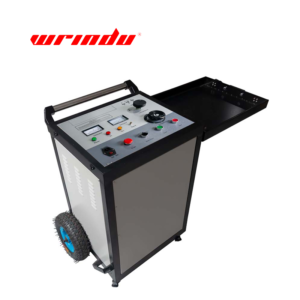
Click the picture to know more about Wrindu Cable Test High-voltage Signal generator.
What Is Impulse Discharge Cable Testing?
Impulse discharge cable testing sends a high-voltage pulse into a faulty cable.
The pulse creates:
-
Arc discharge at the fault point
-
Acoustic signal in the ground
-
Electromagnetic response along the cable
Engineers use these signals to pinpoint the exact fault location.
Because the discharge energy defines signal strength, impulse energy becomes the key control parameter in cable fault testing.
Why Does Impulse Energy Matter in Cable Fault Pinpointing?
Impulse energy directly affects three core results:
1. Signal Visibility
Higher impulse energy produces:
-
Stronger acoustic waves
-
Clearer magnetic signals
-
Easier ground detection
This improves fault pinpointing accuracy in long or deep cables.
2. Insulation Safety
Excessive impulse energy may:
-
Expand existing insulation damage
-
Create secondary breakdown points
-
Shorten cable service life
So engineers must balance visibility and protection.
3. Test Efficiency
Correct energy selection reduces:
-
Repeated discharges
-
Long search time
-
Field labor cost
Efficient impulse control leads to faster underground cable fault location.
How Does the wrindu 535T Improve Impulse Cable Testing?
The wrindu 535T Cable Test High-voltage Signal Generator (Three gear) supports precise impulse discharge cable operations.
Key advantages include:
-
Three-gear impulse energy control
Engineers match energy to cable voltage level and fault type. -
Stable high-voltage output
Stable pulses create reliable acoustic and magnetic signals. -
Safe discharge design
Controlled impulse protects insulation from over-stress. -
Field-ready portability
Compact structure suits substation and urban cable networks.
These features help teams achieve fast, safe, and repeatable cable fault pinpointing.
How Should Engineers Choose the Right Impulse Energy?
Engineers normally consider:
-
Cable voltage rating → Higher voltage needs higher impulse level
-
Fault resistance → High-resistance faults need stronger discharge
-
Cable length and depth → Long or deep cables require clearer signals
Using adjustable equipment like the wrindu 535T allows step-by-step energy increase, which protects insulation while keeping detection clear.
Common Questions About Impulse Discharge Cable Testing
Q1: What impulse energy level should I start with?
Start low and increase gradually. Low energy protects insulation and still reveals many faults.
Q2: Can high impulse energy damage the cable?
Yes, excessive energy may worsen insulation defects. Always match energy to cable rating and fault condition.
Q3: Why is the acoustic signal sometimes weak?
Impulse energy may be too low or the cable may be too deep. Increase energy step by step or improve ground sensor sensitivity.
Q4: How does the wrindu 535T help field engineers?
It provides controlled three-gear impulse output for safe and clear pinpointing. This reduces search time and improves test reliability.
Wrindu Expert Review
Impulse energy defines the success of impulse discharge cable fault pinpointing.
Correct energy delivers:
-
Clear detection signals
-
Safe insulation protection
-
Faster field efficiency
Advanced tools such as the wrindu 535T Cable Test High-voltage Signal Generator (Three gear) give engineers precise control over impulse discharge cable testing. This control leads to more accurate underground cable fault location and lower maintenance risk.
For utilities and testing teams, optimizing impulse energy is not optional. It is the key step toward reliable cable fault diagnosis and long-term network safety.
