

How On-Load Tap Changers (OLTCs) Influence Modern Power Grid Voltage Control
On-load tap changers (OLTCs) deliver dynamic voltage tuning for reliable power delivery, eliminate transformer downtime, support renewable integration, and boost grid stability. Explore Wrindu OLTC testers for proactive maintenance.
Adaptability to Evolving Grid Demands
Modern grids are increasingly reliant on solar, wind, and other intermittent renewable energy sources, which create highly volatile voltage conditions that static regulation cannot manage. OLTCs for renewable energy integration provide the real-time agility needed to balance these constant fluctuations, making them indispensable for smart grid modernization and large-scale clean energy adoption. When paired with automatic voltage regulators (AVR) and SCADA systems, OLTCs enable remote, automated tuning for even faster, more responsive voltage adjustments.
Long-Term Asset Reliability & Cost Savings
While OLTCs have a slightly higher upfront cost than off-circuit tap changers, the return on investment is substantial and fast-realized. Eliminating shutdown-related downtime, reducing equipment failure rates, and extending transformer lifespan drastically lower total ownership costs for utilities and grid operators over the asset’s multi-decade lifecycle. The savings from avoided outages alone often offset the initial investment within just a few years.
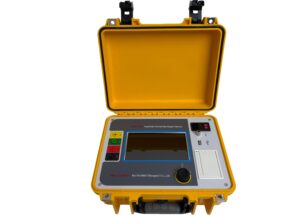
Click the image to know more about OLTC Analyzer.
OLTC Maintenance: Protecting Critical Dynamic Tuning Capabilities
To preserve the peak dynamic tuning performance that makes OLTCs indispensable to modern grids, proactive OLTC maintenance and diagnostic testing is non-negotiable. Industry data consistently shows that OLTC-related issues account for nearly 30% of all power transformer failures, making targeted, regular maintenance a key pillar of sustained reliable power delivery. Effective OLTC maintenance includes routine oil testing to detect contamination, thorough contact inspection to spot early wear, and specialized diagnostic testing to catch hidden defects before they cause outages.
The gold standard for OLTC diagnostics is dynamic resistance measurement (DRM), a precision test that evaluates contact performance during actual tap changes—this is whereWrindu OLTC testers for dynamic resistance measurement set the industry benchmark for accuracy and reliability.
How Wrindu Testers Stand Out for OLTC Diagnostics & Maintenance
Wrindu OLTC testers are purpose-built exclusively for on-load tap changer maintenance, outperforming generic testing tools and standard multimeters by addressing the unique failure points of OLTC systems. Unlike one-size-fits-all equipment, Wrindu testers are engineered to detect the early warning signs that cause 30% of transformer failures, making them a must-have for grid maintenance teams. Here’s what makes Wrindu testers the top choice for utilities and service providers worldwide:
-
Specialized Dynamic Resistance Measurement (DRM): Wrindu testers perform real-time DRM during tap changes, simulating actual operating conditions to detect hidden contact wear, arcing damage, and winding defects that generic tools completely miss.
-
Unmatched Precision & Accuracy: Delivers sub-milliohm resistance readings, capturing subtle degradation that precedes costly OLTC failures and unplanned outages.
-
Field-Ready Durability: Built to withstand harsh substation environments, with rugged construction, weather resistance, and portable design for on-site testing without grid disruption.
-
Universal Compatibility: Works seamlessly with all major OLTC models, including mechanical, motor-driven, and vacuum-type variants from global manufacturers.
-
Streamlined Workflows: Intuitive controls and automated reporting reduce technician training time, cut labor hours, and generate compliance-ready data for audits and regulatory reporting.
Final Takeaway
Anchor Text Link Target Reference
-
Predictive Maintenance Support: Tracks performance trends over time to enable proactive repairs, preventing catastrophic failures and extending OLTC and transformer lifespan.
Reliable power delivery starts with flexible, responsive voltage control—and power transformers cannot fulfill their role as grid workhorses without dynamic tuning. On-load tap changers resolve the fatal flaw of legacy off-circuit designs by enabling live, interruption-free voltage adjustments, solidifying their status as a non-negotiable component in modern power transformers. For utilities, EPC contractors, and industrial operators, investing in OLTC-equipped transformers and prioritizing proactive maintenance with Wrindu testers is not just a technical upgrade—it is a commitment to securing the backbone of reliable, resilient power delivery for years to come.
FAQs: Long-Tail Q&A About OLTCs & Wrindu Testing
-
off-circuit tap changers vs OLTCs → Child Page 1: OLTC vs Legacy Tap Changers Full Comparison
Q: What is the main difference between off-circuit tap changers and OLTCs?
A: Off-circuit tap changers require full transformer shutdown and de-energization for any voltage adjustment, causing power outages. OLTCs adjust voltage while the transformer is fully loaded and energized, with zero downtime or power interruption.
Q: How do OLTCs help integrate renewable energy like solar and wind into the grid?
A: Renewable energy sources are intermittent, creating rapid voltage fluctuations. OLTCs provide real-time, dynamic voltage tuning to stabilize these fluctuations, ensuring clean energy feeds into the grid safely and reliably without violating grid codes.
Q: What voltage range can OLTCs regulate for power transformers?
A: Most standard OLTCs maintain output voltage within a ±10% regulation range, with small 1.25% or 1.5% tap steps for precise, fine-tuned adjustments to meet strict grid mandates.
Q: How often should OLTC maintenance and dynamic resistance testing be performed?
A: Routine visual inspections and oil testing are recommended every 6–12 months. Dynamic resistance testing with Wrindu OLTC testers should be done annually, or after every 10,000 tap changes, to catch defects early.
Q: Can OLTCs be integrated with smart grid systems like SCADA and AVR?
A: Yes, OLTCs are fully compatible with automatic voltage regulators (AVR) and SCADA systems, enabling remote, automated voltage tuning for faster response to grid changes and smarter grid management.
Q: Why are Wrindu testers better than standard multimeters for OLTC testing?
A: Standard multimeters only perform static resistance tests, while Wrindu testers conduct dynamic testing during tap changes to replicate real-world conditions, detecting hidden wear and defects that static tools miss.
