

How On-Load Tap Changers (OLTCs) Work | Operating Principles Explained
Dive into the core operating principles of On-Load Tap Changers (OLTCs). Learn about current diversion, tap switching, arc suppression, and how OLTCs ensure uninterrupted power during voltage adjustments.
- Current Diversion: When a tap adjustment is triggered (automatic or manual), the OLTC’s drive mechanism activates transition resistors or reactors, which temporarily divert the transformer’s load current to a parallel path—ensuring the main circuit remains energized and power flow is uninterrupted.
- Tap Switching: With load current safely diverted, the OLTC’s contact system switches from the original tap position to the target position, adjusting the winding turns ratio to modify the output voltage.
- Arc Suppression: The transition components absorb the energy generated by arcing during switching, preventing arc damage to the contact system and insulation components.
- Circuit Reconnection: After successful tap switching, the transition path is disconnected, and load current is restored to the main circuit—completing the voltage adjustment with zero power interruption and minimal grid disturbance.
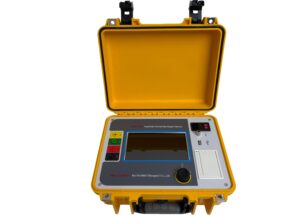
How Wrindu Testers Stand Out
FAQs
Q: How fast can an OLTC complete a tap change, and why is speed critical?
A: Most industrial OLTCs complete a full tap change in 10–50 milliseconds. Speed is critical because it minimizes the duration of arcing during switching, reducing contact wear and arc damage. Faster tap changes also ensure the grid voltage returns to stable levels quickly, even during sudden load swings or renewable energy output fluctuations.
Q: What type of OLTC is best for renewable energy grid-tie systems?
A: Vacuum-type OLTCs are the ideal choice for renewable energy integration. They offer superior arc suppression, lower maintenance needs (no oil contamination), and faster tap switching speeds—perfect for responding to the intermittent output of solar and wind farms. Wrindu testers are fully compatible with vacuum-type OLTCs, with specialized DRM profiles for their unique operation.
