

How to Calculate Transformer No Load Loss Tolerance Under IEC?
Learn how to calculate transformer no load loss tolerance under IEC 60076. Understand guaranteed loss, +15% limits, FAT evaluation, and compliance rules.
Transformer no load loss tolerance is often misunderstood during Factory Acceptance Tests (FAT). Many engineers see a measured value slightly higher than the guaranteed loss and immediately assume non-compliance. In reality, IEC 60076 defines a clear tolerance framework that must be applied before making any judgment.
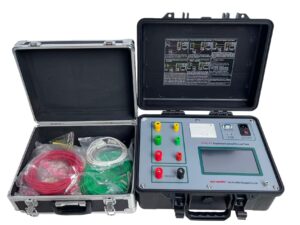
Click the picture to know more about Wrindu No load and Load Loss Tester.
This article explains how to calculate transformer no load loss tolerance under IEC in a practical and professional way.
What Does IEC 60076 Say About No Load Loss Tolerance?
IEC does not fix one universal no load loss value for all transformers. Instead:
-
The manufacturer declares a guaranteed no load loss in the contract.
-
The measured result is compared against that guaranteed value.
-
A positive tolerance is permitted under IEC conditions.
In most practical projects, the typical allowable tolerance for no load loss is:
Up to +15% of the guaranteed value
(depending on transformer rating and contract agreement)
This means the measured value can be higher than the guaranteed value within the permitted margin.
Basic Formula for IEC No Load Loss Tolerance
The calculation is straightforward:
Maximum Acceptable Loss=Guaranteed Loss×(1+Tolerance)\textbf{Maximum Acceptable Loss} = \text{Guaranteed Loss} \times (1 + \text{Tolerance})
Where:
-
Guaranteed Loss = Value stated in technical specification
-
Tolerance = IEC permitted percentage (e.g., 15% = 0.15)
Practical Calculation Example
Example Case:
-
Guaranteed No Load Loss: 10,000 W
-
IEC Allowed Tolerance: +15%
Step 1: Convert Percentage to Decimal
15% = 0.15
Step 2: Multiply
10,000 × (1 + 0.15)
10,000 × 1.15 = 11,500 W
Final Result:
If the measured no load loss is:
-
≤ 11,500 W → Pass
-
11,500 W → Fail
This simple calculation prevents unnecessary disputes during FAT.
Important Technical Notes for Accurate Judgment
Before declaring a transformer non-compliant, engineers should verify:
1️⃣ Voltage Condition
The test must be performed at rated voltage.
If voltage deviates, loss must be corrected proportionally to voltage squared:
P∝V2P \propto V^2
Even a small voltage increase can significantly raise measured loss.
2️⃣ Waveform Quality
IEC requires a nearly sinusoidal waveform. Harmonics increase core loss artificially. If distortion exists, measured values may appear higher than actual.
3️⃣ Core Residual Magnetism
After DC tests or transportation shocks, the core may retain residual flux. Demagnetization is recommended before no load loss measurement.
4️⃣ Instrument Accuracy
No load loss measurement involves:
-
Low current
-
Low power factor
-
High phase sensitivity
Phase angle errors in ordinary wattmeters can create several percent deviation. IEC-compliant power analyzers are strongly recommended.
When Tolerance Is NOT Enough?
Even if the measured value is within +15%, engineers should evaluate:
-
Is the result stable?
-
Is phase imbalance acceptable?
-
Are three-phase losses consistent?
Large fluctuation may indicate:
-
Core assembly stress
-
Transportation impact
-
Localized magnetic saturation
Tolerance compliance does not replace engineering judgment.
Common FAT Misunderstandings
❌ Misconception 1: Any value above guaranteed loss is a failure
Incorrect. IEC clearly allows positive tolerance.
❌ Misconception 2: Tolerance applies automatically without contract reference
Not always. Some contracts define stricter limits.
❌ Misconception 3: Single measurement is sufficient
IEC emphasizes repeatability and stability.
Engineering Recommendation
To avoid disputes during FAT:
-
Confirm guaranteed loss in contract
-
Confirm agreed IEC tolerance
-
Verify rated voltage and waveform
-
Use high-accuracy power measurement systems
-
Record voltage, current, power factor, and harmonic content
Transparent documentation ensures objective acceptance.
