

How to Choose the Right DC Leakage Test Equipment?
Wrindu DC high-voltage generator delivers stable output, low ripple, and precise control for DC hipot and insulation testing in field and factory applications.
DC leakage testing plays a key role in insulation evaluation. Engineers use it to detect early insulation degradation in transformers, cables, and rotating machines. To get reliable results, users must select the right DC leakage test equipment. Different test tasks need different tools. This article explains common instruments and shows how to choose the right one for your application.
What Is DC Leakage Test Equipment and Why Does It Matter?
DC leakage test equipment measures leakage current when DC voltage is applied to insulation. This current reflects insulation condition and aging trends.
Accurate measurement helps engineers:
-
Identify insulation defects early
-
Compare test results over time
-
Reduce unexpected failures
Without proper high-voltage test instruments, results may drift or mislead maintenance decisions.
What Types of DC Leakage Test Equipment Are Commonly Used?
Microammeter
A microammeter measures very small DC currents, usually in the microamp range. It connects in series with the test object.
Common uses include:
-
Transformer winding leakage tests
-
Insulator DC leakage tests
-
Cable insulation assessment
Users value microammeters for high sensitivity and stable readings.
DC High-Voltage Generator
A DC high-voltage generator provides the test voltage. It applies controlled DC stress to insulation.
Key features include:
-
Adjustable output voltage
-
Smooth voltage rise control
-
Overcurrent protection
This device forms the core of most insulation testing tools.
Integrated DC Leakage Test System
Some systems combine voltage generation, current measurement, and data logging. These systems simplify field testing.
They help users:
-
Reduce wiring errors
-
Improve test efficiency
-
Store test results automatically
Such systems fit utilities and service teams with frequent test tasks.
How Do You Choose the Right DC Leakage Test Equipment?
What Voltage Level Do You Need?
Always match the voltage rating to the test object. Cable and transformer tests often require different voltage ranges. Never exceed insulation design limits.
What Measurement Accuracy Is Required?
Small leakage currents demand high resolution. A low-noise microammeter improves repeatability and trend analysis.
Will You Test in the Field or in the Factory?
Field tests need portable and rugged devices. Factory tests focus more on precision and long-term stability.
Do You Need Data Recording?
Digital systems with storage and export functions support preventive maintenance programs and audits.
How Do You Use Each Type of Equipment Correctly?
How Do You Set Up a Microammeter?
-
Connect it in series with the test object
-
Keep leads short and clean
-
Shield cables to reduce interference
Proper grounding improves reading stability.
How Do You Apply DC Voltage Safely?
-
Increase voltage slowly
-
Monitor leakage current in real time
-
Stop the test if current rises abnormally
Safety procedures protect both equipment and operators.
How Do Integrated Systems Improve Testing?
Integrated systems guide users through test steps. They reduce manual errors and speed up test workflows.
How Does the Wrindu DC High-Voltage Generator Meet Your Needs?
The Wrindu RDZG DC High-Voltage Generator meets real testing needs in both field and factory environments. It delivers stable DC output with a ripple factor below 0.5%, which helps engineers get reliable leakage and withstand test results. The PWM high-frequency control ensures smooth voltage rise and precise adjustment, even when testing large-capacitance objects like power cables.
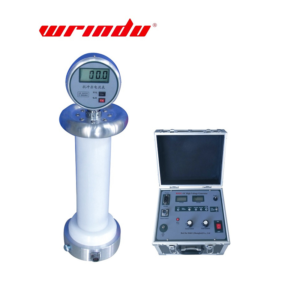
Click the picture to know more about Wrindu DC High-Voltage Generator.
Safety and usability stay at the core of the design. The RDZG series includes over-voltage, over-current, and short-circuit discharge protection. Zero-voltage start and disconnection protection reduce risk during operation. These features make the generator suitable for long test days and frequent on-site work.
Accuracy also supports professional testing standards. With voltage accuracy of 0.5% and current resolution down to 0.1 μA, the system captures small insulation changes clearly. The compact structure, solid-packaged multiplier, and lightweight design make transport and setup easy.
From cable withstand tests to transformer DC insulation checks, the Wrindu DC high-voltage generator adapts to different voltage levels and test scenarios. It helps engineers work safely, measure accurately, and complete tests efficiently.
